- BPM
- 91
- Key
- G Minor
- Camelot
- 6A
Die Walküre, WWV 86B, Act I: In the Sound Code, We "See" His Loving Gaze by Richard Wagner, Berliner Philharmoniker, Lorin Maazel Song Details
"Die Walküre, WWV 86B, Act I: In the Sound Code, We "See" His Loving Gaze" by Richard Wagner, Berliner Philharmoniker, Lorin Maazel had its release date on May 1, 1988. The duration of This song is about 3 minutes long, at 3:20. Based on our data, This song appears to be safe for all ages and is not considered explicit. This track is about the average length of a typical track. This song is part of Wagner: The "Ring" Without Words (Orchestral Highlights from the Ring Cycle) by Richard Wagner, Lorin Maazel, Berliner Philharmoniker. The song's track number on the album is #5 out of 20 tracks. Based on our data, United States was the country where this track was produced or recorded. In terms of popularity, Die Walküre, WWV 86B, Act I: In the Sound Code, We "See" His Loving Gaze is currently not that popular. In our opinion, the overall tone is not very danceable and projects negative sounds, such as being sad, depressed, or angry.
BPM and Tempo
Since Die Walküre, WWV 86B, Act I: In the Sound Code, We "See" His Loving Gaze by Richard Wagner, Berliner Philharmoniker, Lorin Maazel has a tempo of 91 beats per a minute, the tempo markings of this song would be Andante (at a walking pace). With Die Walküre, WWV 86B, Act I: In the Sound Code, We "See" His Loving Gaze being at 91 BPM, the half-time would be 46 BPM with a double-time of 182 BPM.In addition, we consider the tempo speed to be pretty slow for this song. This makes this song perfect for activities such as, yoga or pilates. The time signature for this track is 1/4.
Music Key
This song has a musical key of G Minor. Which also means that the camelot key for this song is 6A. So, the perfect camelot match for 6A would be either 6A or 5B. While, a low energy boost can consist of either 6B or 7A. For moderate energy boost, you would use 3A and a high energy boost can either be 8A or 1A. However, if you are looking for a low energy drop, finding a song with a camelot key of 5A would be a great choice. Where 9A would give you a moderate drop, and 4A or 11A would be a high energy drop. Lastly, 9B allows you to change the mood.
Want to find the BPM and music key for other songs? Check out our BPM and Key Finder page!
- Popularity
- 19%
- Loudness
- -31.763 dB
- Acousticness
- 94%
- Danceability
- 12%
- Energy
- 3%
- Instrumentalness
- 62%
- Liveness
- 21%
- Loudness
- 47%
- Speechiness
- 4%
- Valence
- 5%
Recommendations
| Track | Artist | Key | Energy | Camelot | BPM | ||
|---|---|---|---|---|---|---|---|
 | Pictures at an Exhibition (Orch. Ravel): Promenade 4 - Recorded 1966 | Modest Mussorgsky, Berliner Philharmoniker, Herbert von Karajan | D Minor | 1 | 7A | 139 BPM | |
 | La mer, L. 109: III. Dialogue of the Wind and the Sea | Claude Debussy, Berliner Philharmoniker, Herbert von Karajan | D♭ Major | 2 | 3B | 78 BPM | |
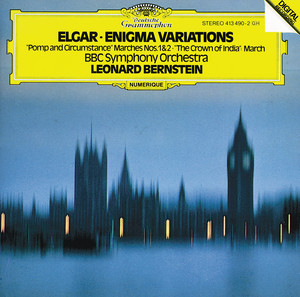 | Variations On An Original Theme, Op.36 "Enigma": 12. B.G.N. (Andante) | Edward Elgar, BBC Symphony Orchestra, Leonard Bernstein | B♭ Major | 0 | 6B | 82 BPM | |
 | Symphony No.8 In G, Op.88, B. 163: 2. Adagio | Antonín Dvořák, Berliner Philharmoniker, Rafael Kubelík | C Major | 1 | 8B | 80 BPM | |
 | Prince Igor: Polovtsian Dances: f. Presto | Alexander Borodin, Chicago Symphony Orchestra, Daniel Barenboim | A Major | 4 | 11B | 184 BPM | |
 | Karelia Suite, Op.11 (2005 - Remaster): I. Intermezzo | Berliner Philharmoniker, Herbert von Karajan | E♭ Major | 2 | 5B | 83 BPM | |
 | Symphony No. 1 in C Minor, Op. 68: II. Andante sostenuto | Johannes Brahms, Berliner Philharmoniker, Kirill Petrenko | E Major | 1 | 12B | 81 BPM | |
 | Symphony No. 4 in A Major, Op. 90 "Italian": III. Con moto moderato | Felix Mendelssohn, Berliner Philharmoniker, Herbert von Karajan | A Minor | 2 | 8A | 95 BPM | |
 | Symphony No.3 In F, Op.90: 1. Allegro con brio - Un poco sostenuto - Tempo I | Johannes Brahms, Berliner Philharmoniker, Herbert von Karajan | F Minor | 1 | 4A | 62 BPM | |
 | Le Sacre du Printemps / Pt 1: L'Adoration de la Terre: 1. Introduction | Igor Stravinsky, Berliner Philharmoniker, Herbert von Karajan | D♭ Minor | 0 | 12A | 97 BPM | |
| Enigma Variations, Op. 36: Var. 5. Moderato "R.P.A." | Edward Elgar, BBC Symphony Orchestra, Leonard Bernstein | C Minor | 0 | 5A | 83 BPM | |
 | Tchaikovsky: Slavonic March, Op. 31 | Pyotr Ilyich Tchaikovsky, Seiji Ozawa, Berliner Philharmoniker | E Minor | 2 | 9A | 104 BPM | |
 | Schoenberg: Verklärte Nacht, Op. 4: IV. Adagio (1943 Version) | Arnold Schoenberg, Daniel Barenboim, Chicago Symphony Orchestra | D Major | 1 | 10B | 82 BPM | |
 | Symphony No. 9 in D Minor, WAB 109: II. Scherzo. Bewegt lebhaft - Trio. Schnell | Anton Bruckner, Berliner Philharmoniker, Herbert von Karajan | B♭ Major | 1 | 6B | 96 BPM | |
 | Fontane di Roma, P. 106: I. La fontana di Valle Giulia all'alba | Ottorino Respighi, New York Philharmonic, Giuseppe Sinopoli | F♯ Major | 2 | 2B | 73 BPM | |
 | Symphony No. 9 in E-Flat Major, Op. 70: II. Moderato | Dmitri Shostakovich, Berliner Philharmoniker, Kirill Petrenko | B♭ Minor | 2 | 3A | 122 BPM | |
 | Digital Aurora | Lumi Risto | C Minor | 8 | 5A | 112 BPM | |
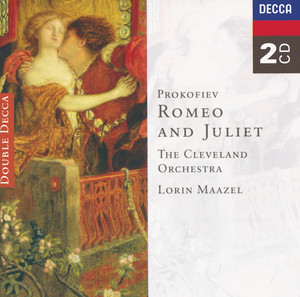 | Romeo and Juliet, Op.64 - Act 3: At Friar Laurence's Cell - Interlude | Sergei Prokofiev, Cleveland Orchestra, Lorin Maazel | F Major | 0 | 7B | 101 BPM | |
 | Variations for Orchestra, Op. 31: Introduktion | Arnold Schoenberg, Berliner Philharmoniker, Kirill Petrenko | C Major | 1 | 8B | 133 BPM | |
 | Das Rheingold, WWV 86A: Ride Donner's Thunderbolt, Crawl with the Thirst-Crazed Siegmund to the Haven (Temporary) of Sieglinde's Hearth and Solace | Richard Wagner, Berliner Philharmoniker, Lorin Maazel | A♭ Major | 0 | 4B | 70 BPM | |
 | Symphony No. 7 in B Minor, D. 759 "Unfinished": II. Andante con moto | Franz Schubert, Berliner Philharmoniker, Nikolaus Harnoncourt | E Major | 0 | 12B | 70 BPM | |
 | Symphony No. 1 in D Major, Op. 25 "Classical Symphony": III. Gavotte. Non troppo allegro | Sergei Prokofiev, Berliner Philharmoniker, Herbert von Karajan | F Minor | 1 | 4A | 62 BPM | |
 | Variations on a Theme by Haydn, Op. 56a: Finale. Andante | Johannes Brahms, Berliner Philharmoniker, Herbert von Karajan | B♭ Major | 1 | 6B | 125 BPM | |
 | Bruckner: Symphony No. 7 in E Major, WAB 107: I. Allegro moderato | Anton Bruckner, Daniel Barenboim, Berliner Philharmoniker | B Major | 1 | 1B | 78 BPM | |
 | Dvořák: Symphony No. 9 in E Minor, Op. 95, B. 178 "From the New World": III. Molto vivace | Antonín Dvořák, Herbert von Karajan, Berliner Philharmoniker | D♭ Minor | 1 | 12A | 86 BPM |
- ISRC
- USTE10305154
- Label
- L-M Records/RCA Records