- BPM
- 105
- Key
- A Minor
- Camelot
- 8A
The Rake's Progress, Act III Scene 2: Duet. How dark, how dark and dreadful Is This place (Tom, Nick) by Igor Stravinsky, Jayne West, Jon Garrison, Arthur Woodley, John Cheek, Shirley Love, Wendy White, Melvin Lowery, Jeffrey Johnson, Gregg Smith Singers, Orchestra of St. Luke's, Robert Craft Song Details
Igor Stravinsky, Jayne West, Jon Garrison, Arthur Woodley, John Cheek, Shirley Love, Wendy White, Melvin Lowery, Jeffrey Johnson, Gregg Smith Singers, Orchestra of St. Luke's, Robert Craft's 'The Rake's Progress, Act III Scene 2: Duet. How dark, how dark and dreadful Is This place (Tom, Nick)' had a release date set for May 26, 2009. With this song being around four minutes long, at 4:03, the duration of this song is pretty average compared to other songs. This track is safe for children and doesn't appear to contain any foul language, since the "Explicit" tag was not present in this track. There are a total of 73 in the song's album "Stravinsky, I.: Rake's Progress (The) [Opera]". In this album, this song's track order is #11. Furthermore, we believe that the track originated from Hong Kong. In terms of popularity, The Rake's Progress, Act III Scene 2: Duet. How dark, how dark and dreadful Is This place (Tom, Nick) is currently unknown. In our opinion, the overall tone is not very danceable and projects negative sounds, such as being sad, depressed, or angry.
BPM and Tempo
With The Rake's Progress, Act III Scene 2: Duet. How dark, how dark and dreadful Is This place (Tom, Nick) by Igor Stravinsky, Jayne West, Jon Garrison, Arthur Woodley, John Cheek, Shirley Love, Wendy White, Melvin Lowery, Jeffrey Johnson, Gregg Smith Singers, Orchestra of St. Luke's, Robert Craft having a BPM of 105 with a half-time of 52 BPM and a double-time of 210 BPM, we would consider this track to have a Andante (at a walking pace) tempo marking. Because of this, we believe that the song has an overall slow tempo. The time signature for this track is 1/4.
Music Key
This song is in the music key of A Minor. Which also means that the camelot key for this song is 8A. So, the perfect camelot match for 8A would be either 8A or 7B. While, a low energy boost can consist of either 8B or 9A. For moderate energy boost, you would use 5A and a high energy boost can either be 10A or 3A. However, if you are looking for a low energy drop, finding a song with a camelot key of 7A would be a great choice. Where 11A would give you a moderate drop, and 6A or 1A would be a high energy drop. Lastly, 11B allows you to change the mood.
Want to find the BPM and music key for other songs? Check out our BPM and Key Finder page!
- Popularity
- 0%
- Loudness
- -17.905 dB
- Acousticness
- 95%
- Danceability
- 36%
- Energy
- 33%
- Instrumentalness
- 1%
- Liveness
- 56%
- Loudness
- 70%
- Speechiness
- 9%
- Valence
- 28%
Recommendations
| Track | Artist | Key | Energy | Camelot | BPM | ||
|---|---|---|---|---|---|---|---|
 | Symphony No. 3 In C Minor, Op. 78 "Organ Symphony": 1. Adagio - Allegro moderato - Poco adagio | Camille Saint-Saëns, Simon Preston, Berliner Philharmoniker, James Levine | A♭ Major | 1 | 4B | 118 BPM | |
 | Tchaikovsky: Symphony No. 4 in F Minor, Op. 36: III. Scherzo (Pizzicato ostinato - Allegro) | Pyotr Ilyich Tchaikovsky, San Francisco Symphony, Michael Tilson Thomas | C Major | 1 | 8B | 156 BPM | |
 | Samson et Dalila: Bacchanale | Camille Saint-Saëns, Royal Stockholm Philharmonic Orchestra, James DePreist | D Minor | 1 | 7A | 122 BPM | |
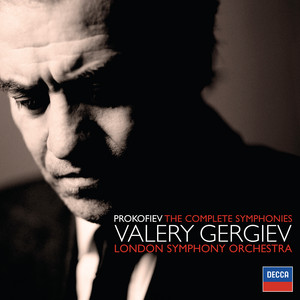 | Symphony No. 1 in D Major, Op. 25 "Classical Symphony": II. Larghetto | Sergei Prokofiev, London Symphony Orchestra, Valery Gergiev | A Major | 5 | 11B | 83 BPM | |
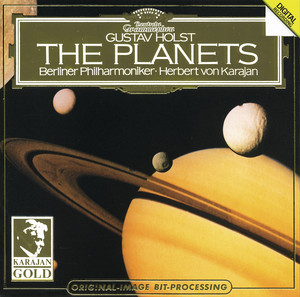 | The Planets, Op. 32: 5. Saturn, the Bringer of Old Age | Gustav Holst, Berliner Philharmoniker, Herbert von Karajan | C Major | 0 | 8B | 106 BPM | |
 | Prelude in C Sharp Minor, Op. 3, No. 2 (Arr. Orchestra) - Live | Sergei Rachmaninoff, Czech Philharmonic, Leopold Stokowski | E♭ Major | 4 | 5B | 124 BPM | |
 | Rachmaninov: Scherzo in D Minor | Sergei Rachmaninoff, Mariss Jansons, St. Petersburg Philharmonic Orchestra | D Minor | 1 | 7A | 109 BPM | |
 | Prokofiev: Suite No. 1 from Romeo and Juliet, Op. 64bis: VII. Death of Tybalt | Sergei Prokofiev, Oslo Philharmonic Orchestra, Mariss Jansons | G Major | 1 | 9B | 122 BPM | |
 | Oedipus Rex: Epilogue | Igor Stravinsky, Joseph Cornwell, Edward Fox, Andrew Greenan, Martyn Hill, Jennifer Lane, David Wilson-Johnson, Simon Joly Male Chorus, Philharmonia Orchestra, Robert Craft | D♭ Major | 6 | 3B | 90 BPM | |
 | Concerto for Orchestra, Sz. 116: IV. Intermezzo interrotto. Allegretto | Béla Bartók, Berliner Philharmoniker, Herbert von Karajan | F Major | 0 | 7B | 96 BPM | |
 | The Rite of Spring: Part One: Adoration of the Earth: Spring Rounds | Igor Stravinsky, Teodor Currentzis, musicAeterna | B♭ Minor | 0 | 3A | 135 BPM | |
 | Quatuor pour la fin du Temps: IV. Intermède | Olivier Messiaen, Martin Fröst | F♯ Major | 2 | 2B | 96 BPM | |
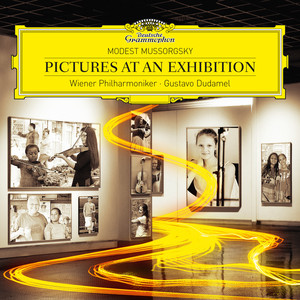 | Night on Bald Mountain | Modest Mussorgsky, Wiener Philharmoniker, Gustavo Dudamel | D Major | 2 | 10B | 69 BPM | |
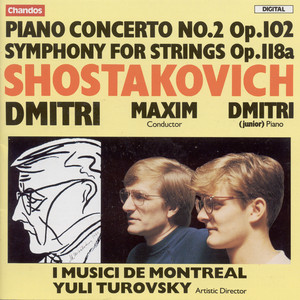 | Piano Concerto No. 2 in F Major, Op. 102: I. Allegro | Dmitri Shostakovich, I Musici de Montréal, Maxim Shostakovich | B♭ Major | 3 | 6B | 160 BPM | |
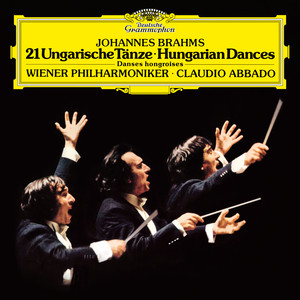 | 21 Hungarian Dances, WoO 1: No. 1 in G Minor. Allegro molto (Version for Orchestra) | Johannes Brahms, Wiener Philharmoniker, Claudio Abbado | G Minor | 2 | 6A | 142 BPM | |
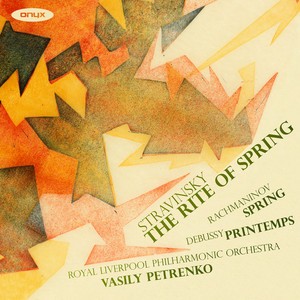 | The Rite of Spring, Part 1: I. Adoration of the Earth | Igor Stravinsky, Public Domain, Vasily Petrenko, Royal Liverpool Philharmonic Orchestra | D Major | 0 | 10B | 79 BPM | |
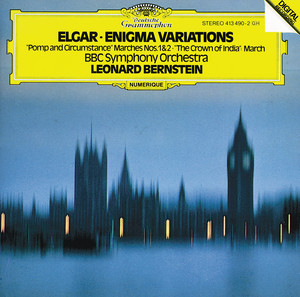 | Enigma Variations, Op. 36: Var. 1. L'istesso tempo "C.A.E." | Edward Elgar, BBC Symphony Orchestra, Leonard Bernstein | G Minor | 0 | 6A | 81 BPM | |
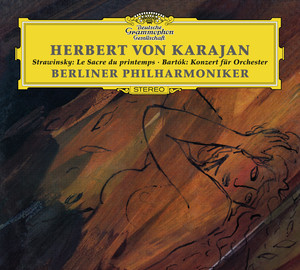 | Le Sacre du Printemps - Revised version for Orchestra (published 1947) / Part 2: The Sacrifice: Mystic Circles of the Young Girls | Igor Stravinsky, Berliner Philharmoniker, Herbert von Karajan | B Minor | 0 | 10A | 89 BPM | |
 | The Firebird, KC 10: VII. Danse infernale de tous les sujets de Kachtcheï | Igor Stravinsky, London Symphony Orchestra, Valery Gergiev | E Major | 3 | 12B | 149 BPM | |
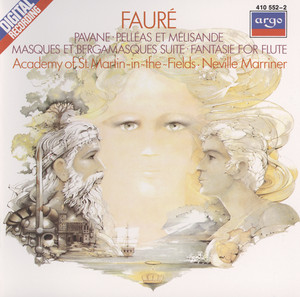 | Pelléas et Mélisande, Op.80: 3. Sicilienne | Gabriel Fauré, Academy of St. Martin in the Fields, Sir Neville Marriner | G Minor | 0 | 6A | 111 BPM | |
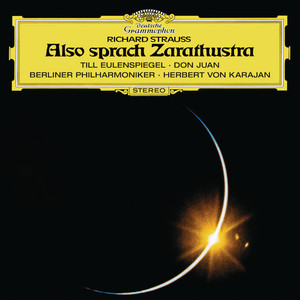 | Salome, Op. 54: Dance of the Seven Veils | Richard Strauss, Berliner Philharmoniker, Herbert von Karajan | F Major | 1 | 7B | 67 BPM | |
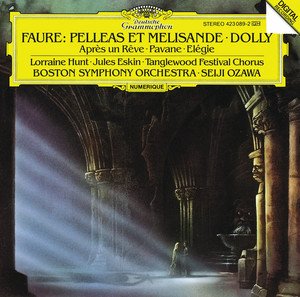 | Pelléas et Mélisande, Op.80: 2. Fileuse. Andantino quasi Allegretto | Gabriel Fauré, Boston Symphony Orchestra, Seiji Ozawa | G Major | 1 | 9B | 88 BPM | |
| Le Sacre du Printemps - Revised version for Orchestra (published 1947) / Part 2: The Sacrifice: Ritual Action of the Ancestors | Igor Stravinsky, Berliner Philharmoniker, Herbert von Karajan | D Minor | 0 | 7A | 108 BPM | |
 | Peer Gynt Suite No. 2, Op. 55: I. The Abduction of the Bride. Ingrid's Lament | Edvard Grieg, Berliner Philharmoniker, Herbert von Karajan | G Minor | 1 | 6A | 135 BPM | |
 | Stravinsky: The Rite of Spring, Pt. 2 "The Sacrifice": Sacrificial Dance | Igor Stravinsky, Riccardo Muti, Philadelphia Orchestra | G Minor | 5 | 6A | 132 BPM |
- ISRC
- HKI190908311
- Label
- L-M Records/RCA Records