- BPM
- 96
- Key
- C Major
- Camelot
- 8B
Le Carnaval des Animaux, R. 125: XIV. Finale by Camille Saint-Saëns, Lucas Jussen, Arthur Jussen, Royal Concertgebouw Orchestra Song Details
On March 24, 2017, the song "Le Carnaval des Animaux, R. 125: XIV. Finale" was released by Camille Saint-Saëns, Lucas Jussen, Arthur Jussen, Royal Concertgebouw Orchestra. The duration of This song is about two minutes long, specifically at 2:00. This song does not appear to have any foul language. Le Carnaval des Animaux, R. 125: XIV. Finale's duration is considered a little bit shorter than the average duration of a typical track. There are a total of 18 in the song's album "Saint-Saëns / Poulenc / Say". In this album, this song's track order is #14. Furthermore, we believe that the track originated from Netherlands. In terms of popularity, Le Carnaval des Animaux, R. 125: XIV. Finale is currently not that popular. The overall tone is very danceable, especially with its high energy, which produces more of a euphoric, cheerful, or happy vibe.
BPM and Tempo
With Le Carnaval des Animaux, R. 125: XIV. Finale by Camille Saint-Saëns, Lucas Jussen, Arthur Jussen, Royal Concertgebouw Orchestra having a BPM of 96 with a half-time of 48 BPM and a double-time of 192 BPM, we would consider this track to have a Andante (at a walking pace) tempo marking. Because of this, we believe that the song has an overall slow tempo. The time signature for this track is 4/4.
Music Key
C Major is the music key of this track. Or for those who are familiar with the camelot wheel, this song has a camelot key of 8B. So, the perfect camelot match for 8B would be either 8B or 9A. While, 9B can give you a low energy boost. For moderate energy boost, you would use 5B and a high energy boost can either be 10B or 3B. Though, if you want a low energy drop, you should looking for songs with either a camelot key of 8A or 7B will give you a low energy drop, 11B would be a moderate one, and 6B or 1B would be a high energy drop. Lastly, 5A allows you to change the mood.
Want to find the BPM and music key for other songs? Check out our BPM and Key Finder page!
- Popularity
- 10%
- Loudness
- -17.856 dB
- Acousticness
- 93%
- Danceability
- 65%
- Energy
- 32%
- Instrumentalness
- 63%
- Liveness
- 6%
- Loudness
- 70%
- Speechiness
- 4%
- Valence
- 82%
Recommendations
| Track | Artist | Key | Energy | Camelot | BPM | ||
|---|---|---|---|---|---|---|---|
 | Ancient Airs & Dances, Suite III, P. 172: I. Italiana (Anonymous) | Ottorino Respighi, Filarmonica della Scala, Riccardo Chailly | B♭ Major | 1 | 6B | 172 BPM | |
 | Peer Gynt Suite No.1 op. 46 Anitra's Dance (Tempo di Mazurka) | Academy of St. Martin in the Fields | E Minor | 0 | 9A | 168 BPM | |
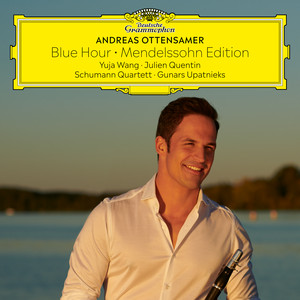 | Lieder ohne Worte I, Op. 19b: VI. Andante sostenuto "Venetian Gondola Song", MWV U78 (Arr. Ottensamer for Clarinet & Strings) | Felix Mendelssohn, Andreas Ottensamer, Schumann Quartett, Gunars Upatnieks | G Minor | 0 | 6A | 84 BPM | |
 | Myrthen, Op. 25 - Version for Cello and Piano: XXIV. Du bist wie eine Blume | Robert Schumann, Kian Soltani, Aaron Pilsan | F Major | 0 | 7B | 116 BPM | |
 | Gypsy Melodies, Op. 55, B. 104: IV. Songs My Mother Taught Me (Adapt. for Cello and Orchestra) | Antonín Dvořák, Camille Thomas, Brussels Philharmonic, Mathieu Herzog | C Minor | 1 | 5A | 100 BPM | |
 | Brook Green Suite: II. Air | Gustav Holst, English Sinfonia, Howard Griffiths | E♭ Major | 0 | 5B | 128 BPM | |
 | 4 Romantic Pieces, Op. 75, B. 150: I. Allegro moderato (Arr. Soltani For Solo Cello and Cello Ensemble) | Antonín Dvořák, Kian Soltani, Staatskapelle Berlin, Cellists | B♭ Major | 1 | 6B | 115 BPM | |
 | Sonata No. 13, Hob. XVI:6: III. Adagio | Joseph Haydn, Jean-Efflam Bavouzet | B♭ Major | 0 | 6B | 75 BPM | |
 | Introduction et Rondo capriccioso, Op.28, R. 188 | Camille Saint-Saëns, Itzhak Perlman, New York Philharmonic, Zubin Mehta | A Minor | 1 | 8A | 103 BPM | |
 | Saint-Saëns: Le carnaval des animaux, R 125: VII. Aquarium | Camille Saint-Saëns, Louis Frémaux, Brenda Lucas, John Ogdon, City Of Birmingham Symphony Orchestra | A Minor | 1 | 8A | 75 BPM | |
 | Symphony No. 5 In C Sharp Minor: 4. Adagietto (Sehr langsam) | Gustav Mahler, Gyeonggi Philharmonic Orchestra, Shi-Yeon Sung | F Major | 0 | 7B | 82 BPM | |
 | Nisi Dominus, RV 608 - Arr. Cello: 4. Cum dederit dilectis suis (Arr. Cello) | Antonio Vivaldi, Harriet Krijgh, Amsterdam Sinfonietta, Candida Thompson | G Minor | 0 | 6A | 106 BPM | |
 | Elgar: Salut d'amour, Op. 12 | Edward Elgar, Min Kym, Gordon Back | E Major | 1 | 12B | 86 BPM | |
 | Carnival of the Animals, R. 125: XIII. The Swan | Camille Saint-Saëns, Marian Lapsansky, Peter Toperczer, Slovak Radio Symphony Orchestra, Ondrej Lenard | G Major | 0 | 9B | 79 BPM | |
 | Scheherazade: The Young Prince | Nikolai Rimsky-Korsakov, Lars Hjalmar Joakim | G Major | 1 | 9B | 91 BPM | |
 | Adagio for Strings, Op. 11 | Samuel Barber, Leonard Bernstein, New York Philharmonic | B♭ Minor | 1 | 3A | 88 BPM | |
 | Masquerade Suite: Maskarad (Masquerade): I. Waltz | St. Petersburg State Symphony Orchestra, Aram Khachaturian | C Major | 3 | 8B | 94 BPM | |
 | Humoresque No. 7 in G-flat Major, Op. 101 | Boston Symphony Orchestra, Yo-Yo Ma, Seiji Ozawa, Itzhak Perlman | F♯ Major | 1 | 2B | 83 BPM | |
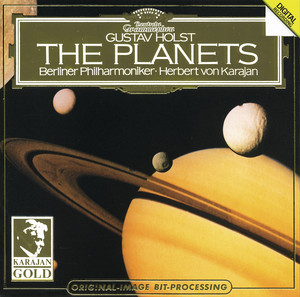 | The Planets, Op. 32: 4. Jupiter, the Bringer of Jollity | Gustav Holst, Berliner Philharmoniker, Herbert von Karajan | G Minor | 3 | 6A | 140 BPM | |
 | Kinderszenen | Robert Schumann, Ivan Moravec | F Major | 0 | 7B | 131 BPM | |
 | Shostakovich: Suite for Jazz Orchestra No. 1, Op. 38a: I. Waltz | Dmitri Shostakovich, Philadelphia Orchestra, Mariss Jansons | E♭ Major | 0 | 5B | 81 BPM | |
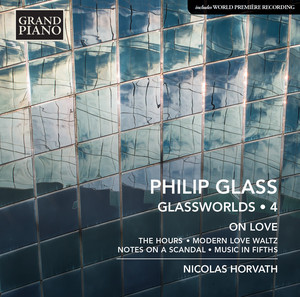 | An Unwelcome Friend (Arr. M. Riesman & N. Muhly for Solo Piano) | Philip Glass, Nicolas Horvath | B♭ Major | 0 | 6B | 74 BPM | |
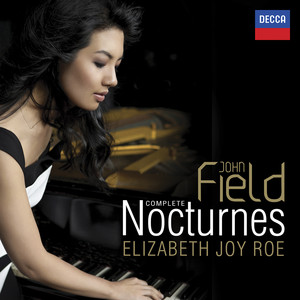 | Nocturne No. 1 in E-Flat Major, H. 24 | John Field, Elizabeth Joy Roe | E♭ Major | 0 | 5B | 75 BPM | |
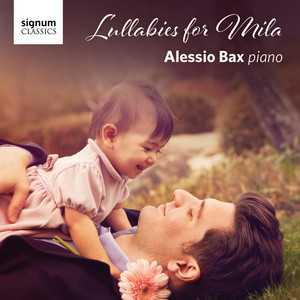 | Lyric Pieces, Book 5, Op. 54: Nocturne | Edvard Grieg, Alessio Bax | C Major | 0 | 8B | 72 BPM | |
 | 12 Songs, Op. 21: V. Lilacs (Transcr. Rachmaninoff for Solo Piano) | Sergei Rachmaninoff, Sergei Babayan | A♭ Major | 0 | 4B | 78 BPM |
- ISRC
- NLK4J1700014
- Label
- L-M Records/RCA Records