- BPM
- 129
- Key
- D♭ Major
- Camelot
- 3B
Le marchand de sable qui passe, Op. 13, Final Scene by Albert Roussel, Royal Scottish National Orchestra, Stéphane Denève Song Details
"Le marchand de sable qui passe, Op. 13, Final Scene" by Albert Roussel, Royal Scottish National Orchestra, Stéphane Denève had its release date on November 17, 2009. With this song being about 5 minutes long, at This song is fairly a long song compared to the average song length. This song does not have an "Explicit" tag, making it safe for all ages. There are a total of 9 in the song's album "Roussel, A.: Symphony No. 1, "Le Poeme De La Foret" / Resurrection / Le Marchand De Sable Qui Passe". In this album, this song's track order is #9. Furthermore, we believe that the track originated from Hong Kong. Based on our statistics, Le marchand de sable qui passe, Op. 13, Final Scene's popularity is not that popular right now. In our opinion, the overall tone is not very danceable and projects negative sounds, such as being sad, depressed, or angry.
BPM and Tempo
With Le marchand de sable qui passe, Op. 13, Final Scene by Albert Roussel, Royal Scottish National Orchestra, Stéphane Denève having a BPM of 129 with a half-time of 64 BPM and a double-time of 258 BPM, we would consider this track to have a Allegro (fast, quick, and bright) tempo marking. Because of this, we believe that the song has an overall fast tempo. Looking at the BPM of this song, this song might go great with walking. The time signature for this track is 3/4.
Music Key
D♭ Major is the music key of this track. Or for those who are familiar with the camelot wheel, this song has a camelot key of 3B. So, the perfect camelot match for 3B would be either 3B or 4A. While, 4B can give you a low energy boost. For moderate energy boost, you would use 12B and a high energy boost can either be 5B or 10B. Though, if you want a low energy drop, you should looking for songs with either a camelot key of 3A or 2B will give you a low energy drop, 6B would be a moderate one, and 1B or 8B would be a high energy drop. Lastly, 12A allows you to change the mood.
Want to find the BPM and music key for other songs? Check out our BPM and Key Finder page!
- Popularity
- 1%
- Loudness
- -33.694 dB
- Acousticness
- 92%
- Danceability
- 17%
- Energy
- 1%
- Instrumentalness
- 65%
- Liveness
- 8%
- Loudness
- 44%
- Speechiness
- 4%
- Valence
- 4%
Recommendations
| Track | Artist | Key | Energy | Camelot | BPM | ||
|---|---|---|---|---|---|---|---|
 | Symphony No. 3: I. Introduzione (Andante con moto) — Allegro con moto | Allan Pettersson, Christian Lindberg, Norrköping Symphony Orchestra | F Minor | 0 | 4A | 70 BPM | |
 | Variations on a theme by Haydn, Op. 56a "St. Anthony Variations": Finale | Johannes Brahms, Pittsburgh Symphony Orchestra, Marek Janowski | C Major | 1 | 8B | 60 BPM | |
| Variations on a theme by Haydn, Op. 56a "St. Anthony Variations": Var. IV | Johannes Brahms, Pittsburgh Symphony Orchestra, Marek Janowski | C Major | 1 | 8B | 60 BPM | |
 | Symphony No. 3 in G Minor, Op. 42, L. 53: III. Vivace | Albert Roussel, Neeme Järvi, Detroit Symphony Orchestra | D Major | 1 | 10B | 129 BPM | |
 | Debussy / Orch. Ansermet: Épigraphes antiques, CD 139, L. 131: No. 3, Pour que la nuit soit propice | Claude Debussy, Armin Jordan, Basler Sinfonie Orchester | E♭ Major | 0 | 5B | 121 BPM | |
 | Poulenc: Clarinet Sonata, FP 184: II. Romanza | Francis Poulenc, Sabine Meyer | G Minor | 0 | 6A | 67 BPM | |
 | Bronze Horseman Suite: IIb. Parasha. Andantino | Reinhold Glière, Sir Edward Downes, BBC Philharmonic | G Minor | 0 | 6A | 86 BPM | |
 | Neon Waves | Lumi Risto | D Major | 1 | 10B | 130 BPM | |
 | Suite en miniature, Op. 1: IV. Menuetto | Vitezslava Kaprálová, Appassionato, Mathieu Herzog | G Major | 2 | 9B | 168 BPM | |
 | Roumanian Folk Dances for Orchestra, BB 76 (Sz. 68): 4. Horn Dance (from Bisztra) | Béla Bartók, Chicago Symphony Orchestra, Sir Georg Solti | D Major | 1 | 10B | 170 BPM | |
 | Liebermann: Gargoyles, Op. 29: II. Adagio semplice, ma con molto rubato | Lowell Liebermann, Stephen Hough | A♭ Major | 0 | 4B | 99 BPM | |
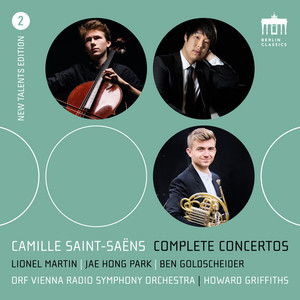 | Romance in F Major, Op. 36 | Camille Saint-Saëns, Ben Goldscheider, ORF Vienna Radio Symphony Orchestra, Howard Griffiths | F Major | 0 | 7B | 110 BPM | |
 | Variation 6: Sostenuto (quasi adagietto) | Max Reger, New Zealand Symphony Orchestra, Franz-Paul Decker | D Major | 1 | 10B | 74 BPM | |
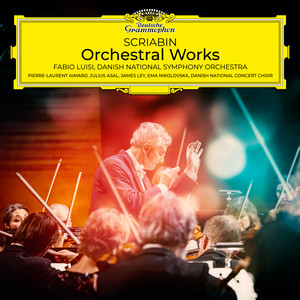 | Symphony No. 1 in E Major, Op. 26: III. Lento | Alexander Scriabin, Danish National Symphony Orchestra, Fabio Luisi | B♭ Minor | 2 | 3A | 86 BPM | |
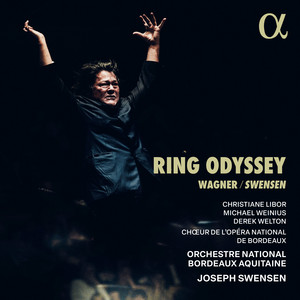 | Die Walküre, WWV 86B, Act I: Prelude - Thunderstorm, Sieglinde offers Shelter to Siegmund (Reworked by Joseph Swensen) | Richard Wagner, Orchestre National Bordeaux Aquitaine, Joseph Swensen | B♭ Major | 0 | 6B | 131 BPM | |
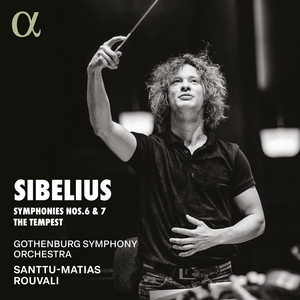 | Symphony No. 6 in D Major, Op. 104: III. Poco vivace | Jean Sibelius, Santtu-Matias Rouvali, Gothenburg Symphony Orchestra | G Major | 3 | 9B | 110 BPM | |
 | Le marchand de sable qui passe, Op. 13, Final Scene | Albert Roussel, Royal Scottish National Orchestra, Stéphane Denève | D♭ Major | 0 | 3B | 129 BPM | |
 | Rakastava, Op. 14: I. The Lover. Andante con moto | Jean Sibelius, Helsinki Philharmonic Orchestra, Susanna Mälkki | B♭ Major | 0 | 6B | 72 BPM | |
 | Respighi: Trittico botticelliano: III. La Nascita di Venere | Ottorino Respighi, Hugh Wolff, Saint Paul Chamber Orchestra | D♭ Minor | 1 | 12A | 112 BPM | |
 | Stravinsky: Concerto in E-Flat Major "Dumbarton Oaks": I. Tempo giusto | Igor Stravinsky, Sir Neville Marriner, Los Angeles Chamber Orchestra | B♭ Major | 3 | 6B | 96 BPM | |
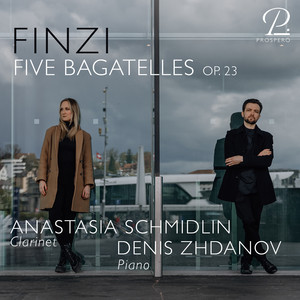 | 5 Bagatelles, Op. 23: No. 2, Romance | Gerald Finzi, Anastasia Schmidlin, Denis Zhdanov | F Minor | 0 | 4A | 70 BPM | |
 | Roussel: Symphony No. 1 in D Minor, Op. 7 "Le poème de la forêt": III. Soir d'été | Albert Roussel, Charles Dutoit, Orchestre National De France | F♯ Major | 0 | 2B | 75 BPM | |
 | Symphony No. 8: III. Volante | Mihkel Kerem, Royal Liverpool Philharmonic Orchestra, Andrew Manze | F Minor | 0 | 4A | 70 BPM | |
 | Larghetto in G Major, Op. 11: I. Larghetto espressivo | Louis Ferdinand Von Preußen, Trio Parnassus, Thomas Selditz, Stanislau Anishchanka | B Major | 2 | 1B | 100 BPM | |
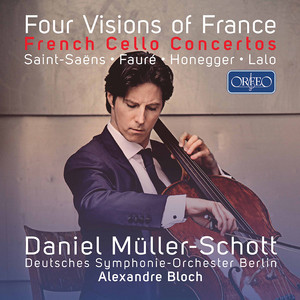 | Cello Concerto No. 1 in A Minor, Op. 33, R. 193: III. Allegro non troppo | Camille Saint-Saëns, Daniel Müller-Schott, Deutsches Symphonie-Orchester Berlin, Alexandre Bloch | F Major | 0 | 7B | 78 BPM |
- ISRC
- HKI190934009
- Label
- L-M Records/RCA Records