- BPM
- 130
- Key
- D Major
- Camelot
- 10B
Piano Album I: A Christmas Card for Mary and Rosemary by Ned Rorem, Carolyn Enger Song Details
Ned Rorem, Carolyn Enger's ' "Piano Album I: A Christmas Card for Mary and Rosemary" was released on its scheduled release date, October 1, 2013. With This song being less than two minutes long, at 1:52, we are fairly confident that this song is not explicit and is safe for all ages. Based on the duration of this song, this song duration is much smaller than the average song duration. There are a total of 33 in the song's album "Rorem: Piano Album I & Six Friends". In this album, this song's track order is #18. Furthermore, we believe that the track originated from Hong Kong. Based on our statistics, Piano Album I: A Christmas Card for Mary and Rosemary's popularity is not that popular right now. Even with the track produces more of a neutral energy, it is pretty danceable compared to others.
BPM and Tempo
With Piano Album I: A Christmas Card for Mary and Rosemary by Ned Rorem, Carolyn Enger having a BPM of 130 with a half-time of 65 BPM and a double-time of 260 BPM, we would consider this track to have a Allegro (fast, quick, and bright) tempo marking. Because of this, we believe that the song has an overall fast tempo. Looking at the BPM of this song, this song might go great with walking. The time signature for this track is 4/4.
Music Key
This song has a musical key of D Major. Or for those who are familiar with the camelot wheel, this song has a camelot key of 10B. So, the perfect camelot match for 10B would be either 10B or 11A. While, 11B can give you a low energy boost. For moderate energy boost, you would use 7B and a high energy boost can either be 12B or 5B. Though, if you want a low energy drop, you should looking for songs with either a camelot key of 10A or 9B will give you a low energy drop, 1B would be a moderate one, and 8B or 3B would be a high energy drop. Lastly, 7A allows you to change the mood.
Want to find the BPM and music key for other songs? Check out our BPM and Key Finder page!
- Popularity
- 2%
- Loudness
- -31.1 dB
- Acousticness
- 100%
- Danceability
- 67%
- Energy
- 1%
- Instrumentalness
- 93%
- Liveness
- 9%
- Loudness
- 48%
- Speechiness
- 60%
- Valence
- 58%
Recommendations
| Track | Artist | Key | Energy | Camelot | BPM | ||
|---|---|---|---|---|---|---|---|
 | 6 Romances, Op. 4: No. 4, Do Not Sing, My Beauty (Arr. for Cello & Piano by Meredith Blecha-Wells & Sun Min Kim) | Sergei Rachmaninoff, Meredith Blecha-Wells, Sun Min Kim | D Minor | 2 | 7A | 73 BPM | |
 | Eine Alpensinfonie, Op. 64, TrV 233: Nacht (2) | Richard Strauss, Finnish Radio Symphony Orchestra, Nicholas Collon | F♯ Minor | 3 | 11A | 129 BPM | |
 | 4 Pictures for Piano Duet: No. 4, Quite Slow and Sad | Edward Gregson, Murray McLachlan, Rose McLachlan | F Major | 1 | 7B | 135 BPM | |
 | Sæverud: Tunes and Dances from Siljustol, Book IV, Op. 25: No. 4, Tone's Cradle Song | Harald Sæverud, Leif Ove Andsnes | B Minor | 0 | 10A | 63 BPM | |
 | Cats on the piano | Aurelio Scotto, ReWind Ensemble | C Major | 1 | 8B | 120 BPM | |
 | Songs of Love: IV. Then Time Stopped (Version for Saxophone Quartet) | Pēteris Vasks, Signum Saxophone Quartet | F♯ Minor | 0 | 11A | 77 BPM | |
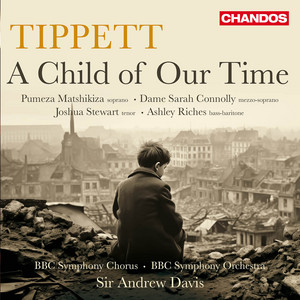 | A Child of our Time, Part I: The world turns on its dark side (Chorus) | Michael Tippett, BBC Symphony Chorus, BBC Symphony Orchestra, Andrew Davis | E Minor | 0 | 9A | 64 BPM | |
 | Concerto for English Horn and Orchestra: II. Love Letter | Ned Rorem, Thomas Stacy, Michael Palmer, Rochester Philharmonic Orchestra | B♭ Major | 0 | 6B | 108 BPM | |
 | Autumn Gardens: II. Tranquillo | Einojuhani Rautavaara, Helsinki Philharmonic Orchestra, Vladimir Ashkenazy | C Major | 0 | 8B | 78 BPM | |
 | Dances: No. 2, Passacaglia | Tõnu Kõrvits, Ksenija Sidorova, Estonian Festival Orchestra, Paavo Järvi | A Major | 0 | 11B | 166 BPM | |
 | Zwei Dialoge mit Nachwort: I. Hochzeitswalzer | Valentin Silvestrov, Alexei Lubimov, Munich Chamber Orchestra, Christoph Poppen | F♯ Major | 0 | 2B | 175 BPM | |
 | Sea-Weed Song, Op. 12c | Ruth Gipps, Juliana Koch, Michael McHale | C Minor | 0 | 5A | 77 BPM | |
 | Blumenleben, Op. 19: No. 7, Lilien | Dora Pejačević, Natasa Veljkovic | C Major | 3 | 8B | 80 BPM | |
 | Les chemins de l'amour, FP 106 (Arr. for Oboe and Piano by Serol Yapici) | Francis Poulenc, Serol Yapici, Tudor Cioceanu | A Major | 0 | 11B | 166 BPM | |
 | Cello Concerto in A Minor, Op. 129: IIa. Sehr langsam | Robert Schumann, Kian Soltani, Camerata Salzburg, Gregory Ahss | E Major | 0 | 12B | 113 BPM | |
 | Symphony No. 3: Andante | Bournemouth Symphony Orchestra, Ned Rorem | A Minor | 0 | 8A | 91 BPM | |
 | The Nightmare Song | Olive the Otter Dog | B Major | 0 | 1B | 166 BPM | |
 | Phantasy Quintet: III. Alla Sarabanda | Ralph Vaughan Williams, Piatti Quartet, Zahra Benyounes | A Major | 0 | 11B | 166 BPM | |
 | Viel Lärmen um Nichts, Op. 11, Act III Scene 1: Intermezzo | Erich Wolfgang Korngold, Holst Sinfonietta, Klaus Simon | C Major | 0 | 8B | 96 BPM | |
 | String Quartet No. 8 in C Minor, Op. 110 (Arr. for Wind Ensemble by David Walter): I. Largo | Dmitri Shostakovich, Ensemble Ouranos | A Major | 0 | 11B | 166 BPM | |
 | Sing My Soul, His Wondrous Love | Ned Rorem, St Martin's Voices, Andrew Earis | A♭ Major | 1 | 4B | 91 BPM | |
 | Das Lied von der Erde: V. Der Trunkene im Frühling. Allegro | Gustav Mahler, Les Siècles, François-Xavier Roth, Andrew Staples | A Major | 0 | 11B | 166 BPM | |
 | Les Danses de Ravel (After Le Tombeau de Couperin): I. Prélude | Franck Tortiller, Quatuor Debussy | E Minor | 2 | 9A | 75 BPM | |
 | 8 Children's Pieces, Op. 12a "The Open Window": No. 7, The Green | George Dyson, Simon Callaghan | C Major | 0 | 8B | 70 BPM | |
| Trauermusik: IV. Choral (Arr. for Saxophone Quartet and Cello) | Paul Hindemith, Signum Saxophone Quartet, Hila Karni | B Minor | 0 | 10A | 70 BPM |
- ISRC
- HKI191318018
- Label
- L-M Records/RCA Records