- BPM
- 101
- Key
- G Minor
- Camelot
- 6A
Der Bettelstudent, Act I: Dialog 1 (Ollendorf) by Carl Millöcker, Georg Stern Song Details
"Der Bettelstudent, Act I: Dialog 1 (Ollendorf)" by Carl Millöcker, Georg Stern had its release date on September 29, 2014. The duration of This song is about two minutes long, specifically at 2:13. This song does not appear to have any foul language. Der Bettelstudent, Act I: Dialog 1 (Ollendorf)'s duration is considered a little bit shorter than the average duration of a typical track. The track order of this song in Carl Millöcker, Sinfonieorchester des Hessischen Rundfunks, Kurt Schröder, Else Tegetthoff, Betina Brucker's "Millöcker: Der Bettelstudent" album is number 3 out of 34. On top of that, Germany appears to be the country where this track was created. In terms of popularity, Der Bettelstudent, Act I: Dialog 1 (Ollendorf) is currently unknown. Although the tone can be danceable to some, this track does projects more of a negative sound rather than a postive one.
BPM and Tempo
We consider the tempo marking of Der Bettelstudent, Act I: Dialog 1 (Ollendorf) by Carl Millöcker, Georg Stern to be Andante (at a walking pace) because the track has a tempo of 101 BPM, a half-time of 50BPM, and a double-time of 202 BPM. Based on that, the speed of the song's tempo is slow. The time signature for this track is 5/4.
Music Key
G Minor is the music key of this track. Because this track belongs in the G Minor key, the camelot key is 6A. So, the perfect camelot match for 6A would be either 6A or 5B. While, a low energy boost can consist of either 6B or 7A. For moderate energy boost, you would use 3A and a high energy boost can either be 8A or 1A. However, if you are looking for a low energy drop, finding a song with a camelot key of 5A would be a great choice. Where 9A would give you a moderate drop, and 4A or 11A would be a high energy drop. Lastly, 9B allows you to change the mood.
Want to find the BPM and music key for other songs? Check out our BPM and Key Finder page!
- Popularity
- 0%
- Loudness
- -8.395 dB
- Acousticness
- 81%
- Danceability
- 52%
- Energy
- 88%
- Instrumentalness
- 0%
- Liveness
- 7%
- Loudness
- 86%
- Speechiness
- 48%
- Valence
- 18%
Recommendations
| Track | Artist | Key | Energy | Camelot | BPM | ||
|---|---|---|---|---|---|---|---|
 | Viktoria und ihr Husar: Reich' mir zum Abschied noch einmal die Hände | Paul Abraham, Sandor Konya, Herta Talmar, Grosses Operetten Orchester, Franz Marszalek | B♭ Major | 3 | 6B | 110 BPM | |
 | Das Sonntagskind: Sonntagskind-Walzer nach Motiven | Carl Millöcker, Nürnberger Philharmoniker, Christian Simonis | E♭ Major | 1 | 5B | 177 BPM | |
 | Donizetti: Don Pasquale, Act 2: "Povero Ernesto!" (Ernesto) | Gaetano Donizetti, Riccardo Muti, Gösta Winbergh, Philharmonia Orchestra | C Minor | 0 | 5A | 68 BPM | |
 | Lehár: Die lustige Witwe, Act 3: "Lippen schweigen" (Hanna, Count Danilo) | Franz Lehár, Diana Damrau, David Charles Abell, Royal Liverpool Philharmonic Orchestra | G Major | 2 | 9B | 78 BPM | |
 | Hereinspaziert, op. 518, Walzer | Großes Wiener Rundfunkorchester, Robert Stolz | G Major | 3 | 9B | 68 BPM | |
 | Rigoletto: Scorrendo uniti remota via | Chor der Deutschen Oper Berlin, Orchester der Deutschen Oper Berlin, Rafael Frühbeck de Burgos | A Major | 1 | 11B | 118 BPM | |
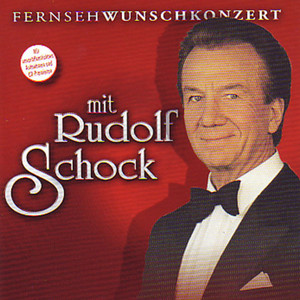 | O Mädchen, mein Mädchen | Rudolf Schock | G Major | 2 | 9B | 80 BPM | |
 | Als flotter Geist | Rudolf Schock | C Major | 3 | 8B | 94 BPM | |
 | Hino 13 - Confiemos em Deus | Orquestra Sacra Paulista | A♭ Major | 0 | 4B | 133 BPM | |
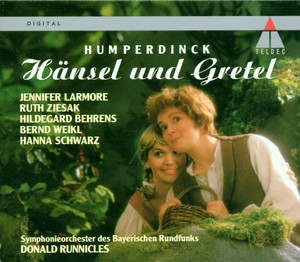 | Humperdinck : Hänsel und Gretel : Act 1 "So recht! Und willst du nun nicht mehr klagen" [Gretel, Hänsel] | Engelbert Humperdinck, Donald Runnicles, Bavarian Radio Symphony Orchestra | G Minor | 1 | 6A | 127 BPM | |
 | Der Freischütz, Op. 77, J. 277: Jägerchor | Carl Maria von Weber, Radio Kamer Filharmonie, Groot Omroepkoor, Michael Schønwandt, Michael Gläser | D♭ Major | 2 | 3B | 123 BPM | |
 | バレエ組曲「眠りの森の美女」 パ・ド・カトル - イントラーダ - ワルツ | Berliner Philharmoniker, ニューフィルハーモニア管弦楽団 | C Major | 1 | 8B | 119 BPM | |
 | 21 Hungarian Dances, WoO 1: No. 1 in G Minor | Johannes Brahms, Swedish Chamber Orchestra, Thomas Dausgaard | G Minor | 2 | 6A | 144 BPM | |
 | Symphony No. 1, GMW 11: IIIb. A tempo. Ziemlich langsam | Gustav Mahler, Tonhalle-Orchester Zürich, Paavo Järvi | D Major | 4 | 10B | 87 BPM | |
 | Hänsel und Gretel, Act I: Suse, liebe Suse (Gretel, Hänsel) | Engelbert Humperdinck, Donald Runnicles, Jennifer Larmore, Ruth Ziesak, Symphonieorchester des Bayerischen Rundfunks | F Major | 1 | 7B | 89 BPM | |
 | Dronning Louise Vals (1868) | Hans Christian Lumbye, Tivoli Symphony Orchestra | A Major | 2 | 11B | 105 BPM | |
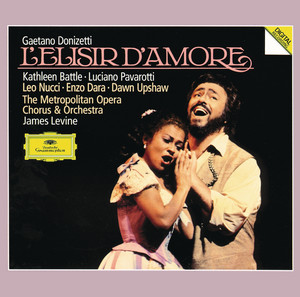 | L'elisir d'amore / Act I: Marziale | Gaetano Donizetti, Metropolitan Opera Orchestra, James Levine | C Major | 2 | 8B | 130 BPM | |
 | Die Dubarry - operetta: Wie schön ist alles | Carl Millöcker, Heinz Hoppe, Ingeborg Hallstein, Gunter Kallmann Choir, Orchester Franz Marszalek, Franz Marszalek | E♭ Major | 3 | 5B | 75 BPM | |
 | Im weißen Rössl · Operette in 3 Akten (1988 - Remaster), Erster Akt: Introduktion (Reiseführer) | Ralph Benatzky, Grit van Jüten/Peter Minich/Benno Hoffmann/Norbert Orth/Peter Kraus/Elke Schary/Hans Putz/Werner Singh/Chor des Bayerischen Rundfunks/Münchner Kinderchor/Münchner Rundfunkorchester/Willy Mattes/Anneliese Rothenberger, Willy Mattes, Muenchner Rundfunkorchester, Munich Radio Orchestra | B♭ Major | 4 | 6B | 96 BPM | |
 | Adriana Lecouvreur / Act II: "Acerba voluttà, dolce tortura ... O vagabonda stella d'Oriente" | Francesco Cilea, Elina Garanca, Orquestra de la Comunitat Valenciana, Roberto Abbado | F Major | 2 | 7B | 177 BPM | |
 | Aïda Marche triomphale | Arthur Fiedler, Boston Pops Orchestra | D Major | 3 | 10B | 100 BPM | |
 | Ich schenk' mein Herz | Carl Millöcker, Gitta Alpar, Odeon-Künstler-Orchester, Theo Mackeben | D Major | 2 | 10B | 74 BPM | |
 | Un ballo in maschera: Overture | Giuseppe Verdi, Orchestra dell'Accademia Nazionale di Santa Cecilia, Bruno Bartoletti | B♭ Minor | 3 | 3A | 87 BPM | |
 | Frau Luna: Ouvertüre | Paul Lincke, Hamburger Rundfunkorchester, Wilhelm Stephan | A Major | 4 | 11B | 75 BPM | |
 | I Will Be There | Mako | F Major | 2 | 7B | 61 BPM |
- ISRC
- DEHB51284645
- Label
- L-M Records/RCA Records