- BPM
- 101
- Key
- G Major
- Camelot
- 9B
Gershwin / Arr. Riddle: They Can't Take That Away from Me by George Gershwin, Yehudi Menuhin, Allan Ganley, David Snell, Derek Price, Eddie Tripp, Laurie Holloway, Martin Taylor, Ray Swinfield, Nelson Riddle Song Details
George Gershwin, Yehudi Menuhin, Allan Ganley, David Snell, Derek Price, Eddie Tripp, Laurie Holloway, Martin Taylor, Ray Swinfield, Nelson Riddle's ' "Gershwin / Arr. Riddle: They Can't Take That Away from Me" was released on its scheduled release date, 1988. With this song being about 5 minutes long, at This song is fairly a long song compared to the average song length. This song does not have an "Explicit" tag, making it safe for all ages. The track order of this song in George Gershwin, Yehudi Menuhin, Stéphane Grappelli's "Menuhin and Grappelli play ... Gershwin" album is number 12 out of 16. On top of that, United Kingdom appears to be the country where this track was created. In terms of popularity, Gershwin / Arr. Riddle: They Can't Take That Away from Me is currently not that popular. Based on the vibe, this track doesn't seem to be that danceable, however its valence properties can make this some somewhat danceable.
BPM and Tempo
We consider the tempo marking of Gershwin / Arr. Riddle: They Can't Take That Away from Me by George Gershwin, Yehudi Menuhin, Allan Ganley, David Snell, Derek Price, Eddie Tripp, Laurie Holloway, Martin Taylor, Ray Swinfield, Nelson Riddle to be Andante (at a walking pace) because the track has a tempo of 101 BPM, a half-time of 50BPM, and a double-time of 202 BPM. Based on that, the speed of the song's tempo is slow. The time signature for this track is 4/4.
Music Key
This song is in the music key of G Major. This also means that this song has a camelot key of 9B. So, the perfect camelot match for 9B would be either 9B or 10A. While, 10B can give you a low energy boost. For moderate energy boost, you would use 6B and a high energy boost can either be 11B or 4B. Though, if you want a low energy drop, you should looking for songs with either a camelot key of 9A or 8B will give you a low energy drop, 12B would be a moderate one, and 7B or 2B would be a high energy drop. Lastly, 6A allows you to change the mood.
Want to find the BPM and music key for other songs? Check out our BPM and Key Finder page!
- Popularity
- 3%
- Loudness
- -19.231 dB
- Acousticness
- 71%
- Danceability
- 35%
- Energy
- 22%
- Instrumentalness
- 0%
- Liveness
- 12%
- Loudness
- 68%
- Speechiness
- 5%
- Valence
- 55%
Recommendations
| Track | Artist | Key | Energy | Camelot | BPM | ||
|---|---|---|---|---|---|---|---|
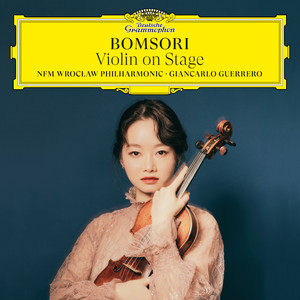 | Thaïs: Méditation | Jules Massenet, Bomsori, NFM Wrocław Philharmonic, Giancarlo Guerrero | D Major | 0 | 10B | 84 BPM | |
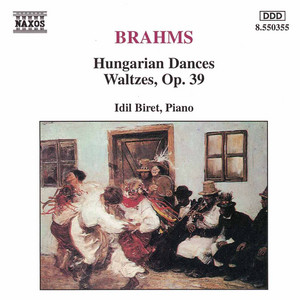 | 16 Waltzes, Op. 39: No. 15 In A Flat Major | Johannes Brahms, Idil Biret | A♭ Major | 0 | 4B | 68 BPM | |
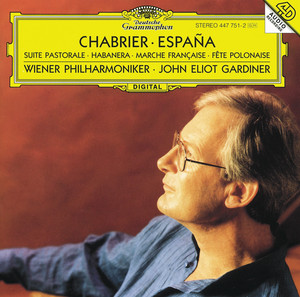 | Suite pastorale: I. Idylle | Emmanuel Chabrier, Wiener Philharmoniker, John Eliot Gardiner | F Major | 0 | 7B | 105 BPM | |
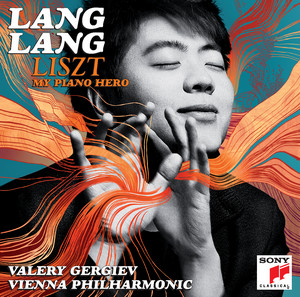 | Romance "O pourquoi donc" in E Minor, S. 169 | Franz Liszt, Lang Lang | E Minor | 0 | 9A | 67 BPM | |
 | Le carnaval des animaux, R. 125: Le cygne | Camille Saint-Saëns, Mischa Maisky, Orpheus Chamber Orchestra | C Major | 0 | 8B | 83 BPM | |
 | Capriol Suite: 5. Pied-en- l'air | Peter Warlock, Academy of St. Martin in the Fields, Nicholas Kraemer, Sir Neville Marriner | G Major | 1 | 9B | 113 BPM | |
 | Carmen Suite No. 1 (Arr. E. Guiraud): IV. Séguedille | Georges Bizet, Orquestra Simfònica de Barcelona i Nacional de Catalunya, Pablo González | G Minor | 0 | 6A | 66 BPM | |
 | Elite Synchopations (1902) | Scott Joplin, Joshua Rifkin | F Major | 2 | 7B | 100 BPM | |
 | Novelette in Fourths | George Gershwin | E♭ Major | 1 | 5B | 89 BPM | |
 | Adoration (Arr. Gray for Violin & Orchestra) | Florence Beatrice Price, Randall Goosby, Philadelphia Orchestra, Yannick Nézet-Séguin | D Major | 3 | 10B | 74 BPM | |
 | Les biches Suite, FP 36b: I. Rondeau | Francis Poulenc, RTÉ National Symphony Orchestra, Jean-Luc Tingaud | C Major | 1 | 8B | 79 BPM | |
 | Violin Concerto No. 1 in G Minor, Op. 26: III. Allegro energico | Max Bruch, Itzhak Perlman, Bernard Haitink, Royal Concertgebouw Orchestra | G Major | 3 | 9B | 97 BPM | |
 | Straussiana | Erich Wolfgang Korngold, John Wilson, Sinfonia Of London | B♭ Major | 2 | 6B | 153 BPM | |
| Violin Concerto No. 1 in G Minor, Op. 26: II. Adagio | Max Bruch, Itzhak Perlman, Bernard Haitink, Royal Concertgebouw Orchestra | E♭ Major | 1 | 5B | 87 BPM | |
 | Bruch : Violin Concerto No.1 in G minor Op.26 : III Finale - Allegro energico | Max Bruch, Maxim Vengerov, Kurt Masur, Gewandhausorchester Leipzig | G Major | 2 | 9B | 90 BPM | |
 | The Lark | Mikhail Glinka, Evgeny Kissin | B♭ Minor | 0 | 3A | 96 BPM | |
 | Valse Vanité | Rudy Wiedoeft, Jess Gillam, Zeynep Özsuca | A♭ Major | 2 | 4B | 86 BPM | |
 | Pictures At An Exhibition: Promenade I | Modest Mussorgsky, Chicago Symphony Orchestra, Carlo Maria Giulini | F Major | 1 | 7B | 79 BPM | |
 | Scheherezade, Op. 35: I. The Sea and Sinbad's Ship | Nikolai Rimsky-Korsakov, Pelin Halkacı Alkın, Sascha Goetzel, Borusan Istanbul Philharmonic Orchestra | E Minor | 1 | 9A | 70 BPM | |
 | Violin Concerto in D Minor, Op. 47: III. Allegro, ma non tanto | Jean Sibelius, Anne-Sophie Mutter, Staatskapelle Dresden, André Previn | D Major | 2 | 10B | 112 BPM | |
 | Appalachian Spring Suite: I. Very Slowly | Aaron Copland, Los Angeles Philharmonic, Zubin Mehta | A Major | 0 | 11B | 71 BPM | |
 | Nocturne No. 7 in Eb Major, FP. 56 | Francis Poulenc, Belle Chen | F Minor | 1 | 4A | 76 BPM | |
 | Sibelius: Valse triste, Op. 44 | Jean Sibelius, San Francisco Symphony, Michael Tilson Thomas | G Major | 0 | 9B | 102 BPM | |
 | Ludus pro Patria, La Nuit et l'Amour: La Nuit et l'Amour: Interlude de l'ode symphonique - Ludus pro Patria | Augusta Holmès, Staatsphilharmonie Rheinland-Pfalz, Patrick Davin | B♭ Major | 0 | 6B | 78 BPM | |
 | Scaramouche Suite: 3. Brazileira | Darius Milhaud, Jess Gillam, Tippett Quartet, Andee Birkett, Zeynep Özsuca | F Major | 4 | 7B | 92 BPM |
- ISRC
- GBAYC8100111
- Label
- L-M Records/RCA Records