- BPM
- 118
- Key
- D Major
- Camelot
- 10B
Symphony No. 5: V. Rondo-Finale. Allegro by Gustav Mahler, Chicago Symphony Orchestra, Claudio Abbado Song Details
"Symphony No. 5: V. Rondo-Finale. Allegro" by Gustav Mahler, Chicago Symphony Orchestra, Claudio Abbado had its release date on January 1, 1981. This song appears to be safe for all ages as it is not explicit. The track order of this song in Gustav Mahler, Chicago Symphony Orchestra, Claudio Abbado's "Mahler: Symphony No. 5" album is number 5 out of 5. On top of that, Germany appears to be the country where this track was created. In terms of popularity, Symphony No. 5: V. Rondo-Finale. Allegro is currently not that popular. In our opinion, the overall tone is not very danceable and projects negative sounds, such as being sad, depressed, or angry.
BPM and Tempo
We consider the tempo marking of Symphony No. 5: V. Rondo-Finale. Allegro by Gustav Mahler, Chicago Symphony Orchestra, Claudio Abbado to be Moderato (at a moderate speed) because the track has a tempo of 118 BPM, a half-time of 59BPM, and a double-time of 236 BPM. Based on that, the speed of the song's tempo is moderate. Activities such as, walking, can go well with this song. The time signature for this track is 4/4.
Music Key
This song is in the music key of D Major. This also means that this song has a camelot key of 10B. So, the perfect camelot match for 10B would be either 10B or 11A. While, 11B can give you a low energy boost. For moderate energy boost, you would use 7B and a high energy boost can either be 12B or 5B. Though, if you want a low energy drop, you should looking for songs with either a camelot key of 10A or 9B will give you a low energy drop, 1B would be a moderate one, and 8B or 3B would be a high energy drop. Lastly, 7A allows you to change the mood.
Want to find the BPM and music key for other songs? Check out our BPM and Key Finder page!
- Popularity
- 12%
- Loudness
- -18.282 dB
- Acousticness
- 91%
- Danceability
- 29%
- Energy
- 20%
- Instrumentalness
- 81%
- Liveness
- 4%
- Loudness
- 70%
- Speechiness
- 5%
- Valence
- 18%
Recommendations
| Track | Artist | Key | Energy | Camelot | BPM | ||
|---|---|---|---|---|---|---|---|
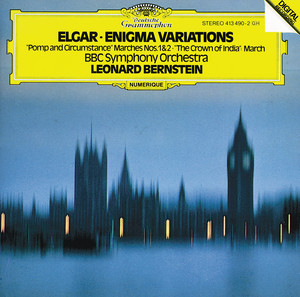 | Enigma Variations, Op. 36: Var. 8. Allegretto "W.N." | Edward Elgar, BBC Symphony Orchestra, Leonard Bernstein | G Major | 0 | 9B | 84 BPM | |
 | Khachaturian: Spartacus (Highlights from the Ballet): Adagio of Spartacus and Phrygia | Aram Khachaturian, London Symphony Orchestra | A♭ Major | 1 | 4B | 88 BPM | |
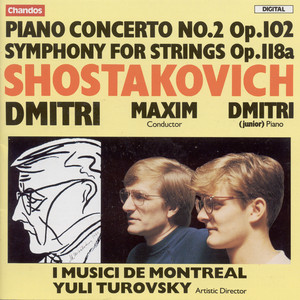 | Piano Concerto No. 2 in F Major, Op. 102: II. Andante | Dmitri Shostakovich, I Musici de Montréal, Maxim Shostakovich | C Minor | 0 | 5A | 177 BPM | |
 | Piano Concerto in F-Sharp Minor, Op. 20: I. Allegro | Alexander Scriabin, Konstantin Scherbakov, Moscow Philharmonic Orchestra, Igor Golovschin | E♭ Major | 0 | 5B | 81 BPM | |
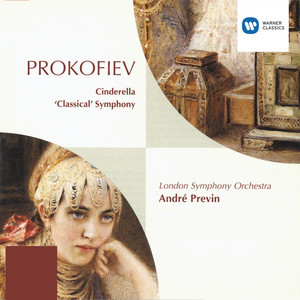 | Prokofiev: Symphony No. 1 in D Major, Op. 25 "Classical": II. Larghetto | Sergei Prokofiev, André Previn, London Symphony Orchestra | A Major | 0 | 11B | 104 BPM | |
 | Háry János Suite: I. Prelude. The Fairy Tale Begins | Zoltán Kodály, Neeme Järvi, Chicago Symphony Orchestra, Laurence Kaptain | F Major | 1 | 7B | 84 BPM | |
 | Holberg Suite, Op. 40: II. Sarabande (Andante) | Edvard Grieg, Gothenburg Symphony Orchestra, Neeme Järvi | A Major | 1 | 11B | 87 BPM | |
 | Quatuor pour la fin du Temps: V. Louange à l'éternité de Jésus | Olivier Messiaen, Lucas Debargue, Torleif Thedéen | E Major | 0 | 12B | 81 BPM | |
 | Symphony No.2 in C minor - "Resurrection" / 5th Movement: Langsam. Misterioso (Chorus: "Aufersteh'n") | Gustav Mahler, Latonia Moore, Wiener Philharmoniker, Gilbert Kaplan, Wiener Singverein, Johannes Prinz | F♯ Major | 0 | 2B | 78 BPM | |
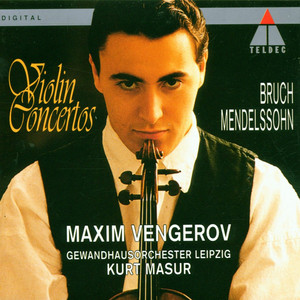 | Bruch: Violin Concerto No. 1 in G Minor, Op. 26: I. Prelude. Allegro moderato | Max Bruch, Maxim Vengerov, Kurt Masur, Gewandhausorchester | E♭ Major | 1 | 5B | 113 BPM | |
| Pomp and Circumstance March No. 2 in A Minor, Op. 39/2 | Edward Elgar, BBC Symphony Orchestra, Leonard Bernstein | B Minor | 2 | 10A | 132 BPM | |
| Symphony No. 2 In C Minor - "Resurrection" / 1st Movement - Allegro maestoso (Totenfeier): Im Tempo nachgeben | Gustav Mahler, Wiener Philharmoniker, Gilbert Kaplan | B Major | 1 | 1B | 152 BPM | |
 | Aleko: Intermezzo | Sergei Rachmaninoff, Berliner Philharmoniker, Lorin Maazel | B♭ Major | 0 | 6B | 90 BPM | |
 | Pelléas et Mélisande, CD 93, Suite (Arr. Leinsdorf): II. Act II. Opening - Interlude 3 - Interlude 4 | Claude Debussy, Berliner Philharmoniker, Claudio Abbado | B♭ Minor | 0 | 3A | 111 BPM | |
 | Piano Quintet in C Minor: I. Andante | Alexander Borodin, Ilona Prunyi, New Budapest Quartet | C Minor | 1 | 5A | 68 BPM | |
 | Pictures at an Exhibition (Orch. Ravel): X. The Great Gates of Kyiv | Modest Mussorgsky, London Symphony Orchestra, Claudio Abbado | E♭ Major | 2 | 5B | 75 BPM | |
 | Verklärte Nacht, Op. 4 (Version for String Orchestra): I. Grave | Arnold Schoenberg, Berliner Philharmoniker, Herbert von Karajan | G Minor | 1 | 6A | 89 BPM | |
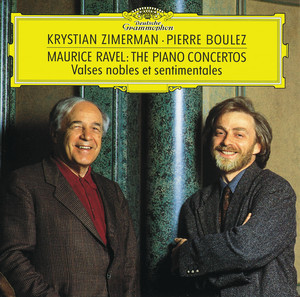 | Piano Concerto in G Major, M. 83: II. Adagio assai | Maurice Ravel, Krystian Zimerman, Cleveland Orchestra, Pierre Boulez | E Major | 0 | 12B | 74 BPM | |
 | Pelléas et Mélisande, Op. 80: 1. Prélude. Quasi Adagio | Gabriel Fauré, Boston Symphony Orchestra, Seiji Ozawa | F Major | 2 | 7B | 98 BPM | |
 | Poulenc: Concerto for Two Pianos in D Minor, FP 61: I. Allegro ma non troppo | Francis Poulenc, James Conlon, Rotterdam Philharmonic Orchestra | E♭ Major | 1 | 5B | 103 BPM | |
 | Symphony No. 5 in D Minor, Op. 107, MWV N15 "Reformation": III. Andante | Felix Mendelssohn, London Symphony Orchestra, Claudio Abbado | G Minor | 0 | 6A | 67 BPM | |
 | Daphnis et Chloé, M. 57, Pt. 1: Ia. Introduction | Maurice Ravel, Berliner Philharmoniker, Pierre Boulez, Rundfunkchor Berlin | B Minor | 0 | 10A | 92 BPM | |
 | Piano Concerto No. 1 in D Major, Op. 17: 1. Andante - Allegro assai | Camille Saint-Saëns, Pascal Rogé, Philharmonia Orchestra, Charles Dutoit | D Major | 2 | 10B | 70 BPM | |
 | Symphony No.9 In E Minor, Op.95, B. 178 "From The New World": 3. Molto vivace | Antonín Dvořák, Wiener Philharmoniker, Herbert von Karajan | E Minor | 1 | 9A | 120 BPM | |
 | Symphony No. 2 in C Minor "Resurrection": V. Etwas bewegter | Gustav Mahler, Brieley Cutting, Angela Turner, Stephen Emmerson, Stewart Kelly | A♭ Major | 1 | 4B | 100 BPM |
- ISRC
- DEF058001825
- Label
- L-M Records/RCA Records