- BPM
- 119
- Key
- B♭ Major
- Camelot
- 6B
2 Aquarelles: No. 2, Gaily, but Not Quick by Frederick Delius, English Chamber Orchestra, Julian Lloyd Webber Song Details
Frederick Delius, English Chamber Orchestra, Julian Lloyd Webber's '2 Aquarelles: No. 2, Gaily, but Not Quick' had a release date set for March 3, 2015. With This song being less than two minutes long, at 1:55, we are fairly confident that this song is not explicit and is safe for all ages. Based on the duration of this song, this song duration is much smaller than the average song duration. The song is number 10 out of 15 in And the Bridge Is Love: English Music for Strings by English Chamber Orchestra, Julian Lloyd Webber. Going off of the ISRC code of this track, we detected that the origin of this track is from Hong Kong. In terms of popularity, 2 Aquarelles: No. 2, Gaily, but Not Quick is currently not that popular. In our opinion, the overall tone is not very danceable and projects negative sounds, such as being sad, depressed, or angry.
BPM and Tempo
The tempo marking of 2 Aquarelles: No. 2, Gaily, but Not Quick by Frederick Delius, English Chamber Orchestra, Julian Lloyd Webber is Moderato (at a moderate speed), since this song has a tempo of 119 BPM. With that information, we can conclude that the song has a moderate tempo. This song can go great with walking. The time signature for this track is 3/4.
Music Key
B♭ Major is the music key of this track. This also means that this song has a camelot key of 6B. So, the perfect camelot match for 6B would be either 6B or 7A. While, 7B can give you a low energy boost. For moderate energy boost, you would use 3B and a high energy boost can either be 8B or 1B. Though, if you want a low energy drop, you should looking for songs with either a camelot key of 6A or 5B will give you a low energy drop, 9B would be a moderate one, and 4B or 11B would be a high energy drop. Lastly, 3A allows you to change the mood.
Want to find the BPM and music key for other songs? Check out our BPM and Key Finder page!
- Popularity
- 10%
- Loudness
- -20.787 dB
- Acousticness
- 98%
- Danceability
- 26%
- Energy
- 10%
- Instrumentalness
- 90%
- Liveness
- 11%
- Loudness
- 65%
- Speechiness
- 5%
- Valence
- 24%
Recommendations
| Track | Artist | Key | Energy | Camelot | BPM | ||
|---|---|---|---|---|---|---|---|
 | The Swan of Tuonela, Op. 22, No. 3 | Jean Sibelius, Leonard Bernstein, New York Philharmonic, Thomas Stacy | A Minor | 1 | 8A | 75 BPM | |
 | Zdes' khorosho ('How Fair This Spot'), Op. 21, No. 7 | Sergei Rachmaninoff, Pablo Ferrandez, Denis Kozhukhin | A Major | 0 | 11B | 87 BPM | |
 | Dido & Aeneas, Z. 626: When I Am Laid in Earth "Dido's Lament" (Transcr. L. Stokowski) | Henry Purcell, Timothy Walden, Bournemouth Symphony Orchestra, José Serebrier | E Major | 0 | 12B | 76 BPM | |
 | Five Bagatelles, Op. 23 - Arr. Ashmore, Dickson: 4. Forlana | Gerald Finzi, Amy Dickson, Aurora Orchestra, Nicholas Collon | F♯ Major | 1 | 2B | 103 BPM | |
 | Lieder ohne Worte I, Op. 19b: VI. Andante sostenuto "Venetian Gondola Song", MWV U78 (Arr. Ottensamer for Clarinet & Strings) | Felix Mendelssohn, Andreas Ottensamer, Schumann Quartett, Gunars Upatnieks | G Minor | 0 | 6A | 84 BPM | |
 | Romeo and Juliette, Op. 64 (Arr. for Viola and Piano by Vadim Borisovsky, Orchestration for Viola and String Orchestra by François Vallières): Introduction | Sergei Prokofiev, Elvira Misbakhova, I Musici de Montréal, Jean-François Rivest | D Major | 1 | 10B | 99 BPM | |
 | Scheherazade: Calm at Sea | Nikolai Rimsky-Korsakov, Lars Hjalmar Joakim | E Major | 2 | 12B | 84 BPM | |
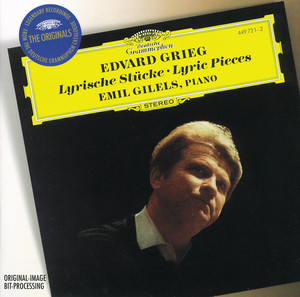 | Lyric Pieces, Book 5, Op. 54: No. 4, Notturno | Edvard Grieg, Emil Gilels | D Minor | 0 | 7A | 72 BPM | |
 | Suite for Violin and Orchestra: I. Pastorale. Andante quasi Allegretto | Frederick Delius, Tasmin Little, Andrew Davis, BBC Philharmonic Orchestra, Sir Andrew Davis | D♭ Major | 0 | 3B | 83 BPM | |
 | String Quartet No. 2 in A Minor: II. Andante cantabile (Arr. Colbert for String Ensemble) | Florence Beatrice Price, Sphinx Virtuosi | E Minor | 2 | 9A | 116 BPM | |
 | Peer Gynt Suite No.1 op. 46 Anitra's Dance (Tempo di Mazurka) | Academy of St. Martin in the Fields | E Minor | 0 | 9A | 168 BPM | |
 | Lyric Pieces, Book 5, Op. 54: Nocturne | Edvard Grieg, Alessio Bax | C Major | 0 | 8B | 72 BPM | |
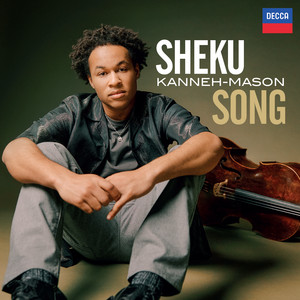 | Come, Sweet Death, BWV 478 (Arr. for 5 Cellos) | Sheku Kanneh-Mason, Hannah Roberts, Ben Davies, Desmond Neysmith, Max Ruisi | C Major | 0 | 8B | 122 BPM | |
 | Myrthen, Op. 25 - Version for Cello and Piano: XXIV. Du bist wie eine Blume | Robert Schumann, Kian Soltani, Aaron Pilsan | F Major | 0 | 7B | 116 BPM | |
 | Andante Cantabile | Pyotr Ilyich Tchaikovsky, St. Lawrence String Quartet | B♭ Major | 0 | 6B | 90 BPM | |
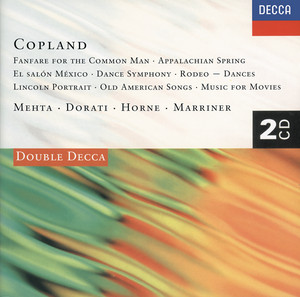 | Appalachian Spring Suite: I. Very Slowly | Aaron Copland, Los Angeles Philharmonic, Zubin Mehta | A Major | 0 | 11B | 71 BPM | |
 | Adoration | Florence Beatrice Price, Randall Goosby, Zhu Wang | D Major | 1 | 10B | 75 BPM | |
 | Petite suite de concert, Op. 77: II. Demande et reponse | Samuel Coleridge-Taylor, Chicago Sinfonietta, Paul Freeman | G Major | 0 | 9B | 90 BPM | |
 | Debussy: La plus que lente, L. 121 | Claude Debussy, San Francisco Symphony, Michael Tilson Thomas | G Major | 0 | 9B | 133 BPM | |
 | Kinderszenen | Robert Schumann, Ivan Moravec | F Major | 0 | 7B | 131 BPM | |
 | Valse lente | Germaine Tailleferre, Dario Müller | G Major | 0 | 9B | 66 BPM | |
 | Gli uccelli (The Birds), P. 154: V. Il cucu. Allegro | Ottorino Respighi, Chamber Orchestra of New York, Salvatore Di Vittorio | A Major | 1 | 11B | 181 BPM | |
 | Sarabande et rigaudon, Op. 93: Sarabande | Camille Saint-Saëns, Orchestre National de Lille, Jun Markl | C Major | 0 | 8B | 71 BPM | |
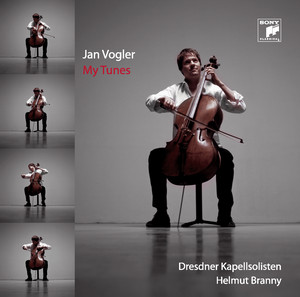 | Kol Nidrei, Op. 47 | Max Bruch, Jan Vogler, Helmut Branny | D Major | 1 | 10B | 136 BPM | |
 | Orpheo ed Euridice, Wq. 30, Act II: Dance of the Blessed Spirits | Christoph Willibald Gluck, Eugene Ormandy, Philadelphia Orchestra | D Minor | 1 | 7A | 67 BPM |
- ISRC
- HKI191422110
- Label
- L-M Records/RCA Records