- BPM
- 74
- Key
- A Major
- Camelot
- 11B
String Quartet No. 2: Nocturne by Alexander Borodin, Prague Chamber Orchestra Song Details
"String Quartet No. 2: Nocturne" by Alexander Borodin, Prague Chamber Orchestra had its release date on January 1, 2009. Since This song is still less than 10 minute long, it is still considered a pretty long duration song compared to the average song length. This song does not appear to be explicit due to the lack of the "E" tag. There are a total of 30 in the song's album "The Most Relaxing Classical Music In The Universe". In this album, this song's track order is #9. Furthermore, we believe that the track originated from United States. String Quartet No. 2: Nocturne is below average in popularity right now. In our opinion, the overall tone is not very danceable and projects negative sounds, such as being sad, depressed, or angry.
BPM and Tempo
With String Quartet No. 2: Nocturne by Alexander Borodin, Prague Chamber Orchestra having a BPM of 74 with a half-time of 37 BPM and a double-time of 148 BPM, we would consider this track to have a Adagio (slowly with great expression) tempo marking. Because of this, we believe that the song has an overall slow tempo. The time signature for this track is 3/4.
Music Key
A Major is the music key of this track. Or for those who are familiar with the camelot wheel, this song has a camelot key of 11B. So, the perfect camelot match for 11B would be either 11B or 12A. While, 12B can give you a low energy boost. For moderate energy boost, you would use 8B and a high energy boost can either be 1B or 6B. Though, if you want a low energy drop, you should looking for songs with either a camelot key of 11A or 10B will give you a low energy drop, 2B would be a moderate one, and 9B or 4B would be a high energy drop. Lastly, 8A allows you to change the mood.
Want to find the BPM and music key for other songs? Check out our BPM and Key Finder page!
- Popularity
- 26%
- Loudness
- -23.639 dB
- Acousticness
- 88%
- Danceability
- 17%
- Energy
- 10%
- Instrumentalness
- 90%
- Liveness
- 10%
- Loudness
- 61%
- Speechiness
- 5%
- Valence
- 8%
Recommendations
| Track | Artist | Key | Energy | Camelot | BPM | ||
|---|---|---|---|---|---|---|---|
![21 Hungarian Dances, WoO 1: Hungarian Dance No. 1 in G Minor (arr. For orchestra) [Orch. J. Brahms] by Johannes Brahms, London Philharmonic Orchestra, Marin Alsop](https://i.scdn.co/image/ab67616d00001e02652a3346f04f528486b5a47f) | 21 Hungarian Dances, WoO 1: Hungarian Dance No. 1 in G Minor (arr. For orchestra) [Orch. J. Brahms] | Johannes Brahms, London Philharmonic Orchestra, Marin Alsop | G Minor | 2 | 6A | 133 BPM | |
 | Petite suite de concert, Op. 77: III. Un sonnet d'amour | Samuel Coleridge-Taylor, Chicago Sinfonietta, Paul Freeman | A Major | 0 | 11B | 70 BPM | |
 | Aladdin Suite, Op. 34, FS 89: I. The Festival March | Carl Nielsen, South Jutland Symphony Orchestra, Niklas Willen | A♭ Major | 0 | 4B | 132 BPM | |
 | 6 Album Leaves, Op. 2, JB 1:51: No. 2 in A Minor, Chanson. Moderato | Bedřich Smetana, Jitka Čechová | A Minor | 0 | 8A | 66 BPM | |
 | Symphony No. 3 in C Minor, Op. 78 "Organ": Allegro moderato | Camille Saint-Saëns, Eugene Ormandy, Philadelphia Orchestra | A♭ Major | 1 | 4B | 109 BPM | |
 | Concerto in D Minor for Two Violins, BWV 1043: Vivace | Johann Sebastian Bach, Jascha Heifetz, Erick Friedman, Thornton Lofthouse, The New Symphony Orchestra Of London, Sir Malcolm Sargent | A Minor | 2 | 8A | 94 BPM | |
 | Prince Igor, Act II: Polovtsian Dance with Chorus "Poyte pesni slavy khanu!" | Alexander Borodin, Александр Ведерников I, хор Большого театра, Mark Ermler, Оркестр Большого театра | G Major | 3 | 9B | 174 BPM | |
 | Myrthen, Op. 25 - Version for Cello and Piano: XXIV. Du bist wie eine Blume | Robert Schumann, Kian Soltani, Aaron Pilsan | F Major | 0 | 7B | 116 BPM | |
 | The Bartered Bride: Overture | Bedřich Smetana, BBC Symphony Orchestra, Jiří Bělohlávek | F Major | 2 | 7B | 145 BPM | |
 | Piano Concerto in A Minor, Op. 7: II. Romanze. Andante non troppo con grazia | Clara Schumann, Veronica Jochum, Bamberg Symphony, Joseph Silverstein | A♭ Major | 0 | 4B | 96 BPM | |
 | Carmen Suite No. 1 (Arr. E. Guiraud): IV. Séguedille | Georges Bizet, Orquestra Simfònica de Barcelona i Nacional de Catalunya, Pablo González | G Minor | 0 | 6A | 66 BPM | |
 | String Quartet No. 1 in A Major: II. Andante con moto | Alexander Borodin, Budapest Haydn Quartet | F♯ Minor | 1 | 11A | 88 BPM | |
 | Halvorsen: Passacaglia (After Handel's Keyboard Suite, HWV 432) | Johan Halvorsen, Itzhak Perlman, Pinchas Zukerman | G Minor | 2 | 6A | 109 BPM | |
 | Simple Symphony, Op. 4: III. Sentimental Sarabande | Benjamin Britten, Camerata Nordica, Terje Tonnesen | G Minor | 0 | 6A | 85 BPM | |
 | Cello Concerto No. 1 in G Major: II. Romance. Andantino | Carl Stamitz, Christian Benda, Prague Chamber Orchestra | B♭ Major | 0 | 6B | 176 BPM | |
 | The Seasons, Op. 67: XIV. Petit Adagio | Alexander Glazunov, Neeme Järvi, Royal Scottish National Orchestra | A Major | 1 | 11B | 87 BPM | |
 | Cello Concerto No. 1 in A Minor, Op. 33: I. Allegro non troppo | Camille Saint-Saëns, Mischa Maisky, Orpheus Chamber Orchestra | F Major | 2 | 7B | 131 BPM | |
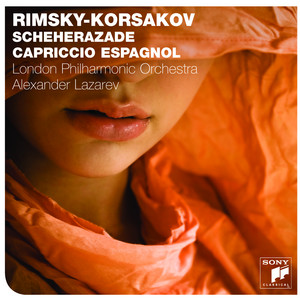 | Scheherazade: The Sea & Sinbad's Ship | Nikolai Rimsky-Korsakov, Lars Hjalmar Joakim | E Major | 1 | 12B | 82 BPM | |
 | Borodin: String Quartet No. 2 in D Major: III. Notturno. Andante | Alexander Borodin, Borodin Quartet | F Major | 3 | 7B | 96 BPM | |
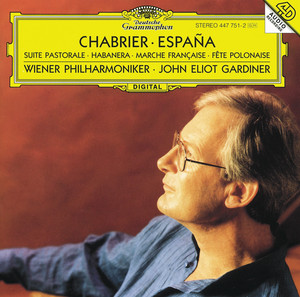 | Suite pastorale: III. Sous-bois | Emmanuel Chabrier, Wiener Philharmoniker, John Eliot Gardiner | G Major | 0 | 9B | 0 BPM | |
 | Violin Concerto No. 1 in G Minor, Op. 26: II. Adagio | Max Bruch, Joshua Bell, Academy of St. Martin in the Fields, Sir Neville Marriner | E♭ Major | 1 | 5B | 85 BPM | |
 | Schwanenlied | Fanny Mendelssohn, Eva Oertle, Consuelo Giulianelli | G Minor | 1 | 6A | 143 BPM | |
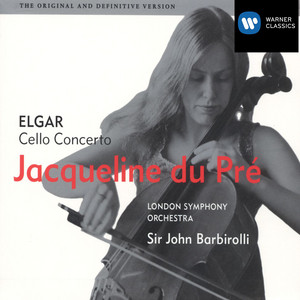 | Elgar: Cello Concerto in E Minor, Op. 85: I. Adagio - Moderato | Edward Elgar, Jacqueline du Pré, London Symphony Orchestra, Sir John Barbirolli | E Minor | 1 | 9A | 96 BPM | |
 | Cello Concerto No. 1 in C Major, Hob.VIIb:1: III. Allegro molto | Joseph Haydn, Steven Isserlis, Chamber Orchestra of Europe, Sir Roger Norrington | C Major | 1 | 8B | 147 BPM | |
 | 6 Studies in English Folksong (Version for Cello & Piano): No. 3, Larghetto "Van Dieman's Land" | Ralph Vaughan Williams, Gerald Peregrine, Antony Ingham | D Minor | 0 | 7A | 81 BPM |
- ISRC
- USSJ10301407
- Label
- L-M Records/RCA Records