- BPM
- 130
- Key
- G Major
- Camelot
- 9B
Peer Gynt, Op. 23: The Death of Åse - Arr. for Hardanger Fiddle & String Orchestra by Tormod Tvete Vik by Edvard Grieg, Ragnhild Hemsing, TrondheimSolistene Song Details
"Peer Gynt, Op. 23: The Death of Åse - Arr. for Hardanger Fiddle & String Orchestra by Tormod Tvete Vik" by Edvard Grieg, Ragnhild Hemsing, TrondheimSolistene had its release date on February 25, 2022. Since This song is still less than 10 minute long, it is still considered a pretty long duration song compared to the average song length. This song does not appear to be explicit due to the lack of the "E" tag. There are a total of 12 in the song's album "Peer Gynt". In this album, this song's track order is #11. Furthermore, we believe that the track originated from Germany. Based on our statistics, Peer Gynt, Op. 23: The Death of Åse - Arr. for Hardanger Fiddle & String Orchestra by Tormod Tvete Vik's popularity is not that popular right now. In our opinion, the overall tone is not very danceable and projects negative sounds, such as being sad, depressed, or angry.
BPM and Tempo
With Peer Gynt, Op. 23: The Death of Åse - Arr. for Hardanger Fiddle & String Orchestra by Tormod Tvete Vik by Edvard Grieg, Ragnhild Hemsing, TrondheimSolistene having a BPM of 130 with a half-time of 65 BPM and a double-time of 260 BPM, we would consider this track to have a Allegro (fast, quick, and bright) tempo marking. Because of this, we believe that the song has an overall fast tempo. Looking at the BPM of this song, this song might go great with walking. The time signature for this track is 4/4.
Music Key
G Major is the music key of this track. Or for those who are familiar with the camelot wheel, this song has a camelot key of 9B. So, the perfect camelot match for 9B would be either 9B or 10A. While, 10B can give you a low energy boost. For moderate energy boost, you would use 6B and a high energy boost can either be 11B or 4B. Though, if you want a low energy drop, you should looking for songs with either a camelot key of 9A or 8B will give you a low energy drop, 12B would be a moderate one, and 7B or 2B would be a high energy drop. Lastly, 6A allows you to change the mood.
Want to find the BPM and music key for other songs? Check out our BPM and Key Finder page!
- Popularity
- 17%
- Loudness
- -21.193 dB
- Acousticness
- 93%
- Danceability
- 16%
- Energy
- 4%
- Instrumentalness
- 28%
- Liveness
- 12%
- Loudness
- 65%
- Speechiness
- 4%
- Valence
- 4%
Recommendations
| Track | Artist | Key | Energy | Camelot | BPM | ||
|---|---|---|---|---|---|---|---|
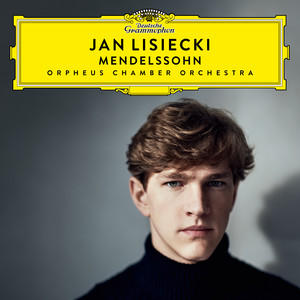 | Lieder ohne Worte, Op. 19: No. 6 in G Minor (Andante sostenuto) "Venetian Gondola Song", MWV U78 | Felix Mendelssohn, Jan Lisiecki | G Minor | 0 | 6A | 168 BPM | |
 | I. Prélude. Andantino | César Franck, Jean-Pierre Armengaud | D Major | 0 | 10B | 66 BPM | |
 | Nocturne No. 2 in E-Flat Major, Op. 9 No. 2 | Frédéric Chopin, Vladimir Ashkenazy | B♭ Major | 0 | 6B | 71 BPM | |
![Spartacus, Act III: Adagio of Spartacus and Phrygia (arr. Y. Grigorovich) [1968 Bolshoi Version] by Aram Khachaturian, RIAS Kammerchor, Deutsches Symphonie-Orchester Berlin, Michail Jurowski](https://i.scdn.co/image/ab67616d00001e02c21d253eed4ccdd547b4b94d) | Spartacus, Act III: Adagio of Spartacus and Phrygia (arr. Y. Grigorovich) [1968 Bolshoi Version] | Aram Khachaturian, RIAS Kammerchor, Deutsches Symphonie-Orchester Berlin, Michail Jurowski | E Major | 2 | 12B | 123 BPM | |
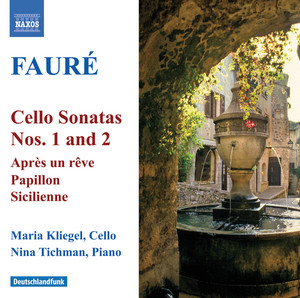 | Elegie, Op. 24 | Gabriel Fauré, Maria Kliegel, Nina Tichman | A♭ Major | 0 | 4B | 72 BPM | |
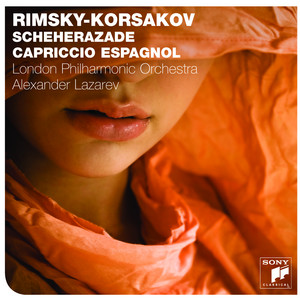 | Scheherazade: The Young Prince | Nikolai Rimsky-Korsakov, Lars Hjalmar Joakim | G Major | 1 | 9B | 91 BPM | |
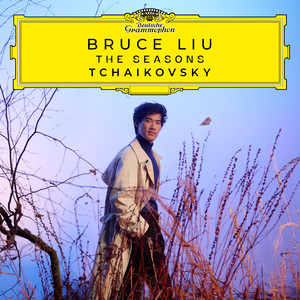 | The Seasons, Op. 37a: VI. June. Barcarolle | Pyotr Ilyich Tchaikovsky, Bruce Liu | G Minor | 0 | 6A | 76 BPM | |
 | Panis Angelicus (Arr. Leopold Stokowski) | César Franck, Matthias Bamert, BBC Philharmonic | A Major | 1 | 11B | 65 BPM | |
 | Piano Concerto No. 2 in C Minor, Op. 18: II. Adagio sostenuto | Sergei Rachmaninoff, Royal Liverpool Philharmonic Orchestra, Simon Trpčeski, Vasily Petrenko | E Major | 0 | 12B | 67 BPM | |
 | Suite No. 3, P. 172: I. Italiana: Andantino | Ottorino Respighi, RTÉ National Symphony Orchestra | B♭ Major | 1 | 6B | 94 BPM | |
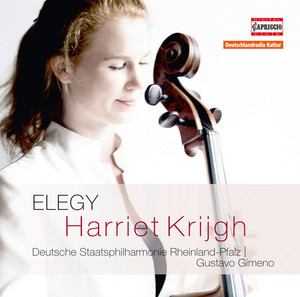 | El cant dels ocells (Version for Cello & Orchestra) | Pablo Casals, Harriet Krijgh, Gustavo Gimeno, Deutsche Staatsphilharmonie Rheinland-Pfalz | D Major | 0 | 10B | 128 BPM | |
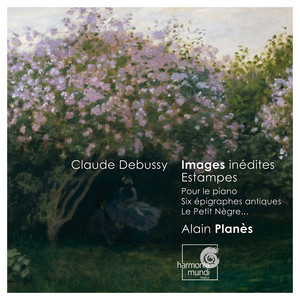 | Rêverie, L. 68 | Claude Debussy, Alain Planès | F Major | 0 | 7B | 63 BPM | |
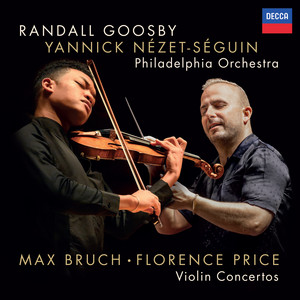 | Adoration (Arr. Gray for Violin & Orchestra) | Florence Beatrice Price, Randall Goosby, Philadelphia Orchestra, Yannick Nézet-Séguin | D Major | 3 | 10B | 74 BPM | |
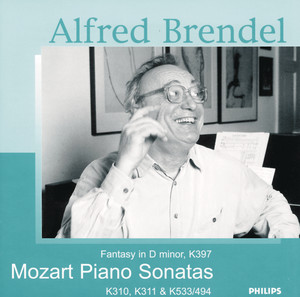 | Fantasia in D Minor, K. 397 | Wolfgang Amadeus Mozart, Alfred Brendel | D Major | 0 | 10B | 126 BPM | |
 | Etude in F Minor | Felix Mendelssohn, Benjamin Frith | B♭ Major | 0 | 6B | 75 BPM | |
 | 12 Klavierstücke für kleine und große Kinder, Op. 85: No. 12, Abendlied (Arr. Rot for Cello and Orchestra) | Robert Schumann, Kian Soltani, Camerata Salzburg, Gregory Ahss | E♭ Minor | 2 | 2A | 81 BPM | |
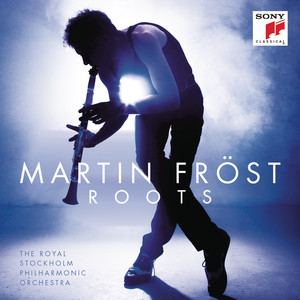 | 5 Stücke im Volkston, Op. 102: II. Langsam | Robert Schumann, Martin Fröst, Royal Stockholm Philharmonic Orchestra | F Major | 0 | 7B | 62 BPM | |
 | Peer Gynt Suite No. 2, Op. 55: IV. Solveigs sang (Solveig's Song) | Edvard Grieg, Malmö Symphony Orchestra, Bjarte Engeset | D Minor | 0 | 7A | 86 BPM | |
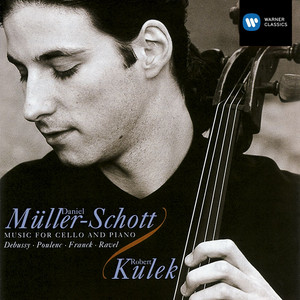 | Poulenc: Cello Sonata, FP 143: II. Cavatine | Francis Poulenc, Daniel Müller-Schott/Robert Kulek | F♯ Major | 0 | 2B | 77 BPM | |
 | Les Boréades, RCT 31, Acte IV, Scène IV: Entrée pour les Muses, les Zéphyres, les Saisons, les Heures et les Arts | Jean-Philippe Rameau, Teodor Currentzis | D♭ Major | 1 | 3B | 130 BPM | |
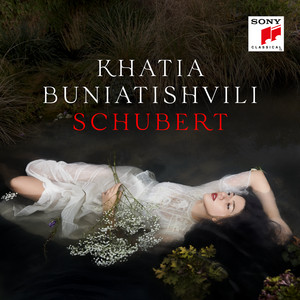 | Ständchen, S. 560 (Trans. from Schwanengesang No. 4, D. 957) | Franz Schubert, Franz Liszt, Khatia Buniatishvili | D Major | 0 | 10B | 67 BPM | |
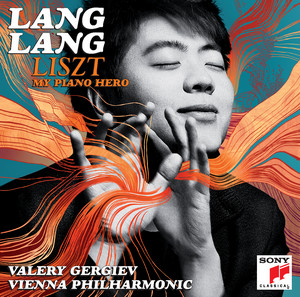 | Consolation No. 3 in D-Flat Major, S. 172 | Franz Liszt, Lang Lang | D♭ Major | 0 | 3B | 74 BPM | |
 | Piano Concerto in A Minor, Op. 16: II. Adagio - Remastered | Edvard Grieg, Arthur Rubinstein, RCA Victor Symphony Orchestra, Alfred Wallenstein | D♭ Major | 0 | 3B | 86 BPM | |
 | Orfeo ed Euridice, Wq. 30 / Act II: Dance of the Blessed Spirits (Arr. by Mathieu Herzog for Cello and Strings) | Christoph Willibald Gluck, Camille Thomas, Brussels Philharmonic, Mathieu Herzog | B Minor | 1 | 10A | 87 BPM | |
 | Holberg Suite, Op. 40: I. Präludium (Allegro vivace) | Edvard Grieg, Gothenburg Symphony Orchestra, Neeme Järvi | G Major | 1 | 9B | 135 BPM |
- ISRC
- DES382209011
- Label
- L-M Records/RCA Records