- BPM
- 83
- Key
- D Major
- Camelot
- 10B
Symphony No. 3 in G Minor, Op. 42, L. 53: IV. Allegro con spirito by Albert Roussel, Neeme Järvi, Detroit Symphony Orchestra Song Details
"Symphony No. 3 in G Minor, Op. 42, L. 53: IV. Allegro con spirito" by Albert Roussel, Neeme Järvi, Detroit Symphony Orchestra had its release date on June 1, 1991. This song is about six minutes long, preciously at 5:59, making this song fairly long compared to other songs. There are a total of 12 in the song's album "Roussel: Symphony No. 3, Suite No. 2 from Bacchus et Ariane, Sinfonietta, Symphony No. 4". In this album, this song's track order is #4. Furthermore, we believe that the track originated from United Kingdom. Symphony No. 3 in G Minor, Op. 42, L. 53: IV. Allegro con spirito is unknown right now. In our opinion, the overall tone is not very danceable and projects negative sounds, such as being sad, depressed, or angry.
BPM and Tempo
With Symphony No. 3 in G Minor, Op. 42, L. 53: IV. Allegro con spirito by Albert Roussel, Neeme Järvi, Detroit Symphony Orchestra having a BPM of 83 with a half-time of 42 BPM and a double-time of 166 BPM, we would consider this track to have a Andante (at a walking pace) tempo marking. Because of this, we believe that the song has an overall slow tempo. The time signature for this track is 4/4.
Music Key
D Major is the music key of this track. Or for those who are familiar with the camelot wheel, this song has a camelot key of 10B. So, the perfect camelot match for 10B would be either 10B or 11A. While, 11B can give you a low energy boost. For moderate energy boost, you would use 7B and a high energy boost can either be 12B or 5B. Though, if you want a low energy drop, you should looking for songs with either a camelot key of 10A or 9B will give you a low energy drop, 1B would be a moderate one, and 8B or 3B would be a high energy drop. Lastly, 7A allows you to change the mood.
Want to find the BPM and music key for other songs? Check out our BPM and Key Finder page!
- Popularity
- 0%
- Loudness
- -27.201 dB
- Acousticness
- 77%
- Danceability
- 22%
- Energy
- 10%
- Instrumentalness
- 28%
- Liveness
- 9%
- Loudness
- 55%
- Speechiness
- 5%
- Valence
- 4%
Recommendations
| Track | Artist | Key | Energy | Camelot | BPM | ||
|---|---|---|---|---|---|---|---|
 | Kodály: Duo for Violin and Cello, Op. 7: II. Adagio (Live at Saratoga Performing Arts Centre, 1998) | Zoltán Kodály, Truls Mørk, Chantal Juillet | G Major | 0 | 9B | 96 BPM | |
 | Juditha triumphans, RV 644: Agitata infido flatu - Arr. for Voice & Piano | Antonio Vivaldi, Théophile Alexandre, Guillaume Vincent | D♭ Minor | 3 | 12A | 76 BPM | |
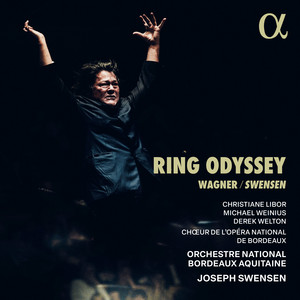 | Die Walküre, WWV 86B, Act I: Prelude - Thunderstorm, Sieglinde offers Shelter to Siegmund (Reworked by Joseph Swensen) | Richard Wagner, Orchestre National Bordeaux Aquitaine, Joseph Swensen | B♭ Major | 0 | 6B | 131 BPM | |
 | El Amor brujo: Quadre Segon: Danza y cancíon de la bruja fingida | Manuel de Falla, Ginesa Ortega, Josep Pons, Orquestra De Cambra Teatre Lliure | F Major | 0 | 7B | 94 BPM | |
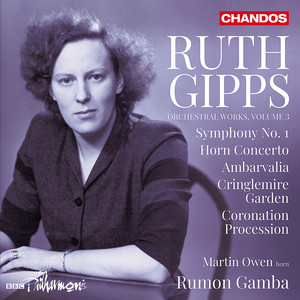 | Horn Concerto, Op. 58: II. Scherzo | Ruth Gipps, Martin Owen, BBC Philharmonic, Rumon Gamba | F Minor | 0 | 4A | 47 BPM | |
 | Sérénité Nocturne | Etoilee | E Major | 3 | 12B | 178 BPM | |
 | El amor brujo: Danza Ritual del Fuego | Manuel de Falla, Leonard Bernstein | A Major | 2 | 11B | 70 BPM | |
 | Roland Furieux: II. Andante tranquillo | Augusta Holmès, Michael Francis, Deutsche Staatsphilharmonie Rheinland-Pfalz | E♭ Major | 1 | 5B | 88 BPM | |
 | Sussex Landscape: II. Lento e molto tranquillo | Avril Coleridge-Taylor, BBC Philharmonic Orchestra, John Andrews | B♭ Major | 0 | 6B | 74 BPM | |
 | Gloria, FP 177: VI. Qui sedes ad dexteram Patris | Francis Poulenc, Britten Sinfonia, Polyphony, The Choir Of Trinity College, Cambridge, Susan Gritton, Stephen Layton | G Major | 2 | 9B | 81 BPM | |
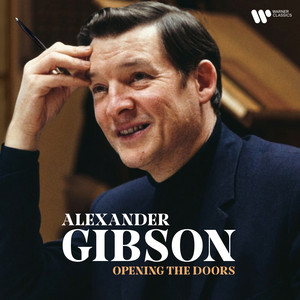 | Britten: Soirées musicales, Op. 9: I. March | Benjamin Britten, English Chamber Orchestra, Alexander Gibson | G Major | 0 | 9B | 96 BPM | |
 | Strauss, R: Don Quixote, Op. 35: Theme. Don Quixote, Knight of the Sorrowful Countenance - Maggiore. Sancho Panza | Richard Strauss, Mstislav Rostropovich, Ulrich Koch, Herbert von Karajan, Berliner Philharmoniker | A Major | 6 | 11B | 113 BPM | |
 | Suita Concertante-Encounters IV for Viola Clarinet and Chamber Orchestra: II. Allegro | Menachem Wiesenberg, Yuval Gotlibovich, Chen Halevi, Thomas Rösner, Beethoven Philarmonie Orchestra | A Minor | 2 | 8A | 137 BPM | |
 | Falla: El sombrero de tres picos, Pt. 2: Danza final | Manuel de Falla, Sir Neville Marriner, Academy of St. Martin in the Fields | G Major | 0 | 9B | 96 BPM | |
 | Symphony No. 8 in E-Flat Major "Symphony of a Thousand": Komm! Hebe dich zu höhern Sphären! | Gustav Mahler, Marta Boberska, Timothy Bentch, Cardinal Stefan Wyszynski University Choir, Polish Radio Choir, Warsaw Boys Choir, Warsaw Philharmonic Choir, Warsaw Philharmonic Orchestra, Antoni Wit | E♭ Major | 1 | 5B | 85 BPM | |
 | Heut triumphieret Gottes Sohn, BWV 630 (Arr. for Orchestra by Sir Andrew Davis) | Johann Sebastian Bach, Martyn Brabbins, BBC Philharmonic | E♭ Major | 0 | 5B | 73 BPM | |
 | El Sombrero de tres picos, Parte II: Danza de los vecinos. Seguidillas | Manuel de Falla, Mahler Chamber Orchestra, Pablo Heras-Casado | D Major | 2 | 10B | 93 BPM | |
 | Miške, MKČ 101: II. Exposition, Bridge Passage | Mikalojus Konstantinas Čiurlionis, Orchestre Philharmonique de Radio France, Mirga Gražinytė-Tyla | A Minor | 0 | 8A | 85 BPM | |
 | Aladdin Suite, Op. 34, FS 89: V. The Marketplace in Isaphan | Carl Nielsen, South Jutland Symphony Orchestra, Niklas Willen | G Major | 2 | 9B | 119 BPM | |
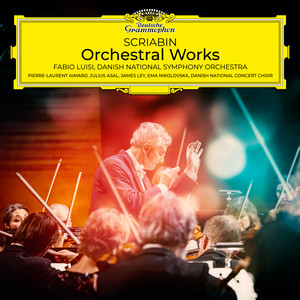 | Rêverie, Op. 24 | Alexander Scriabin, Danish National Symphony Orchestra, Fabio Luisi | B♭ Minor | 2 | 3A | 86 BPM | |
 | Fastnachts-Sinfonie: Tranquillo non troppo sostenuto (1) | Richard Flury, BBC Symphony Orchestra, Paul Mann | G Major | 0 | 9B | 96 BPM | |
 | Sinfonietta, JW VI/18: II. Andante | Leoš Janáček, Czech Philharmonic, Karel Ančerl | A♭ Minor | 2 | 1A | 145 BPM | |
 | Svanevit Suite, Op. 54: III. Tärnorna med rosor | Jean Sibelius, Finnish Radio Symphony Orchestra, Nicholas Collon | C Major | 1 | 8B | 85 BPM | |
 | Poulenc: Sextet for Piano and Winds, FP 100: I. Allegro vivace | Francis Poulenc, Les Vents Français | E Minor | 1 | 9A | 76 BPM | |
 | Love blows as the wind blows: III Fill a glass with golden wine | George Butterworth, Jonathan Lemalu, Belcea Quartet | F Major | 0 | 7B | 87 BPM |
- ISRC
- GBLWD9112104
- Label
- L-M Records/RCA Records