- BPM
- 96
- Key
- A Minor
- Camelot
- 8A
The Soldier's Tale (Narrated by Roger Waters): Part I: The Soldier, Disconsolate... by Igor Stravinsky, Roger Waters Song Details
Igor Stravinsky, Roger Waters's 'The Soldier's Tale (Narrated by Roger Waters): Part I: The Soldier, Disconsolate...' had a release date set for October 26, 2018. With this song being around four minutes long, at 4:13, the duration of this song is pretty average compared to other songs. This track is safe for children and doesn't appear to contain any foul language, since the "Explicit" tag was not present in this track. There are a total of 46 in the song's album "The Soldier's Tale (Narrated by Roger Waters)". In this album, this song's track order is #8. Furthermore, we believe that the track originated from United States. In terms of popularity, The Soldier's Tale (Narrated by Roger Waters): Part I: The Soldier, Disconsolate... is currently not that popular. Although the overall vibe is very danceable, it does project more negative sounds.
BPM and Tempo
With The Soldier's Tale (Narrated by Roger Waters): Part I: The Soldier, Disconsolate... by Igor Stravinsky, Roger Waters having a BPM of 96 with a half-time of 48 BPM and a double-time of 192 BPM, we would consider this track to have a Andante (at a walking pace) tempo marking. Because of this, we believe that the song has an overall slow tempo. The time signature for this track is 4/4.
Music Key
This song is in the music key of A Minor. Which also means that the camelot key for this song is 8A. So, the perfect camelot match for 8A would be either 8A or 7B. While, a low energy boost can consist of either 8B or 9A. For moderate energy boost, you would use 5A and a high energy boost can either be 10A or 3A. However, if you are looking for a low energy drop, finding a song with a camelot key of 7A would be a great choice. Where 11A would give you a moderate drop, and 6A or 1A would be a high energy drop. Lastly, 11B allows you to change the mood.
Want to find the BPM and music key for other songs? Check out our BPM and Key Finder page!
- Popularity
- 2%
- Loudness
- -30.832 dB
- Acousticness
- 20%
- Danceability
- 66%
- Energy
- 12%
- Instrumentalness
- 0%
- Liveness
- 20%
- Loudness
- 49%
- Speechiness
- 72%
- Valence
- 29%
Recommendations
| Track | Artist | Key | Energy | Camelot | BPM | ||
|---|---|---|---|---|---|---|---|
 | 4 Kleine Stücke: I. Timoroso | Franz Schreker, Staatsphilharmonie Rheinland-Pfalz, Christopher Ward | F♯ Minor | 0 | 11A | 51 BPM | |
 | Petrouchka / Tableau I: Fête populaire de la semaine grasse | Igor Stravinsky, Cleveland Orchestra, Pierre Boulez | D Minor | 2 | 7A | 116 BPM | |
 | The Rite of Spring, K15, Pt. 1: IV. Spring Rounds | Igor Stravinsky, Berliner Philharmoniker, Herbert von Karajan | F Minor | 0 | 4A | 77 BPM | |
 | Symphonie fantastique, Op. 14, H 48: IV. Marche au supplice | Hector Berlioz, London Symphony Orchestra, Sir Colin Davis | B♭ Major | 1 | 6B | 155 BPM | |
 | Sibelius : Symphony No.5 in E flat major Op.82 : II Andante mosso, quasi allegretto | Jean Sibelius, Sakari Oramo, City Of Birmingham Symphony Orchestra | G Major | 0 | 9B | 142 BPM | |
 | Concerto for Orchestra, Sz. 116: IV. Intermezzo interrotto (Allegretto) | Béla Bartók, Chicago Symphony Orchestra, Pierre Boulez | D Major | 1 | 10B | 73 BPM | |
 | Quatuor pour la fin du Temps: II. Vocalise, pour l'Ange qui annonce la fin du Temps | Olivier Messiaen, Martin Fröst, Lucas Debargue, Torleif Thedéen, Janine Jansen | F♯ Minor | 0 | 11A | 97 BPM | |
![Les Noces, Scene 1: The Tresses (At the Bride's House) [the Wedding] by Susan Bickley, Martyn Hill, Alan Ewing, Alison Wells, Simon Joly Chorale, International Piano Quartet, Tristan Fry Percussion Ensemble, Robert Craft](https://i.scdn.co/image/ab67616d00001e02946bbad1fa051db2cacde94d) | Les Noces, Scene 1: The Tresses (At the Bride's House) [the Wedding] | Susan Bickley, Martyn Hill, Alan Ewing, Alison Wells, Simon Joly Chorale, International Piano Quartet, Tristan Fry Percussion Ensemble, Robert Craft | E Major | 2 | 12B | 118 BPM | |
 | Also sprach Zarathustra, Op. 30: VIII. Das Tanzlied – Das Nachtlied | Richard Strauss, Michel Schwalbé, Berliner Philharmoniker, Herbert von Karajan | F Minor | 0 | 4A | 77 BPM | |
 | Pictures at an Exhibition (Orch. Ravel): I. Gnomus | Modest Mussorgsky, Wiener Philharmoniker, Gustavo Dudamel | E Major | 1 | 12B | 60 BPM | |
 | Peer Gynt Suite No. 2, Op. 55: III. Peer Gynt's Homecoming | Edvard Grieg, Berliner Philharmoniker, Herbert von Karajan | B Minor | 1 | 10A | 69 BPM | |
 | Tchaikovsky: Symphony No. 4 in F Minor, Op. 36: II. Andantino in moto di canzone | Pyotr Ilyich Tchaikovsky, San Francisco Symphony, Michael Tilson Thomas | B♭ Minor | 0 | 3A | 82 BPM | |
 | La Mer, L.109: 3. Dialogue Of The Wind And The Sea | Claude Debussy, Orchestre Symphonique de Montréal, Charles Dutoit | D♭ Major | 2 | 3B | 83 BPM | |
 | Stravinsky: Symphony in C: II. Larghetto concertante | Igor Stravinsky, Sir Simon Rattle, Berliner Philharmoniker | F Major | 0 | 7B | 104 BPM | |
 | Scheherazade: Calm - the triumph of Scheherazade | Nikolai Rimsky-Korsakov, Lars Hjalmar Joakim | E Minor | 0 | 9A | 68 BPM | |
 | Quatuor pour la fin du Temps: V. Louange à l'éternité de Jésus | Olivier Messiaen, Lucas Debargue, Torleif Thedéen | E Major | 0 | 12B | 81 BPM | |
 | Symphony No. 4 in F Minor, Op. 36: III. Scherzo. Pizzicato ostinato – Allegro | Pyotr Ilyich Tchaikovsky, Wiener Philharmoniker, Herbert von Karajan | C Major | 1 | 8B | 156 BPM | |
 | Symphony No. 5 in B Flat Major, Op. 100: II. Allegro marcato | Sergei Prokofiev, Thomas Søndergård, Royal Scottish National Orchestra | G Major | 2 | 9B | 81 BPM | |
 | Symphony No. 1 in B-Flat Minor: II. Scherzo. Presto, con malizia | William Walton, London Symphony Orchestra, Sir Colin Davis | F Major | 2 | 7B | 153 BPM | |
 | El amor brujo: Ritual Fire Dance | Manuel de Falla, Fritz Reiner, Chicago Symphony Orchestra | G Major | 1 | 9B | 134 BPM | |
 | The Rite of Spring: Part One: Adoration of the Earth: Dance of the Earth | Igor Stravinsky, Teodor Currentzis, musicAeterna | G Major | 5 | 9B | 89 BPM | |
![Spartacus, Act III: Adagio of Spartacus and Phrygia (arr. Y. Grigorovich) [1968 Bolshoi Version] by Aram Khachaturian, RIAS Kammerchor, Deutsches Symphonie-Orchester Berlin, Michail Jurowski](https://i.scdn.co/image/ab67616d00001e02c21d253eed4ccdd547b4b94d) | Spartacus, Act III: Adagio of Spartacus and Phrygia (arr. Y. Grigorovich) [1968 Bolshoi Version] | Aram Khachaturian, RIAS Kammerchor, Deutsches Symphonie-Orchester Berlin, Michail Jurowski | E Major | 2 | 12B | 123 BPM | |
| The Rite of Spring, K15, Pt. 2: XIV. Sacrificial Dance | Igor Stravinsky, Berliner Philharmoniker, Herbert von Karajan | F Minor | 0 | 4A | 77 BPM | |
 | Debussy: Syrinx, CD 137, L. 129 | Emmanuel Pahud | A♭ Major | 0 | 4B | 65 BPM | |
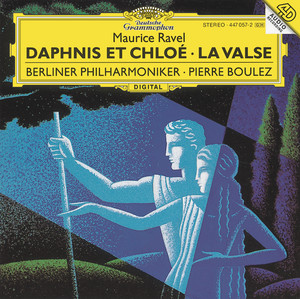 | Daphnis et Chloé, M. 57 / Troisième partie: Danse générale | Maurice Ravel, Berliner Philharmoniker, Pierre Boulez, Rundfunkchor Berlin | D♭ Minor | 4 | 12A | 173 BPM |
- ISRC
- USQX91802236
- Label
- L-M Records/RCA Records