- BPM
- 77
- Key
- B Major
- Camelot
- 1B
Four Transcriptions from Emerson: No. 3 by Charles Ives Song Details
"Four Transcriptions from Emerson: No. 3" by Charles Ives had its release date on January 1, 2006. With this song being around four minutes long, at 3:42, the duration of this song is pretty average compared to other songs. This track is safe for children and doesn't appear to contain any foul language, since the "Explicit" tag was not present in this track. The track order of this song in Charles Ives's "Ives Plays Ives: The Complete Recordings of Charles Ives at the Piano" album is number 14 out of 42. On top of that, United States appears to be the country where this track was created. Four Transcriptions from Emerson: No. 3 is unknown right now. In our opinion, the overall tone is not very danceable and projects negative sounds, such as being sad, depressed, or angry.
BPM and Tempo
We consider the tempo marking of Four Transcriptions from Emerson: No. 3 by Charles Ives to be Andante (at a walking pace) because the track has a tempo of 77 BPM, a half-time of 38BPM, and a double-time of 154 BPM. Based on that, the speed of the song's tempo is slow. The time signature for this track is 1/4.
Music Key
B Major is the music key of this track. This also means that this song has a camelot key of 1B. So, the perfect camelot match for 1B would be either 1B or 2A. While, 2B can give you a low energy boost. For moderate energy boost, you would use 10B and a high energy boost can either be 3B or 8B. Though, if you want a low energy drop, you should looking for songs with either a camelot key of 1A or 12B will give you a low energy drop, 4B would be a moderate one, and 11B or 6B would be a high energy drop. Lastly, 10A allows you to change the mood.
Want to find the BPM and music key for other songs? Check out our BPM and Key Finder page!
- Popularity
- 0%
- Loudness
- -18.888 dB
- Acousticness
- 99%
- Danceability
- 39%
- Energy
- 27%
- Instrumentalness
- 92%
- Liveness
- 22%
- Loudness
- 69%
- Speechiness
- 4%
- Valence
- 17%
Recommendations
| Track | Artist | Key | Energy | Camelot | BPM | ||
|---|---|---|---|---|---|---|---|
 | Mathis der Maler Symphony: I. Engelkonzert | Paul Hindemith, Berliner Philharmoniker, Claudio Abbado | D Major | 1 | 10B | 106 BPM | |
 | Piano Concerto No. 1, BB 91, Sz. 83: I. Allegro moderato - Allegro | Béla Bartók, Géza Anda, Deutsches Symphonie-Orchester Berlin, Ferenc Fricsay | G Major | 3 | 9B | 124 BPM | |
 | 4 Ragtime Dances: No. 1, — | Charles Ives, Orchestra New England, James Sinclair | G Major | 0 | 9B | 173 BPM | |
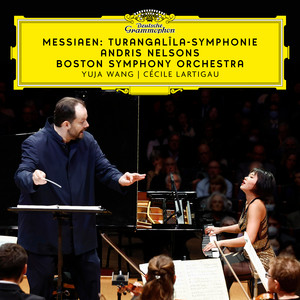 | Turangalîla-Symphonie: I. Introduction | Olivier Messiaen, Yuja Wang, Cécile Lartigau, Boston Symphony Orchestra, Andris Nelsons | B Major | 4 | 1B | 152 BPM | |
 | Preludes: Le nombre leger (The Light Number) | Olivier Messiaen, Håkon Austbø | B Major | 1 | 1B | 68 BPM | |
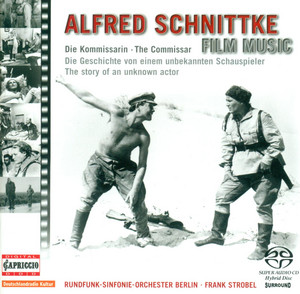 | Die Kommissarin (The Commissar): Spaziergange d. Wawilowa durch die Stadt | Alfred Schnittke, Berlin Radio Symphony Orchestra, Frank Strobel | E Minor | 0 | 9A | 73 BPM | |
 | Suite de danzas criollas, Op. 15: I. Adagietto pianissimo | Alberto Ginastera, Simon Cohen, Jerusalem Symphony Orchestra, Gisele Ben-Dor | G Major | 0 | 9B | 144 BPM | |
 | Symphony No. 2: V. Allegro molto vivace | Charles Ives, Los Angeles Philharmonic, Gustavo Dudamel | F Major | 1 | 7B | 142 BPM | |
| Turangalîla-Symphonie: IV. Chant d'amour 2 | Olivier Messiaen, Yuja Wang, Cécile Lartigau, Boston Symphony Orchestra, Andris Nelsons | D♭ Major | 5 | 3B | 87 BPM | |
| Piano Concerto No. 3, Sz. 119: II. Adagio religioso | Béla Bartók, Géza Anda, Deutsches Symphonie-Orchester Berlin, Ferenc Fricsay | B Major | 2 | 1B | 150 BPM | |
 | Color Field: I. Yellow | Anna Clyne, Baltimore Symphony Orchestra, Marin Alsop | G Major | 1 | 9B | 98 BPM | |
 | Symphony No. 1 in F Minor, Op. 10: III. Lento | Dmitri Shostakovich, Michael Sanderling, Dresdner Philharmonie | D♭ Major | 0 | 3B | 80 BPM | |
 | Apollo (1947 revision): Tableau II: Apotheosis: Apollo and the Muses | London Symphony Orchestra, Robert Craft | E Minor | 0 | 9A | 60 BPM | |
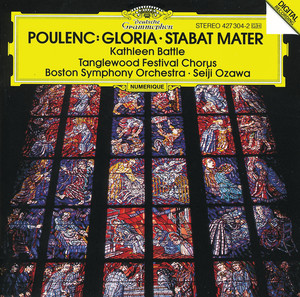 | Gloria, FP 144: 1. Gloria | Francis Poulenc, Kathleen Battle, Boston Symphony Orchestra, Seiji Ozawa, Tanglewood Festival Chorus, John Oliver | C Major | 3 | 8B | 109 BPM | |
 | Modern chorusmusic: Lux Aeterna | György Ligeti, Helmut Franz, Chor des Norddeutschen Rundfunks | A Minor | 1 | 8A | 66 BPM | |
 | Violin Concerto No. 2 in D Minor, Op. 61: II. Andantino sostenuto | Karol Szymanowski, Warmia Symphonic Orchestra, Silvano Frontalini, Beatrice Antonionini | A♭ Major | 4 | 4B | 103 BPM | |
 | And God Created Great Whales, Op. 229, No. 1 | Alan Hovhaness, Seattle Symphony Orchestra, Gerard Schwarz | C Major | 1 | 8B | 85 BPM | |
 | Cantus arcticus, Op. 61, "Concerto for Birds and Orchestra": I. Suo (The Marsh) | Einojuhani Rautavaara, Royal Scottish National Orchestra, Hannu Lintu | F♯ Major | 1 | 2B | 119 BPM | |
 | Belshazzar's Feast, JS 48: Prelude. Nocturno | Jean Sibelius, Turku Philharmonic Orchestra, Leif Segerstam | G Major | 2 | 9B | 98 BPM | |
 | The Dreams & Prayers of Isaac the Blind: Postlude | Osvaldo Golijov, Emil Jonason, Vamlingbo Quartet | N/A | N/A | N/A | 0 BPM | |
 | Ives / Orch. Brant: A Concord Symphony: III. The Alcotts | Charles Ives, Henry Brant, San Francisco Symphony, Michael Tilson Thomas | E♭ Major | 1 | 5B | 91 BPM | |
 | Five Movements for String Quartet, Op. 5: IV. Sehr langsam | Anton Webern, Leonkoro Quartet | A Major | 4 | 11B | 106 BPM | |
 | Trauermusik | Paul Hindemith, Geraldine Walther, San Francisco Symphony, Herbert Blomstedt | E Major | 0 | 12B | 88 BPM | |
 | Violin Concerto, Op. 36: I. Poco Allegro | Arnold Schoenberg, Hilary Hahn, Swedish Radio Symphony Orchestra, Esa-Pekka Salonen | A Minor | 2 | 8A | 82 BPM | |
 | Simple Symphony, Op. 4: III. Sentimental Sarabande | Benjamin Britten, Camerata Nordica, Terje Tonnesen | G Minor | 0 | 6A | 85 BPM |
- ISRC
- US4QP0664214
- Label
- L-M Records/RCA Records