- BPM
- 66
- Key
- C Major
- Camelot
- 8B
String Quartet No. 1 in G Minor: I. Allegro moderato by Ralph Vaughan Williams, Medici String Quartet Song Details
"String Quartet No. 1 in G Minor: I. Allegro moderato" by Ralph Vaughan Williams, Medici String Quartet had its release date on January 1, 1989. Since This song is still less than 10 minute long, it is still considered a pretty long duration song compared to the average song length. This song does not appear to be explicit due to the lack of the "E" tag. This song is part of Vaughan Williams: The String Quartets & Phantasy Quintet by Ralph Vaughan Williams, Medici String Quartet, Simon Rowland-Jones. The song's track number on the album is #5 out of 12 tracks. Based on our data, United Kingdom was the country where this track was produced or recorded. String Quartet No. 1 in G Minor: I. Allegro moderato is not that popular right now. In our opinion, the overall tone is not very danceable and projects negative sounds, such as being sad, depressed, or angry.
BPM and Tempo
Since String Quartet No. 1 in G Minor: I. Allegro moderato by Ralph Vaughan Williams, Medici String Quartet has a tempo of 66 beats per a minute, the tempo markings of this song would be Larghetto (rather broadly). With String Quartet No. 1 in G Minor: I. Allegro moderato being at 66 BPM, the half-time would be 33 BPM with a double-time of 132 BPM.In addition, we consider the tempo speed to be pretty slow for this song. The time signature for this track is 4/4.
Music Key
This song has a musical key of C Major. Or for those who are familiar with the camelot wheel, this song has a camelot key of 8B. So, the perfect camelot match for 8B would be either 8B or 9A. While, 9B can give you a low energy boost. For moderate energy boost, you would use 5B and a high energy boost can either be 10B or 3B. Though, if you want a low energy drop, you should looking for songs with either a camelot key of 8A or 7B will give you a low energy drop, 11B would be a moderate one, and 6B or 1B would be a high energy drop. Lastly, 5A allows you to change the mood.
Want to find the BPM and music key for other songs? Check out our BPM and Key Finder page!
- Popularity
- 11%
- Loudness
- -22.863 dB
- Acousticness
- 96%
- Danceability
- 10%
- Energy
- 6%
- Instrumentalness
- 36%
- Liveness
- 26%
- Loudness
- 62%
- Speechiness
- 5%
- Valence
- 7%
Recommendations
| Track | Artist | Key | Energy | Camelot | BPM | ||
|---|---|---|---|---|---|---|---|
 | Elegy, Op. 58 | Edward Elgar, English Northern Philharmonia, David Lloyd-Jones | F Minor | 0 | 4A | 84 BPM | |
 | Sailing By | Ronald Binge, Slovak Radio Symphony Orchestra, Ernest Tomlinson | F Major | 0 | 7B | 80 BPM | |
 | Gypsy Melodies, Op. 55, B. 104: IV. Songs My Mother Taught Me (Arr. Soltani For Solo Cello and Cello Ensemble) | Antonín Dvořák, Kian Soltani, Staatskapelle Berlin, Cellists | D Major | 1 | 10B | 125 BPM | |
 | Dies Natalis, Op. 8 - Arr. Sheppard: 5. The Salutation - Instrumental | Gerald Finzi, Amy Dickson, Aurora Orchestra, Nicholas Collon | G Major | 1 | 9B | 112 BPM | |
 | Songs My Mother Taught Me (from "Gypsy Songs", Op. 55, No. 4) | Antonín Dvořák, Yo-Yo Ma, Kathryn Stott | B Minor | 0 | 10A | 92 BPM | |
 | Messiah, HWV 56, Pt. I: Pastoral Symphony, "Pifa" (Arr. L. Stokowski) | George Frideric Handel, Bournemouth Symphony Orchestra, José Serebrier | C Major | 0 | 8B | 84 BPM | |
 | Vocalise, Op. 34, No. 14 | Sergei Rachmaninoff, Berliner Philharmoniker, Lorin Maazel | E Minor | 1 | 9A | 76 BPM | |
 | II. Adagio non troppo | George Butterworth, BBC National Orchestra Of Wales, Kriss Russman | F Major | 1 | 7B | 78 BPM | |
 | Suite No. 2, P. 138: IV. Bergamasca: Allegro | Ottorino Respighi, RTÉ National Symphony Orchestra | D Major | 1 | 10B | 86 BPM | |
 | Belshazzar's Feast, JS 48: Prelude. Nocturno | Jean Sibelius, Turku Philharmonic Orchestra, Leif Segerstam | G Major | 2 | 9B | 98 BPM | |
 | Enigma Variations: Nimrod | London Philharmonic Orchestra | E♭ Major | 1 | 5B | 68 BPM | |
 | The Moldau (From Má Vlast), JB 1:112 - Version 1960 | Bedřich Smetana, Berliner Philharmoniker, Ferenc Fricsay | E Minor | 2 | 9A | 87 BPM | |
 | 2 Pieces for Small Orchestra: No. 1, On Hearing the First Cuckoo in Spring | Frederick Delius, Royal Scottish National Orchestra, David Lloyd-Jones | E Minor | 0 | 9A | 79 BPM | |
![Etudes symphoniques (Symphonic Etudes), Op. 13, Adagio and Allegro brillante: Variation 11 [arr. P.I. Tchaikovsky for orchestra] by Robert Schumann, Seattle Symphony Orchestra, Gerard Schwarz](https://i.scdn.co/image/ab67616d00001e029057c124b554163ef1edd618) | Etudes symphoniques (Symphonic Etudes), Op. 13, Adagio and Allegro brillante: Variation 11 [arr. P.I. Tchaikovsky for orchestra] | Robert Schumann, Seattle Symphony Orchestra, Gerard Schwarz | A Minor | 0 | 8A | 104 BPM | |
 | Appalachian Spring: II. Allegro | Aaron Copland, Leonard Bernstein, New York Philharmonic | F Major | 4 | 7B | 82 BPM | |
| Introit, Op. 6 | Gerald Finzi, Thomas Gould, Aurora Orchestra, Nicholas Collon | F Major | 1 | 7B | 96 BPM | |
 | Walton: Henry V: Passacaglia "The Death of Falstaff" | William Walton, Douglas Boyd, Chamber Orchestra of Europe | E Minor | 0 | 9A | 86 BPM | |
 | Dvořák: Serenade for Strings in E Major, Op. 22, B. 52: I. Moderato | Antonín Dvořák, London Chamber Orchestra, Christopher Warren-Green | E Major | 1 | 12B | 82 BPM | |
 | Humoresque No. 7 in G-flat Major, Op. 101 | Boston Symphony Orchestra, Yo-Yo Ma, Seiji Ozawa, Itzhak Perlman | F♯ Major | 1 | 2B | 83 BPM | |
 | Mozart: Clarinet Concerto in A Major, K. 622: II. Adagio | Wolfgang Amadeus Mozart, Sabine Meyer, Hans Vonk, Staatskapelle Dresden | D Major | 0 | 10B | 93 BPM | |
 | Litolff: Concerto symphonique No. 4 in D Minor, Op. 102: II. Scherzo | Henry Litolff, San Francisco Symphony, Michael Tilson Thomas | D Minor | 3 | 7A | 122 BPM | |
 | Orpheo ed Euridice, Wq. 30, Act II: Dance of the Blessed Spirits | Christoph Willibald Gluck, Eugene Ormandy, Philadelphia Orchestra | D Minor | 1 | 7A | 67 BPM | |
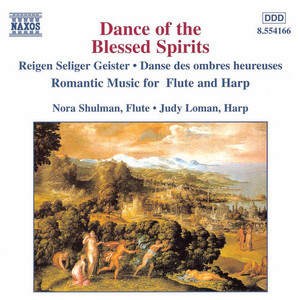 | Sicilienne, Op. 78 (arr. for flute and harp) | Donald Sosin, Gabriel Fauré, Nora Shulman, Judy Loman | B♭ Major | 1 | 6B | 153 BPM | |
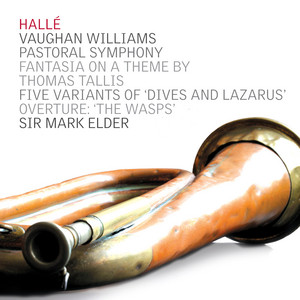 | Five Variants of ‘Dives and Lazarus’ | Ralph Vaughan Williams, Hallé, Sir Mark Elder | B Minor | 1 | 10A | 71 BPM | |
 | Brook Green Suite: II. Air | Gustav Holst, English Sinfonia, Howard Griffiths | E♭ Major | 0 | 5B | 128 BPM |
- ISRC
- GBAJU8900405
- Label
- L-M Records/RCA Records