- BPM
- 72
- Key
- E Major
- Camelot
- 12B
The Golden Cockerel, Act II: "Pogodi! Net bolshe sil!" by Nikolai Rimsky-Korsakov, Alexei Korolyov, Клара Кадинская, Алексей Ковалёв, Евгений Акулов, Grand Symphony Orchestra of All-Union National Radio Service and Central Television Networks Song Details
"The Golden Cockerel, Act II: "Pogodi! Net bolshe sil!"" by Nikolai Rimsky-Korsakov, Alexei Korolyov, Клара Кадинская, Алексей Ковалёв, Евгений Акулов, Grand Symphony Orchestra of All-Union National Radio Service and Central Television Networks had its release date on January 22, 2015. With This song being less than two minutes long, at 1:55, we are fairly confident that this song is not explicit and is safe for all ages. Based on the duration of this song, this song duration is much smaller than the average song duration. There are a total of 37 in the song's album "Rimsky-Korsakov: The Golden Cockerel". In this album, this song's track order is #14. The Golden Cockerel, Act II: "Pogodi! Net bolshe sil!" is unknown right now. In our opinion, the overall tone is not very danceable and projects negative sounds, such as being sad, depressed, or angry.
BPM and Tempo
With The Golden Cockerel, Act II: "Pogodi! Net bolshe sil!" by Nikolai Rimsky-Korsakov, Alexei Korolyov, Клара Кадинская, Алексей Ковалёв, Евгений Акулов, Grand Symphony Orchestra of All-Union National Radio Service and Central Television Networks having a BPM of 72 with a half-time of 36 BPM and a double-time of 144 BPM, we would consider this track to have a Adagio (slowly with great expression) tempo marking. Because of this, we believe that the song has an overall slow tempo. The time signature for this track is 3/4.
Music Key
This song has a musical key of E Major. Or for those who are familiar with the camelot wheel, this song has a camelot key of 12B. So, the perfect camelot match for 12B would be either 12B or 1A. While, 1B can give you a low energy boost. For moderate energy boost, you would use 9B and a high energy boost can either be 2B or 7B. Though, if you want a low energy drop, you should looking for songs with either a camelot key of 12A or 11B will give you a low energy drop, 3B would be a moderate one, and 10B or 5B would be a high energy drop. Lastly, 9A allows you to change the mood.
Want to find the BPM and music key for other songs? Check out our BPM and Key Finder page!
- Popularity
- 0%
- Loudness
- -17.469 dB
- Acousticness
- 95%
- Danceability
- 26%
- Energy
- 13%
- Instrumentalness
- 0%
- Liveness
- 9%
- Loudness
- 71%
- Speechiness
- 3%
- Valence
- 8%
Recommendations
| Track | Artist | Key | Energy | Camelot | BPM | ||
|---|---|---|---|---|---|---|---|
 | 21 Hungarian Dances, WoO 1: Hungarian Dance No. 5 in F-Sharp Minor | Johannes Brahms, Seattle Symphony Orchestra, Gerard Schwarz | E Major | 1 | 12B | 102 BPM | |
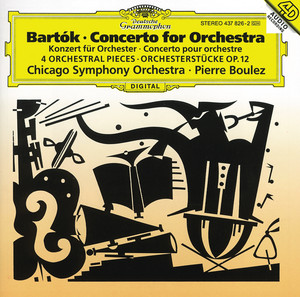 | Concerto for Orchestra, Sz. 116: IV. Intermezzo interrotto (Allegretto) | Béla Bartók, Chicago Symphony Orchestra, Pierre Boulez | D Major | 1 | 10B | 73 BPM | |
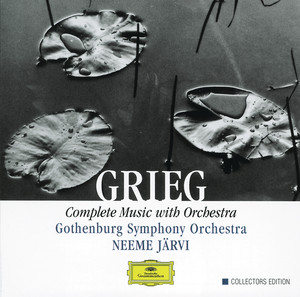 | In Autumn, Op. 11 | Edvard Grieg, Gothenburg Symphony Orchestra, Neeme Järvi | A Minor | 1 | 8A | 109 BPM | |
 | Prokofiev: Suite No. 2 from Romeo and Juliet, Op. 64ter: I. The Montagues and Capulets (Excerpt) | Sergei Prokofiev, Philadelphia Orchestra, Riccardo Muti | A Minor | 3 | 8A | 108 BPM | |
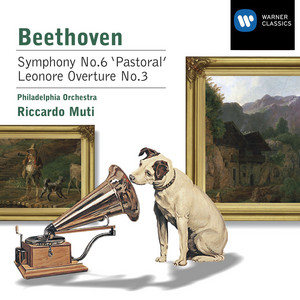 | Beethoven: Symphony No. 6 in F Major, Op. 68 "Pastoral": IV. Gewitter. Sturm. Allegro - | Ludwig van Beethoven, Philadelphia Orchestra, Riccardo Muti | G Major | 0 | 9B | 127 BPM | |
 | Hungarian Dances, WoO 1: No. 1 in G Minor | Johannes Brahms, Cristian Mandeal, George Enescu Philharmonic Orchestra, Bucharest | G Minor | 2 | 6A | 73 BPM | |
 | Brook Green Suite: I. Prelude | Gustav Holst, English Sinfonia, Howard Griffiths | D♭ Major | 0 | 3B | 66 BPM | |
 | Halvorsen: Passacaglia (After Handel's Keyboard Suite, HWV 432) | Johan Halvorsen, Itzhak Perlman, Pinchas Zukerman | G Minor | 2 | 6A | 109 BPM | |
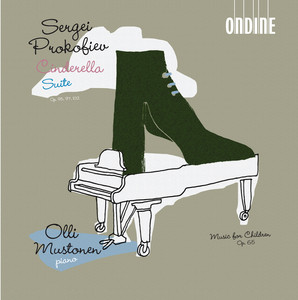 | 10 Pieces, Op. 12: No. 7, Prelude | Sergei Prokofiev, Olli Mustonen | C Major | 1 | 8B | 76 BPM | |
 | Prélude to the Afternoon of a Faun | Claude Debussy, Hanspeter Gmür, Nuremberg Symphony Orchestra | C Major | 9 | 8B | 85 BPM | |
 | Waltz Suite, Op. 110: VI. Happiness (From Cinderella, Op. 87) | Sergei Prokofiev, Orquestra Sinfônica do Estado de São Paulo, Marin Alsop | D Major | 1 | 10B | 141 BPM | |
 | Skazaniye o nevidimom grade Kitezhe i deve Fevronii (Legend of the Invisible City of Kitezh and the Maiden Fevroniya): Prelude. In praise of the wilderness | Nikolai Rimsky-Korsakov, Mikhail Kazakov, Vitaly Panfilov, Tatiana Monogarova, Mikhail Gubsky, Gevorg Hakobyan, Marika Gulordava, Riccardo Ferrari, Stefano Consolini, Valery Gilmanov, Alexander Naumenko, Rosanna Savoia, Elena Manistina, Cagliari Theatre C | B Minor | 0 | 10A | 102 BPM | |
 | Paganini: 24 Caprices, Op. 1: No. 24 in A Minor | Niccolò Paganini, Itzhak Perlman | A Minor | 1 | 8A | 111 BPM | |
 | The Rite of Spring: Part Two: The Sacrifice: Sacrificial Dance (The Chosen One) | Igor Stravinsky, Teodor Currentzis, musicAeterna | D Minor | 5 | 7A | 136 BPM | |
 | Jazz Suite No. 2: III. Dance 1 | Dmitri Shostakovich, Russian State Symphony Orchestra, Dmitry Yablonsky | A Major | 3 | 11B | 153 BPM | |
 | Ständchen, S. 560 (Trans. from Schwanengesang No. 4, D. 957) | Franz Schubert, Franz Liszt, Khatia Buniatishvili | D Major | 0 | 10B | 67 BPM | |
 | Ruslan and Lyudmila, Op. 5, Overture | Mikhail Glinka, Alexander Vedernikov, Bolshoi Theatre Orchestra | E Minor | 1 | 9A | 151 BPM | |
 | Carmen Suite No. 1: 4. Les dragons d'Alcala | Georges Bizet, Orchestre de Paris, Semyon Bychkov | G Major | 0 | 9B | 117 BPM | |
 | Saint-Saëns: Piano Concerto No. 2 in G Minor, Op. 22: III. Presto | Camille Saint-Saëns, Bertrand Chamayou, Emmanuel Krivine, Orchestre National De France | C Minor | 4 | 5A | 110 BPM | |
 | Carmen Concert Fantasy, Op. 25: I. Introduction. Allegro moderato | Pablo de Sarasate, Tianwa Yang, Navarre Symphony Orchestra, Ernest Martinez Izquierdo | D Minor | 1 | 7A | 107 BPM | |
 | Violin Concerto in E Minor, Op. 64: I. Allegro molto appassionato – | Felix Mendelssohn, Kyung Wha Chung, Orchestre Symphonique de Montréal, Charles Dutoit | E Minor | 1 | 9A | 101 BPM | |
 | Piano Concerto No. 2 in F Major, Op. 102: II. Andante | Dmitri Shostakovich, Boris Giltburg, Royal Liverpool Philharmonic Orchestra, Vasily Petrenko | C Minor | 0 | 5A | 80 BPM | |
 | Romanian Folk Dances, Sz. 56 - Arr. for String Orchestra by Arthur Wilner | Béla Bartók, Orchestra of the Swan, David le Page | B Minor | 0 | 10A | 78 BPM | |
| Carmen Suite No.2: 5. Danse bohème | Georges Bizet, Orchestre de Paris, Semyon Bychkov | E Major | 1 | 12B | 142 BPM | |
 | Symphonie espagnole, Op. 21: I. Allegro non troppo | Édouard Lalo, Itzhak Perlman, Orchestre de Paris, Daniel Barenboim | D Minor | 1 | 7A | 75 BPM |
- ISRC
- UK2Y21500121
- Label
- L-M Records/RCA Records