- BPM
- 104
- Key
- G Minor
- Camelot
- 6A
Strauss, R: Violin Concerto in D Minor, Op. 8: II. Lento, ma non troppo by Richard Strauss, Rudolf Kempe, Ulf Hoelscher, Staatskapelle Dresden Song Details
"Strauss, R: Violin Concerto in D Minor, Op. 8: II. Lento, ma non troppo" by Richard Strauss, Rudolf Kempe, Ulf Hoelscher, Staatskapelle Dresden had its release date on 2013. Since This song is still less than 10 minute long, it is still considered a pretty long duration song compared to the average song length. This song does not appear to be explicit due to the lack of the "E" tag. There are a total of 103 in the song's album "Strauss, Richard: Complete Orchestral Works". In this album, this song's track order is #82. Furthermore, we believe that the track originated from United Kingdom. In terms of popularity, Strauss, R: Violin Concerto in D Minor, Op. 8: II. Lento, ma non troppo is currently unknown. In our opinion, the overall tone is not very danceable and projects negative sounds, such as being sad, depressed, or angry.
BPM and Tempo
With Strauss, R: Violin Concerto in D Minor, Op. 8: II. Lento, ma non troppo by Richard Strauss, Rudolf Kempe, Ulf Hoelscher, Staatskapelle Dresden having a BPM of 104 with a half-time of 52 BPM and a double-time of 208 BPM, we would consider this track to have a Andante (at a walking pace) tempo marking. Because of this, we believe that the song has an overall slow tempo. The time signature for this track is 4/4.
Music Key
This song has a musical key of G Minor. Which also means that the camelot key for this song is 6A. So, the perfect camelot match for 6A would be either 6A or 5B. While, a low energy boost can consist of either 6B or 7A. For moderate energy boost, you would use 3A and a high energy boost can either be 8A or 1A. However, if you are looking for a low energy drop, finding a song with a camelot key of 5A would be a great choice. Where 9A would give you a moderate drop, and 4A or 11A would be a high energy drop. Lastly, 9B allows you to change the mood.
Want to find the BPM and music key for other songs? Check out our BPM and Key Finder page!
- Popularity
- 0%
- Loudness
- -17.425 dB
- Acousticness
- 97%
- Danceability
- 16%
- Energy
- 17%
- Instrumentalness
- 82%
- Liveness
- 10%
- Loudness
- 71%
- Speechiness
- 4%
- Valence
- 4%
Recommendations
| Track | Artist | Key | Energy | Camelot | BPM | ||
|---|---|---|---|---|---|---|---|
 | Dvořák: 7 Gipsy Melodies, Op. 55, B. 104: No. 4, Als die alte Mutter (Transcr. for Trumpet and Orchestra) | Antonín Dvořák, Tine Thing Helseth, Eivind Aadland, Royal Liverpool Philharmonic Orchestra | D Major | 1 | 10B | 92 BPM | |
 | Hungarian Dance No.1 in G minor - Orchestrated by Brahms: Allegro molto | Johannes Brahms, Chicago Symphony Orchestra, Daniel Barenboim | G Minor | 2 | 6A | 65 BPM | |
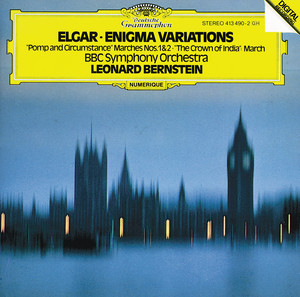 | Enigma Variations, Op. 36: Var. 9. Adagio "Nimrod" | Edward Elgar, BBC Symphony Orchestra, Leonard Bernstein | E♭ Major | 0 | 5B | 79 BPM | |
 | Warsaw Concerto | Richard Addinsell, Jean-Yves Thibaudet, BBC Symphony Orchestra, Hugh Wolff | B Major | 1 | 1B | 76 BPM | |
 | The Rite of Spring: Part Two: The Sacrifice: Sacrificial Dance (The Chosen One) | Igor Stravinsky, Teodor Currentzis, musicAeterna | D Minor | 5 | 7A | 136 BPM | |
 | Ravel: La Valse: La Valse, M. 72 | Maurice Ravel, Mariss Jansons, Bavarian Radio Symphony Orchestra | D Major | 1 | 10B | 108 BPM | |
 | Pavane pour une infante défunte | Maurice Ravel, Richard Sebring, Boston Pops Orchestra, John Williams | G Major | 1 | 9B | 93 BPM | |
 | Symphony No. 4, Op. 29 "The Inextinguishable": III. Poco adagio quasi andante | Carl Nielsen, Danish National Symphony Orchestra, Fabio Luisi | D♭ Major | 3 | 3B | 95 BPM | |
 | Tchaikovsky: Variations on a Rococo Theme, Op. 33: Introduction - Thema | Pyotr Ilyich Tchaikovsky, Munich Philharmonic Orchestra, Valery Gergiev | B♭ Minor | 1 | 3A | 136 BPM | |
 | Carmen Suite No. 1 (Arr. E. Guiraud): IV. Séguedille | Georges Bizet, Orquestra Simfònica de Barcelona i Nacional de Catalunya, Pablo González | G Minor | 0 | 6A | 66 BPM | |
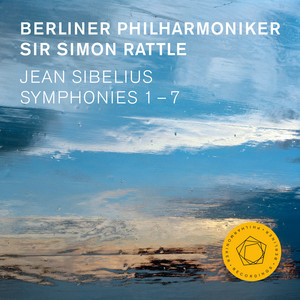 | Symphony No. 1 in E Minor, Op. 39: I. Andante, ma non troppo - Allegro energico | Jean Sibelius, Berliner Philharmoniker, Sir Simon Rattle | E Minor | 1 | 9A | 77 BPM | |
 | Scottish Fantasy for Violin and Orchestra, Op. 46: I. Introduction: Grave, Adagio cantabile | Max Bruch, Joshua Bell, Academy of St. Martin in the Fields | E♭ Major | 2 | 5B | 60 BPM | |
 | Ständchen in G Major, TrV 114: Standchen, TrV 114 | Richard Strauss, Amelia Piano Trio, Max Mandel | D♭ Major | 1 | 3B | 126 BPM | |
![Spartacus, Act III: Adagio of Spartacus and Phrygia (arr. Y. Grigorovich) [1968 Bolshoi Version] by Aram Khachaturian, RIAS Kammerchor, Deutsches Symphonie-Orchester Berlin, Michail Jurowski](https://i.scdn.co/image/ab67616d00001e02c21d253eed4ccdd547b4b94d) | Spartacus, Act III: Adagio of Spartacus and Phrygia (arr. Y. Grigorovich) [1968 Bolshoi Version] | Aram Khachaturian, RIAS Kammerchor, Deutsches Symphonie-Orchester Berlin, Michail Jurowski | E Major | 2 | 12B | 123 BPM | |
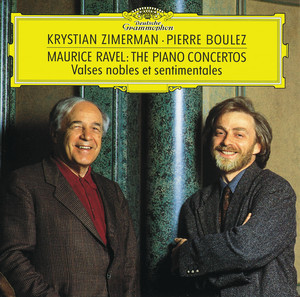 | Piano Concerto in G Major, M. 83: I. Allegramente | Maurice Ravel, Krystian Zimerman, The Cleveland Orchestra, Pierre Boulez | D Major | 1 | 10B | 129 BPM | |
 | Piano Concerto No. 2 in F Major, Op. 102: II. Andante | Dmitri Shostakovich, Boris Giltburg, Royal Liverpool Philharmonic Orchestra, Vasily Petrenko | C Minor | 0 | 5A | 80 BPM | |
 | Má Vlast, JB1:112: III. Sarka | Bedřich Smetana, Boston Symphony Orchestra, Rafael Kubelík | E Minor | 3 | 9A | 104 BPM | |
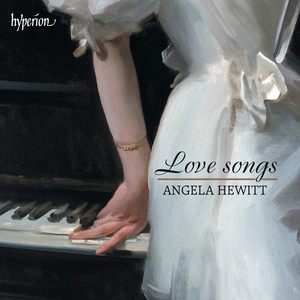 | Morgen, Op. 27 No. 4 (Arr. Reger for Piano) | Richard Strauss, Angela Hewitt | A Major | 2 | 11B | 143 BPM | |
 | 2nd Movement: Largo | London Philharmonic Orchestra | D♭ Major | 0 | 3B | 74 BPM | |
 | Tristan und Isolde, Act I: Prelude | Richard Wagner, Staatskapelle Dresden, Carlos Kleiber | A Major | 1 | 11B | 82 BPM | |
 | La Mer, L.109: 1. From Dawn Till Noon On The Sea (De l'aube à midi sur la mer) | Claude Debussy, Orchestre Symphonique de Montréal, Charles Dutoit | F♯ Major | 1 | 2B | 61 BPM | |
 | La Cenerentola: Overture (Sinfonia) | Gioachino Rossini, Orchestra del Teatro Comunale di Bologna, Riccardo Chailly | A Minor | 1 | 8A | 116 BPM | |
 | Aleko: Intermezzo | Sergei Rachmaninoff, Berliner Philharmoniker, Lorin Maazel | B♭ Major | 0 | 6B | 90 BPM | |
| Piano Concerto in G Major, M. 83: II. Adagio assai | Maurice Ravel, Krystian Zimerman, Cleveland Orchestra, Pierre Boulez | E Major | 0 | 12B | 74 BPM | |
 | Miške, MKČ 101: VI. Recapitulation, Main Theme a tempo I | Mikalojus Konstantinas Čiurlionis, Orchestre Philharmonique de Radio France, Mirga Gražinytė-Tyla | A Minor | 0 | 8A | 85 BPM |
- ISRC
- GBAYC1302893
- Label
- L-M Records/RCA Records