- BPM
- 134
- Key
- D Major
- Camelot
- 10B
Otello / Act 1: "Esultate!" by Giuseppe Verdi, Luciano Pavarotti, Chicago Symphony Chorus, Chicago Symphony Orchestra, Sir Georg Solti Song Details
"Otello / Act 1: "Esultate!"" by Giuseppe Verdi, Luciano Pavarotti, Chicago Symphony Chorus, Chicago Symphony Orchestra, Sir Georg Solti had its release date on January 1, 1991. The duration of This song is about two minutes long, specifically at 2:24. This song does not appear to have any foul language. Otello / Act 1: "Esultate!"'s duration is considered a little bit shorter than the average duration of a typical track. This song is part of Verdi: Otello by Giuseppe Verdi, Kiri Te Kanawa, Luciano Pavarotti, Anthony Rolfe Johnson, Leo Nucci, Chicago Symphony Chorus, Chicago Symphony Orchestra, Sir Georg Solti. The song's track number on the album is #2 out of 45 tracks. Based on our data, United Kingdom was the country where this track was produced or recorded. Based on our statistics, Otello / Act 1: "Esultate!"'s popularity is not that popular right now. In our opinion, the overall tone is not very danceable and projects negative sounds, such as being sad, depressed, or angry.
BPM and Tempo
Since Otello / Act 1: "Esultate!" by Giuseppe Verdi, Luciano Pavarotti, Chicago Symphony Chorus, Chicago Symphony Orchestra, Sir Georg Solti has a tempo of 134 beats per a minute, the tempo markings of this song would be Allegro (fast, quick, and bright). With Otello / Act 1: "Esultate!" being at 134 BPM, the half-time would be 67 BPM with a double-time of 268 BPM.In addition, we consider the tempo speed to be pretty fast for this song. This makes this song perfect for activities such as, walking. The time signature for this track is 5/4.
Music Key
This song is in the music key of D Major. Or for those who are familiar with the camelot wheel, this song has a camelot key of 10B. So, the perfect camelot match for 10B would be either 10B or 11A. While, 11B can give you a low energy boost. For moderate energy boost, you would use 7B and a high energy boost can either be 12B or 5B. Though, if you want a low energy drop, you should looking for songs with either a camelot key of 10A or 9B will give you a low energy drop, 1B would be a moderate one, and 8B or 3B would be a high energy drop. Lastly, 7A allows you to change the mood.
Want to find the BPM and music key for other songs? Check out our BPM and Key Finder page!
- Popularity
- 15%
- Loudness
- -13.956 dB
- Acousticness
- 94%
- Danceability
- 18%
- Energy
- 26%
- Instrumentalness
- 35%
- Liveness
- 12%
- Loudness
- 77%
- Speechiness
- 4%
- Valence
- 6%
Recommendations
| Track | Artist | Key | Energy | Camelot | BPM | ||
|---|---|---|---|---|---|---|---|
 | La Girometta - Live at the Llangollen International Musical Eisteddfod, 1995 | Gabriele Sibella, Luciano Pavarotti, BBC Philharmonic, Leone Magiera | E♭ Major | 1 | 5B | 80 BPM | |
 | Cavalleria rusticana: "Fior di giaggiolo" | Pietro Mascagni, Carmen Gonzales, Luciano Pavarotti, Julia Varady, National Philharmonic Orchestra, Gianandrea Gavazzeni | B♭ Major | 1 | 6B | 176 BPM | |
 | Vaga luna che inargenti (Orch. Faris) | Vincenzo Bellini, Luciano Pavarotti, Philharmonia Orchestra, Piero Gamba | B Major | 2 | 1B | 86 BPM | |
 | Macbeth, Act I: Witches' Chorus. Che faceste? dite su! - Giorno non vid mai | Giuseppe Verdi, Piero Cappuccilli, Giovanni Foiani, Orchestra Del Teatro Alla Scala, Milano, Claudio Abbado, Coro Del Teatro Alla Scala Di Milano, Romano Gandolfi | D♭ Major | 1 | 3B | 81 BPM | |
 | Die Entführung aus dem Serail / Act 1: "Wer ein Liebchen hat gefunden" - "Verwünscht seist du samt deinem Liede!" | Wolfgang Amadeus Mozart, Gösta Winbergh, Martti Talvela, Heinz Zednik, Wiener Philharmoniker, Sir Georg Solti | G Minor | 2 | 6A | 82 BPM | |
 | Marechiare | Francesco Paolo Tosti, Luciano Pavarotti, National Philharmonic Orchestra, Giancarlo Chiaramello | C Major | 2 | 8B | 132 BPM | |
| Caro mio ben | Tomasso Giordani, Luciano Pavarotti, Philharmonia Orchestra, Piero Gamba | F Major | 1 | 7B | 85 BPM | |
 | La Cenerentola / Act 2: "Sì, ritrovarla io giuro" | Gioachino Rossini, William Matteuzzi, Michele Pertusi, Coro del Teatro Comunale di Bologna, Orchestra del Teatro Comunale di Bologna, Riccardo Chailly | F Major | 2 | 7B | 86 BPM | |
 | La serenata | Francesco Paolo Tosti, Luciano Pavarotti, Orchestra del Teatro Comunale di Bologna, Richard Bonynge | F Major | 3 | 7B | 96 BPM | |
 | Rigoletto / Act 3: Della vendetta alfin giunge l'istante (Rigoletto, Sparafucile, Duca) | Giuseppe Verdi, Vladimir Chernov, Roberto Scandiuzzi, Luciano Pavarotti, Metropolitan Opera Orchestra, James Levine | A Major | 9 | 11B | 99 BPM | |
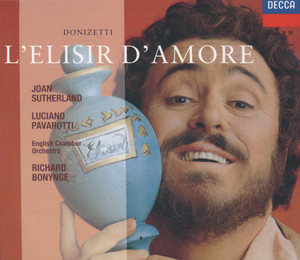 | L'elisir d'amore / Act 1: "Benedette queste carte!" - "Della crudele Isotta" | Gaetano Donizetti, Dame Joan Sutherland, Luciano Pavarotti, Maria Casula, Ambrosian Opera Chorus, English Chamber Orchestra, Richard Bonynge | E Major | 1 | 12B | 75 BPM | |
 | Rondine al nido | Vincenzo de Crescenzo, Luciano Pavarotti, Andrea Griminelli, Henry Mancini, Unknown Orchestra | G Major | 2 | 9B | 174 BPM | |
 | Messa di Requiem, Dies irae: Recordare | Giuseppe Verdi, Angela Gheorghiu, Claudio Abbado, Berliner Philharmoniker | F Major | 1 | 7B | 75 BPM | |
| Torna a Surriento (Arr. Chiaramello) | Ernesto de Curtis, Luciano Pavarotti, National Philharmonic Orchestra, Giancarlo Chiaramello | E Major | 2 | 12B | 83 BPM | |
 | Der fliegende Holländer, Act III: Willst jenen Tag du nicht dich mehr entsinnen "Cavatina" | Richard Wagner, René Kollo, Chicago Symphony Orchestra, Sir Georg Solti | A Major | 3 | 11B | 87 BPM | |
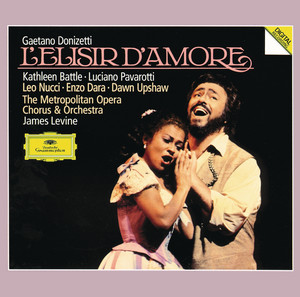 | L'elisir d'amore / Act II: "Una furtiva lagrima" | Gaetano Donizetti, Luciano Pavarotti, Metropolitan Opera Orchestra, James Levine | B♭ Minor | 1 | 3A | 87 BPM | |
 | Simon Boccanegra: Prologo: Che dicesti (Paolo, Pietro, Simone, Coro) | Giuseppe Verdi, Mattia Olivieri, Andrea Pellegrini, Ludovic Tezier, Coro del Teatro di San Carlo di Napoli, Michele Spotti, Orchestra del Teatro San Carlo di Napoli | A♭ Minor | 1 | 1A | 84 BPM | |
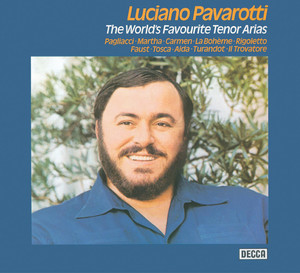 | Faust, CG 4, Act III: Quel trouble inconnu – Salut, demeure chaste et pure | Charles Gounod, Luciano Pavarotti, Vienna Volksoper Orchestra, Leone Magiera | A♭ Major | 2 | 4B | 174 BPM | |
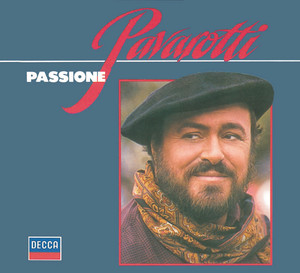 | La Palummella | Anonymous, Luciano Pavarotti, Orchestra del Teatro Comunale di Bologna, Giancarlo Chiaramello | C Minor | 3 | 5A | 121 BPM | |
| Core 'ngrato (Arr. Chiaramello) | Salvatore Cardillo, Luciano Pavarotti, Orchestra del Teatro Comunale di Bologna, Giancarlo Chiaramello | E♭ Major | 3 | 5B | 84 BPM | |
 | Macbeth: Act IV: Una macchia e qui tutt'ora (Lady Macbeth, a Doctor, a Lady's Maid) | Giuseppe Verdi, Giuseppe Altomare, Olha Zhuravel, Pavel Kudinov, Rubens Pelizzari, Marco Voleri, Luca Dall'Amico, William Corro, Andrea Pistolesi, Coro Lirico Marchigiano 'V. Bellini', Marchigiana Philharmonic Orchestra, Daniele Callegari | D♭ Major | 1 | 3B | 113 BPM | |
 | La Gioconda / Act 1: Voce di donna ... a te questo rosario | Amilcare Ponchielli, Alfreda Hodgson, Montserrat Caballé, Agnes Baltsa, Regolo Romani, John del Carlo, Nicolai Ghiaurov, Luciano Pavarotti, National Philharmonic Orchestra, Bruno Bartoletti | E♭ Major | 1 | 5B | 89 BPM | |
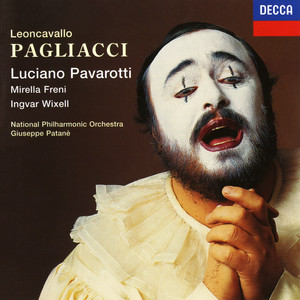 | Pagliacci / Act 1: "Sei là" - "So ben che difforme" - "Oh! lasciami" | Ruggero Leoncavallo, Mirella Freni, Ingvar Wixell, National Philharmonic Orchestra, Giuseppe Patanè | E Major | 2 | 12B | 127 BPM | |
 | Rigoletto, Act I: Questa o quella – Partite? Crudele – Ah, più di Ceprano | Giuseppe Verdi, Plácido Domingo, Olive Fredricks, Luigi De Corato, Dirk Sagemüller, Piero Cappuccilli, Walter Gullino, Wiener Philharmoniker, Carlo Maria Giulini, Wiener Staatsopernchor | A♭ Minor | 1 | 1A | 84 BPM | |
| Pagliacci / Act 2: "Presto, affrettiamoci" | Ruggero Leoncavallo, Ingvar Wixell, Vincenzo Bello, Lorenzo Saccomani, Mirella Freni, The London Opera Chorus, National Philharmonic Orchestra, Giuseppe Patanè | E Major | 3 | 12B | 109 BPM |
- ISRC
- GBF079140402
- Label
- L-M Records/RCA Records