- BPM
- 138
- Key
- A Minor
- Camelot
- 8A
Rouse : Concert de Gaudí : III Svolazzante by Christopher Rouse, Sharon Isbin, Muhai Tang, The Gulbenkian Orchestra Song Details
"Rouse : Concert de Gaudí : III Svolazzante" by Christopher Rouse, Sharon Isbin, Muhai Tang, The Gulbenkian Orchestra had its release date on August 31, 2000. Since This song is still less than 10 minute long, it is still considered a pretty long duration song compared to the average song length. This song does not appear to be explicit due to the lack of the "E" tag. There are a total of 8 in the song's album "Tan Dun & Rouse : Guitar Concertos". In this album, this song's track order is #3. Based on our statistics, Rouse : Concert de Gaudí : III Svolazzante's popularity is unknown right now. Although the tone can be danceable to some, this track does projects more of a negative sound rather than a postive one.
BPM and Tempo
With Rouse : Concert de Gaudí : III Svolazzante by Christopher Rouse, Sharon Isbin, Muhai Tang, The Gulbenkian Orchestra having a BPM of 138 with a half-time of 69 BPM and a double-time of 276 BPM, we would consider this track to have a Allegro (fast, quick, and bright) tempo marking. Because of this, we believe that the song has an overall fast tempo. Looking at the BPM of this song, this song might go great with walking. The time signature for this track is 3/4.
Music Key
A Minor is the music key of this track. Which also means that the camelot key for this song is 8A. So, the perfect camelot match for 8A would be either 8A or 7B. While, a low energy boost can consist of either 8B or 9A. For moderate energy boost, you would use 5A and a high energy boost can either be 10A or 3A. However, if you are looking for a low energy drop, finding a song with a camelot key of 7A would be a great choice. Where 11A would give you a moderate drop, and 6A or 1A would be a high energy drop. Lastly, 11B allows you to change the mood.
Want to find the BPM and music key for other songs? Check out our BPM and Key Finder page!
- Popularity
- 0%
- Loudness
- -19.772 dB
- Acousticness
- 95%
- Danceability
- 41%
- Energy
- 24%
- Instrumentalness
- 84%
- Liveness
- 13%
- Loudness
- 67%
- Speechiness
- 4%
- Valence
- 12%
Recommendations
| Track | Artist | Key | Energy | Camelot | BPM | ||
|---|---|---|---|---|---|---|---|
 | A Song for Bram (Version for Piano & Orchestra) | Edward Gregson, BBC Philharmonic Orchestra, Ben Gernon | F♯ Major | 0 | 2B | 77 BPM | |
 | Serenade for Strings in E-Flat Major, Op. 6: III. Adagio | Josef Suk, Alexej Svjatlovskij, Igor Makarow, Sergej Belesow, European New Philharmonic Orchestra, Volker Hartung | G Major | 0 | 9B | 73 BPM | |
 | In the Wake of the Flames for Bassoon Sextet | Nikolas Eleftheriou | B♭ Minor | 0 | 3A | 67 BPM | |
 | Symphony No. 2: III. Allegro | Christopher Rouse, Houston Symphony, Christoph Eschenbach | F Major | 4 | 7B | 101 BPM | |
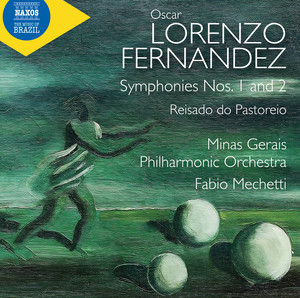 | Reisado do pastoreio: III. Batuque | Oscar Lorenzo Fernández, Minas Gerais Philharmonic Orchestra, Fabio Mechetti | F Major | 7 | 7B | 100 BPM | |
 | Dybbuk: Part I: IV. Dream | Leonard Bernstein, Mel Ulrich, Mark Risinger, Nashville Symphony Orchestra, Andrew Mogrelia | D♭ Major | 0 | 3B | 87 BPM | |
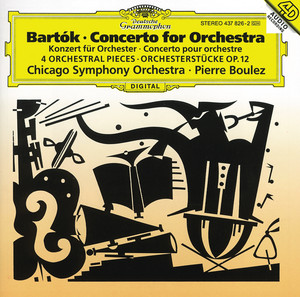 | Four Orchestral Pieces Op. 12 (Sz 51): II. Scherzo: Allegro | Béla Bartók, Chicago Symphony Orchestra, Pierre Boulez | D Major | 1 | 10B | 73 BPM | |
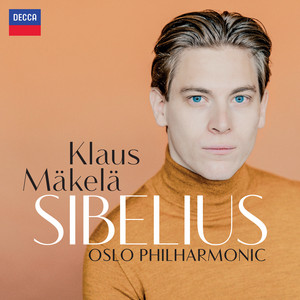 | Symphony No. 1 in E Minor, Op. 39: II. Andante (ma non troppo lento) | Jean Sibelius, Oslo Philharmonic Orchestra, Klaus Mäkelä | F♯ Minor | 1 | 11A | 66 BPM | |
 | Hungarian Sketches, Sz. 97: V. Swineherd's Dance | Béla Bartók, Chicago Symphony Orchestra, Pierre Boulez | D Major | 1 | 10B | 74 BPM | |
 | Sibelius: Symphony No. 1 in E Minor, Op. 39: I. Andante, ma non troppo - Allegro energico | Jean Sibelius, Paavo Berglund, Helsinki Philharmonic Orchestra | C Major | 2 | 8B | 109 BPM | |
 | Neon Waves | Lumi Risto | D Major | 1 | 10B | 130 BPM | |
 | 4 Ragtime Dances: No. 1, — | Charles Ives, Orchestra New England, James Sinclair | G Major | 0 | 9B | 173 BPM | |
 | Overture: Overture | Grażyna Bacewicz, BBC Symphony Orchestra, Sakari Oramo | B Major | 0 | 1B | 112 BPM | |
 | Symphony No. 2 "The Age of Anxiety", Pt. 2: The Epilogue. L'istesso tempo | Leonard Bernstein, Jean-Yves Thibaudet, Baltimore Symphony Orchestra, Marin Alsop | D♭ Major | 0 | 3B | 135 BPM | |
 | Billy the Kid: No. 10, Billy's Funeral | Aaron Copland, Colorado Symphony, Andrew Litton | D Major | 0 | 10B | 92 BPM | |
 | Piano Concerto No. 2 in F Major, Op. 102: I. Allegro | Dmitri Shostakovich, Michael Houstoun, New Zealand Symphony Orchestra, Christopher Lyndon-Gee | C Major | 2 | 8B | 123 BPM | |
 | Respighi: Pini di Roma: II. Pini presso una catacomba (Lento - Più mosso) | Ottorino Respighi, Riccardo Muti, Philadelphia Orchestra | B Minor | 0 | 10A | 74 BPM | |
 | Violin Sonata in E Minor, P. 85: IV. Giga. Vivace assai (After J.S. Bach's BWV 1023) | Ottorino Respighi, Ilkka Talvi, Seattle Symphony Orchestra, Gerard Schwarz | E Minor | 0 | 9A | 121 BPM | |
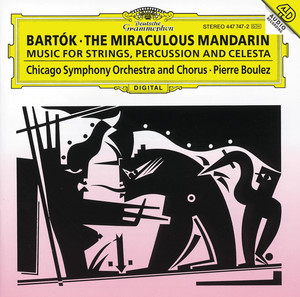 | The Miraculous Mandarin, Sz. 73: 1st Decoy Game. Moderato | Béla Bartók, Chicago Symphony Orchestra, Pierre Boulez | F Minor | 0 | 4A | 74 BPM | |
 | Passacaglia & Fugue in C Minor, BWV 582 (Arr. for Orchestra by Sir Andrew Davis): II. Fugue | Johann Sebastian Bach, BBC Philharmonic, Sir Andrew Davis | E♭ Major | 0 | 5B | 73 BPM | |
 | King Christian II Suite, Op. 27: III. Musette | Jean Sibelius, Thomas Søndergård, BBC National Orchestra Of Wales | A Minor | 2 | 8A | 143 BPM | |
 | 3 Dance Episodes from On the Town: No. 2, Lonely Town | Leonard Bernstein, Bournemouth Symphony Orchestra, Marin Alsop | D Minor | 2 | 7A | 105 BPM | |
 | Organ Concerto in G Minor, FP 93: VI. Tempo de I' Allegro intial | Francis Poulenc, Philippe Lefebvre, Orchestre National de Lille, Jean-Claude Casadesus | A♭ Minor | 0 | 1A | 71 BPM | |
 | Bridge of Darling | Ernesto Vallini, Neon Lilith, Valhalla Orquestra, Jackie Vanguast | C Minor | 1 | 5A | 69 BPM | |
 | Vaughan Williams: Job, a Masque for Dancing, Scene 1: Sarabande of the Sons of God | Ralph Vaughan Williams, Andrew Davis, BBC Symphony Orchestra | D Major | 1 | 10B | 110 BPM |
- ISRC
- This song does not have an ISRC.
- Label
- L-M Records/RCA Records