- BPM
- 82
- Key
- E♭ Major
- Camelot
- 5B
Enigma Variations, Op. 36: Var. 9. Adagio "Nimrod" by Edward Elgar, Chicago Symphony Orchestra, Sir Georg Solti Song Details
"Enigma Variations, Op. 36: Var. 9. Adagio "Nimrod"" by Edward Elgar, Chicago Symphony Orchestra, Sir Georg Solti had its release date on November 1, 1976. The duration of This song is about 3 minutes long, at 3:11. Based on our data, This song appears to be safe for all ages and is not considered explicit. This track is about the average length of a typical track. The song is number 10 out of 16 in Elgar: Enigma Variations; Cockaigne by Edward Elgar, Sir Georg Solti, Chicago Symphony Orchestra. Going off of the ISRC code of this track, we detected that the origin of this track is from United Kingdom. Enigma Variations, Op. 36: Var. 9. Adagio "Nimrod" is not that popular right now. In our opinion, the overall tone is not very danceable and projects negative sounds, such as being sad, depressed, or angry.
BPM and Tempo
The tempo marking of Enigma Variations, Op. 36: Var. 9. Adagio "Nimrod" by Edward Elgar, Chicago Symphony Orchestra, Sir Georg Solti is Andante (at a walking pace), since this song has a tempo of 82 BPM. With that information, we can conclude that the song has a slow tempo. The time signature for this track is 3/4.
Music Key
E♭ Major is the music key of this track. This also means that this song has a camelot key of 5B. So, the perfect camelot match for 5B would be either 5B or 6A. While, 6B can give you a low energy boost. For moderate energy boost, you would use 2B and a high energy boost can either be 7B or 12B. Though, if you want a low energy drop, you should looking for songs with either a camelot key of 5A or 4B will give you a low energy drop, 8B would be a moderate one, and 3B or 10B would be a high energy drop. Lastly, 2A allows you to change the mood.
Want to find the BPM and music key for other songs? Check out our BPM and Key Finder page!
- Popularity
- 14%
- Loudness
- -18.539 dB
- Acousticness
- 71%
- Danceability
- 9%
- Energy
- 16%
- Instrumentalness
- 88%
- Liveness
- 24%
- Loudness
- 69%
- Speechiness
- 4%
- Valence
- 4%
Recommendations
| Track | Artist | Key | Energy | Camelot | BPM | ||
|---|---|---|---|---|---|---|---|
 | The Planets, Op. 32: 4. Jupiter, the Bringer of Jollity | Gustav Holst, London Philharmonic Orchestra, Sir Georg Solti | C Minor | 3 | 5A | 68 BPM | |
 | Two English Idylls | George Butterworth, Academy of St. Martin in the Fields, Sir Neville Marriner | C Major | 1 | 8B | 89 BPM | |
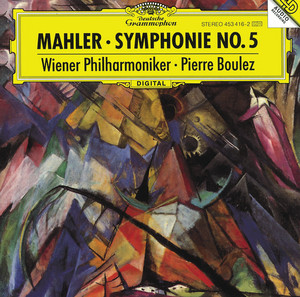 | Symphony No. 5: IV. Adagietto. Sehr langsam | Gustav Mahler, Wiener Philharmoniker, Pierre Boulez | F Major | 0 | 7B | 87 BPM | |
 | VII. Introduction (Prelude) | Dmitri Shostakovich, Ukraine National Symphony Orchestra, Theodore Kuchar | D Minor | 3 | 7A | 78 BPM | |
 | Wagner: Lohengrin, WWV 75, Act 3 Scene 1: Prelude (Sehr lebhaft) | Richard Wagner, Vienna State Opera Chorus, Rudolf Kempe, Wiener Philharmoniker | G Major | 3 | 9B | 80 BPM | |
| Capriol Suite: 5. Pied-en- l'air | Peter Warlock, Academy of St. Martin in the Fields, Nicholas Kraemer, Sir Neville Marriner | G Major | 1 | 9B | 113 BPM | |
 | Adagio in G Minor | Tomaso Albinoni, City of London Sinfonia, Andrew Watkinson, Ian Watson | C Minor | 1 | 5A | 89 BPM | |
 | 3 Gymnopedies: III. Lent et Grave | Erik Satie, John Lanchbery, Orchestra of the Royal Opera House, Covent Garden | A Minor | 0 | 8A | 73 BPM | |
 | Strauss, R: Also sprach Zarathustra, Op. 30: Introduction | Richard Strauss, Staatskapelle Dresden, Rudolf Kempe | C Major | 2 | 8B | 71 BPM | |
 | Spitfire Prelude and Fugue | William Walton, English Northern Philharmonia, Paul Daniel | C Major | 3 | 8B | 125 BPM | |
 | 3 Bavarian Dances, Op. 27a: No. 1 | Edward Elgar, New Zealand Symphony Orchestra, James Judd | G Major | 1 | 9B | 181 BPM | |
 | Symphony No. 5 in C-Sharp Minor: IV. Adagietto, Sehr langsam | Gustav Mahler, David Zinman, Tonhalle-Orchester Zürich | C Minor | 2 | 5A | 113 BPM | |
 | Britten: The Young Person's Guide to the Orchestra (Variations and Fugue on a Theme of Purcell), Op. 34: Fugue (Allegro molto) | Benjamin Britten, Sir Simon Rattle, City Of Birmingham Symphony Orchestra | A Minor | 1 | 8A | 74 BPM | |
 | The Ashokan Farewell | Ungar arr Perkins, Nil, Major John Perkins, John Perkins | F Major | 2 | 7B | 119 BPM | |
 | In the Steppes of Central Asia | Alexander Borodin, Mariinsky Orchestra, Valery Gergiev | A Minor | 0 | 8A | 68 BPM | |
 | Carmen Suite No. 1: Intermezzo | Georges Bizet, Orchestre Symphonique de Montréal, Charles Dutoit | E♭ Major | 0 | 5B | 80 BPM | |
 | Way Out West (Arr. For Oboe) | Diana Doherty | E Major | 1 | 12B | 63 BPM | |
 | Love Sleeping Alone | Ria Mbanefo | G Minor | 1 | 6A | 134 BPM | |
 | Symphony No. 5 In C Sharp Minor: 4. Adagietto (Sehr langsam) | Gustav Mahler, Gewandhausorchester, Václav Neumann | C Major | 3 | 8B | 129 BPM | |
 | La Damnation de Faust, Op. 24, H 111 / Pt. 1: Marche hongroise | Hector Berlioz, Chicago Symphony Orchestra, Sir Georg Solti | A Major | 2 | 11B | 93 BPM | |
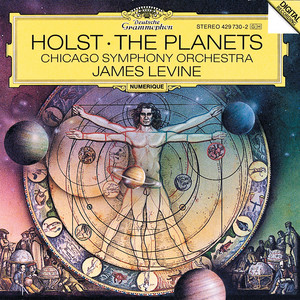 | The Planets, Op. 32: II. Venus, the Bringer of Peace | Gustav Holst, Chicago Symphony Orchestra, James Levine | A♭ Major | 0 | 4B | 71 BPM | |
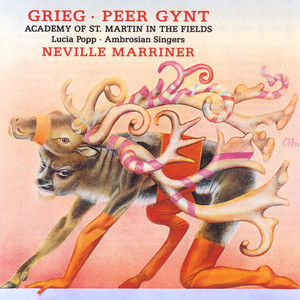 | Grieg: Peer Gynt, Op. 23, Act 1: Prelude. At the Wedding | Edvard Grieg, Lucia Popp, Academy of St. Martin in the Fields, Sir Neville Marriner | D Major | 1 | 10B | 137 BPM | |
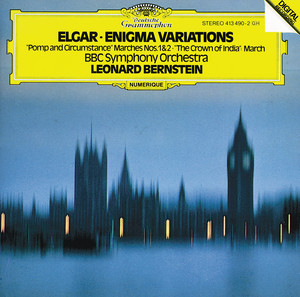 | Variations On An Original Theme, Op.36 "Enigma": 3. R.B.T. (Allegretto) | Edward Elgar, BBC Symphony Orchestra, Leonard Bernstein | G Major | 0 | 9B | 86 BPM | |
 | Debussy / Orch. Stokowski: Suite bergamasque, CD 82, L. 75: III. Clair de lune | Claude Debussy, Wolfgang Sawallisch, Philadelphia Orchestra | F♯ Major | 0 | 2B | 113 BPM | |
 | Warsaw Concerto | Richard Addinsell, Jean-Yves Thibaudet, BBC Symphony Orchestra, Hugh Wolff | B Major | 1 | 1B | 76 BPM |
- ISRC
- GBF077440610
- Label
- L-M Records/RCA Records