- BPM
- 82
- Key
- A Minor
- Camelot
- 8A
Liederkreis, Op. 39: No. 1, In der Fremde (Transcr. Soltani for Cello and Piano) by Robert Schumann, Kian Soltani, Julien Quentin Song Details
"Liederkreis, Op. 39: No. 1, In der Fremde (Transcr. Soltani for Cello and Piano)" by Robert Schumann, Kian Soltani, Julien Quentin had its release date on September 27, 2024. With This song being less than two minutes long, at 1:45, we are fairly confident that this song is not explicit and is safe for all ages. Based on the duration of this song, this song duration is much smaller than the average song duration. There are a total of 16 in the song's album "Schumann". In this album, this song's track order is #11. Furthermore, we believe that the track originated from Germany. Liederkreis, Op. 39: No. 1, In der Fremde (Transcr. Soltani for Cello and Piano) is not that popular right now. In our opinion, the overall tone is not very danceable and projects negative sounds, such as being sad, depressed, or angry.
BPM and Tempo
With Liederkreis, Op. 39: No. 1, In der Fremde (Transcr. Soltani for Cello and Piano) by Robert Schumann, Kian Soltani, Julien Quentin having a BPM of 82 with a half-time of 41 BPM and a double-time of 164 BPM, we would consider this track to have a Andante (at a walking pace) tempo marking. Because of this, we believe that the song has an overall slow tempo. The time signature for this track is 3/4.
Music Key
This song has a musical key of A Minor. Which also means that the camelot key for this song is 8A. So, the perfect camelot match for 8A would be either 8A or 7B. While, a low energy boost can consist of either 8B or 9A. For moderate energy boost, you would use 5A and a high energy boost can either be 10A or 3A. However, if you are looking for a low energy drop, finding a song with a camelot key of 7A would be a great choice. Where 11A would give you a moderate drop, and 6A or 1A would be a high energy drop. Lastly, 11B allows you to change the mood.
Want to find the BPM and music key for other songs? Check out our BPM and Key Finder page!
- Popularity
- 9%
- Loudness
- -27.874 dB
- Acousticness
- 93%
- Danceability
- 21%
- Energy
- 3%
- Instrumentalness
- 95%
- Liveness
- 11%
- Loudness
- 54%
- Speechiness
- 5%
- Valence
- 5%
Recommendations
| Track | Artist | Key | Energy | Camelot | BPM | ||
|---|---|---|---|---|---|---|---|
 | Schumann: 12 Gedichte aus Friedrich Rückerts "Liebesfrühling", Op. 37: No. 9, Rose, Meer und Sonne (Ruhig, die letzten Verse mit steigendem Ausdruck) | Clara Schumann, Friedrich Rückert, Robert Schumann, Nicolai Gedda | B Major | 2 | 1B | 171 BPM | |
 | There Will Come | Rebecca Dale, Philharmonia Orchestra, Michael Collins, Steven Isserlis | B♭ Major | 1 | 6B | 67 BPM | |
 | Piano Sonata in G Minor: I. Allegro molto agitato | Fanny Mendelssohn, Heather Schmidt | B Minor | 3 | 10A | 87 BPM | |
 | 2 Pieces for the Left Hand, Op. 9: No. 1, Prelude in C-Sharp Minor | Alexander Scriabin, Maria Lettberg | A Major | 0 | 11B | 126 BPM | |
 | Piano Concerto in A Minor, Op. 7: II. Romanze. Andante non troppo con grazia | Clara Schumann, Veronica Jochum, Bamberg Symphony, Joseph Silverstein | A♭ Major | 0 | 4B | 96 BPM | |
 | Intermezzo In E Flat Major, Op. 117 No. 1 | Johannes Brahms, Kun-Woo Paik | D♭ Major | 0 | 3B | 71 BPM | |
 | Étude No. 3: Ballade | Marie Awadis | D♭ Major | 0 | 3B | 127 BPM | |
 | Intermezzo No. 1 | Manuel Ponce, Simon Ghraichy | E Minor | 1 | 9A | 67 BPM | |
 | Piano Sonata No.8 In C Minor, Op.13 -"Pathétique": 2. Adagio cantabile | Ludwig van Beethoven, Daniel Barenboim | A♭ Major | 0 | 4B | 179 BPM | |
 | Kinderszenen, Op. 15: XII. Kind im Einschlummern | Robert Schumann, Martha Argerich | E Minor | 0 | 9A | 123 BPM | |
 | Three Romances, Op. 11: No. 1 in E-Flat Minor, Andante | Clara Schumann, Sara Costa | E♭ Minor | 1 | 2A | 134 BPM | |
 | Melody from « Orfeo » | Christoph Willibald Gluck, Roberto Giordano | G Minor | 2 | 6A | 115 BPM | |
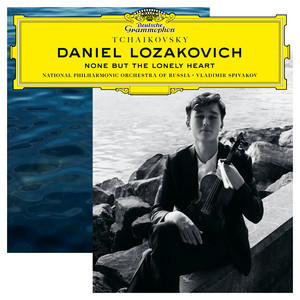 | Six Romances, Op. 6, TH 93: VI. None but the Lonely Heart (Arr. Elman) | Pyotr Ilyich Tchaikovsky, Daniel Lozakovich, Stanislav Soloviev | D♭ Major | 1 | 3B | 101 BPM | |
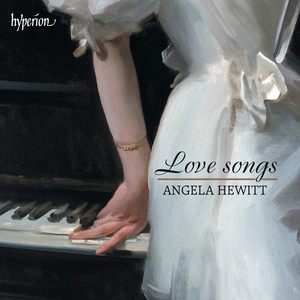 | Liebeslied "Widmung, von Robert Schumann", S. 566 (After Myrthen, Op. 25/1) | Franz Liszt, Angela Hewitt | G Major | 0 | 9B | 63 BPM | |
 | Vogel als Prophet, Op. 82: No. 7 | Robert Schumann, Arthur Rubinstein | G Minor | 0 | 6A | 72 BPM | |
 | Improvisation No. 3 | Gabriela Montero | D Major | 2 | 10B | 113 BPM | |
 | String Quartet No. 1 in D Major, Op. 11, TH 111: II. Andante cantabile | Pyotr Ilyich Tchaikovsky, Heath Quartet | A Minor | 1 | 8A | 82 BPM | |
 | Lieder ohne Worte (Songs without Words), Book 2, Op. 30: No. 7 in E-Flat Major, Op. 30, No. 1, MWV U103 | Felix Mendelssohn, Péter Nagy | E♭ Major | 0 | 5B | 65 BPM | |
 | Le tombeau de Couperin: 3. Menuet (version for orchestra) | Maurice Ravel, フランス国立リヨン管弦楽団, レナード・スラットキン | A Major | 1 | 11B | 107 BPM | |
 | Forgotten Melodies I, Op. 38: No. 6; Canzona Serenata | Nikolai Medtner, Dmitry Shishkin | B Major | 0 | 1B | 69 BPM | |
 | Capriol Suite: 5. Pied-en- l'air | Peter Warlock, Academy of St. Martin in the Fields, Nicholas Kraemer, Sir Neville Marriner | G Major | 1 | 9B | 113 BPM | |
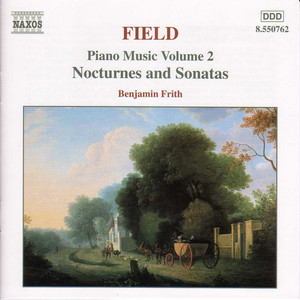 | Nocturne No. 13 In D Minor | Benjamin Frith, John Field | D Minor | 0 | 7A | 68 BPM | |
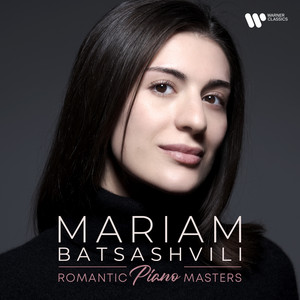 | Liszt: Lieder aus Franz Schubert's "Schwanengesang", S. 560: No. 7 Ständchen | Franz Liszt, Mariam Batsashvili | A Minor | 1 | 8A | 120 BPM | |
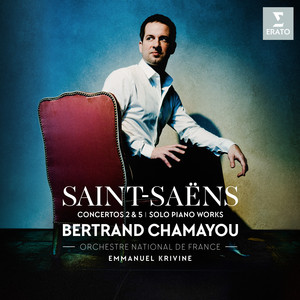 | Saint-Saëns: Valse nonchalante in D-Flat Major, Op. 110 | Camille Saint-Saëns, Bertrand Chamayou | C Major | 1 | 8B | 66 BPM | |
 | Zdes' khorosho ('How Fair This Spot'), Op. 21, No. 7 | Sergei Rachmaninoff, Pablo Ferrandez, Denis Kozhukhin | A Major | 0 | 11B | 87 BPM |
- ISRC
- DEN962434711
- Label
- L-M Records/RCA Records