- BPM
- 83
- Key
- E♭ Major
- Camelot
- 5B
Strauss, R: Ein Heldenleben, Op. 40: IX. Entsagung by Richard Strauss, Rudolf Kempe, Staatskapelle Dresden Song Details
"Strauss, R: Ein Heldenleben, Op. 40: IX. Entsagung" by Richard Strauss, Rudolf Kempe, Staatskapelle Dresden had its release date on January 1, 2013. Since This song is still less than 10 minute long, it is still considered a pretty long duration song compared to the average song length. This song does not appear to be explicit due to the lack of the "E" tag. There are a total of 103 in the song's album "Strauss: Complete Orchestral Works". In this album, this song's track order is #18. Furthermore, we believe that the track originated from United Kingdom. Strauss, R: Ein Heldenleben, Op. 40: IX. Entsagung is not that popular right now. In our opinion, the overall tone is not very danceable and projects negative sounds, such as being sad, depressed, or angry.
BPM and Tempo
With Strauss, R: Ein Heldenleben, Op. 40: IX. Entsagung by Richard Strauss, Rudolf Kempe, Staatskapelle Dresden having a BPM of 83 with a half-time of 42 BPM and a double-time of 166 BPM, we would consider this track to have a Andante (at a walking pace) tempo marking. Because of this, we believe that the song has an overall slow tempo. The time signature for this track is 4/4.
Music Key
This song has a musical key of E♭ Major. Or for those who are familiar with the camelot wheel, this song has a camelot key of 5B. So, the perfect camelot match for 5B would be either 5B or 6A. While, 6B can give you a low energy boost. For moderate energy boost, you would use 2B and a high energy boost can either be 7B or 12B. Though, if you want a low energy drop, you should looking for songs with either a camelot key of 5A or 4B will give you a low energy drop, 8B would be a moderate one, and 3B or 10B would be a high energy drop. Lastly, 2A allows you to change the mood.
Want to find the BPM and music key for other songs? Check out our BPM and Key Finder page!
- Popularity
- 2%
- Loudness
- -20.569 dB
- Acousticness
- 95%
- Danceability
- 8%
- Energy
- 15%
- Instrumentalness
- 84%
- Liveness
- 12%
- Loudness
- 66%
- Speechiness
- 4%
- Valence
- 3%
Recommendations
| Track | Artist | Key | Energy | Camelot | BPM | ||
|---|---|---|---|---|---|---|---|
 | Japanese Suite, Op. 33, H. 126: I. Prelude. Song of the Fisherman | Gustav Holst, Ulster Orchestra, Joann Falletta | C Minor | 3 | 5A | 103 BPM | |
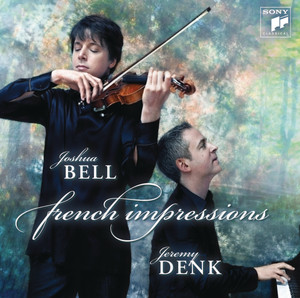 | Violin Sonata in A major, FWV 8: IV. Allegretto poco mosso | César Franck, Joshua Bell, Jeremy Denk | A Major | 1 | 11B | 94 BPM | |
 | Ravel: Pavane pour une infante défunte, M. 19 | Maurice Ravel, Daniel Barenboim, Chicago Symphony Orchestra | G Major | 0 | 9B | 102 BPM | |
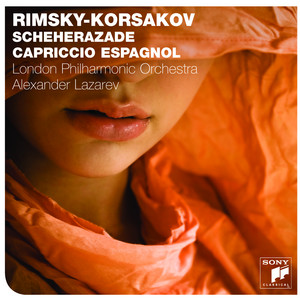 | Scheherazade: Calm at Sea | Nikolai Rimsky-Korsakov, Lars Hjalmar Joakim | E Major | 2 | 12B | 84 BPM | |
 | Tchaikovsky: Symphony No. 5 in E Minor, Op. 64: III. Valse. Allegro moderato | Pyotr Ilyich Tchaikovsky, Daniel Barenboim, Chicago Symphony Orchestra | A Major | 1 | 11B | 146 BPM | |
 | Serenade for String Orchestra in C Minor, Op. posth.: VI. Andante sostenuto | Max Bruch, George Hanson, Sinfonieorchester Wuppertal | E♭ Major | 0 | 5B | 87 BPM | |
 | Eine Alpensinfonie, Op. 64, TrV 233: XX. Sonnenuntergang | Richard Strauss, Berliner Philharmoniker, Seiji Ozawa | E♭ Major | 1 | 5B | 105 BPM | |
 | 3 Chorales, P. 167: No. 1, Lento assai (After J.S. Bach's BWV 659) | Ottorino Respighi, Seattle Symphony Orchestra, Gerard Schwarz | C Major | 0 | 8B | 65 BPM | |
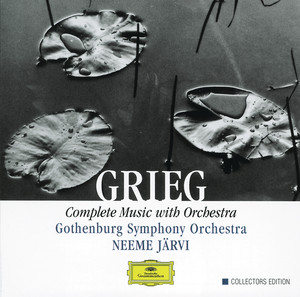 | Holberg Suite, Op. 40: V. Rigaudon (Allegro con brio) | Edvard Grieg, Gothenburg Symphony Orchestra, Neeme Järvi | G Major | 0 | 9B | 85 BPM | |
![Spartacus, Act III: Adagio of Spartacus and Phrygia (arr. Y. Grigorovich) [1968 Bolshoi Version] by Aram Khachaturian, RIAS Kammerchor, Deutsches Symphonie-Orchester Berlin, Michail Jurowski](https://i.scdn.co/image/ab67616d00001e02c21d253eed4ccdd547b4b94d) | Spartacus, Act III: Adagio of Spartacus and Phrygia (arr. Y. Grigorovich) [1968 Bolshoi Version] | Aram Khachaturian, RIAS Kammerchor, Deutsches Symphonie-Orchester Berlin, Michail Jurowski | E Major | 2 | 12B | 123 BPM | |
 | Pirogov Suite, Op. 76a (Arr. L. Atovmyan for Orchestra): V. Finale | Dmitri Shostakovich, Bolshoi Theatre Orchestra, Maxim Shostakovich | E♭ Major | 2 | 5B | 107 BPM | |
 | Violin Concerto in D Minor, Op. 47: III. Allegro, ma non tanto | Jean Sibelius, Anne-Sophie Mutter, Staatskapelle Dresden, André Previn | D Major | 2 | 10B | 112 BPM | |
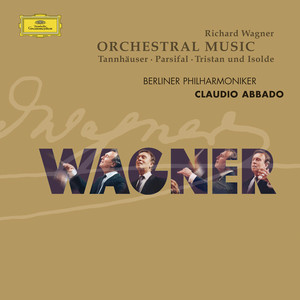 | Parsifal, WWV 111, Act III Suite (Ed. Abbado): Procession. Ritterzug | Richard Wagner, Berliner Philharmoniker, Claudio Abbado, Swedish Radio Choir, Simon Halsey | F Major | 1 | 7B | 170 BPM | |
 | La Damnation de Faust, Op. 24, H 111 / Pt. 1: Marche hongroise | Hector Berlioz, Chicago Symphony Orchestra, Sir Georg Solti | A Major | 2 | 11B | 93 BPM | |
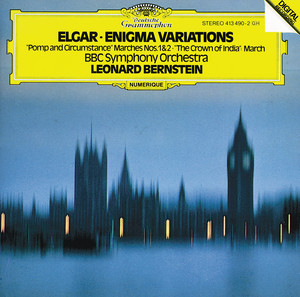 | Enigma Variations, Op. 36: Var. 1. L'istesso tempo "C.A.E." | Edward Elgar, BBC Symphony Orchestra, Leonard Bernstein | G Minor | 0 | 6A | 81 BPM | |
 | D'un matin de printemps | Lili Boulanger, Yan Pascal Tortelier, BBC Philharmonic | C Major | 1 | 8B | 130 BPM | |
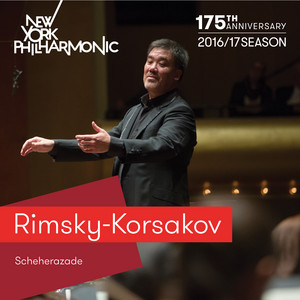 | Scheherazade, Op. 35: II. Lento - Andantino "The Legend of the Kalendar Prince" | Nikolai Rimsky-Korsakov, New York Philharmonic, Alan Gilbert, Lawrence Rock | G Major | 1 | 9B | 59 BPM | |
 | Zdes' khorosho ('How Fair This Spot'), Op. 21, No. 7 | Sergei Rachmaninoff, Pablo Ferrandez, Denis Kozhukhin | A Major | 0 | 11B | 87 BPM | |
 | Symphony No. 5 in C-Sharp Minor: IV. Adagietto. Sehr langsam | Gustav Mahler, Leonard Bernstein, New York Philharmonic | B♭ Major | 3 | 6B | 96 BPM | |
 | Symphony No. 1 in D Major: III. Feierlich und gemessen, ohne zu schleppen - Live | Gustav Mahler, Berliner Philharmoniker, Claudio Abbado | G Minor | 0 | 6A | 56 BPM | |
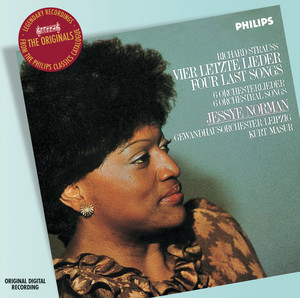 | 4 Letzte Lieder, TrV 296: No. 4, Im Abendrot | Richard Strauss, Jessye Norman, Gewandhausorchester, Kurt Masur | B♭ Major | 1 | 6B | 78 BPM | |
 | 21 Hungarian Dances, WoO 1: Hungarian Dance No. 16 in F Minor | Johannes Brahms, Seattle Symphony Orchestra, Gerard Schwarz | F Major | 1 | 7B | 84 BPM | |
 | Mozart - Serenade K361 "Gran Partita" for 13 wind instruments: Adagio | Wolfgang Amadeus Mozart, London Winds, Michael Collins | G Major | 1 | 9B | 135 BPM | |
 | Symphony No. 9 in E-Flat Major, Op. 70: II. Moderato | Dmitri Shostakovich, Berliner Philharmoniker, Kirill Petrenko | B♭ Minor | 2 | 3A | 122 BPM | |
 | Scottish Fantasy for Violin and Orchestra, Op. 46: I. Introduction: Grave, Adagio cantabile | Max Bruch, Joshua Bell, Academy of St. Martin in the Fields | E♭ Major | 2 | 5B | 60 BPM |
- ISRC
- GBAYC1201679
- Label
- L-M Records/RCA Records