- BPM
- 170
- Key
- F Major
- Camelot
- 7B
Parsifal, WWV 111, Act III Suite (Ed. Abbado): Procession. Ritterzug by Richard Wagner, Berliner Philharmoniker, Claudio Abbado, Swedish Radio Choir, Simon Halsey Song Details
"Parsifal, WWV 111, Act III Suite (Ed. Abbado): Procession. Ritterzug" by Richard Wagner, Berliner Philharmoniker, Claudio Abbado, Swedish Radio Choir, Simon Halsey had its release date on January 1, 2003. Since This song is still less than 10 minute long, it is still considered a pretty long duration song compared to the average song length. This song does not appear to be explicit due to the lack of the "E" tag. This song is part of Wagner: Orchestral Pieces from Parsifal . Tristan & Isolde . Tannhäuser by Richard Wagner, Berliner Philharmoniker, Claudio Abbado. The song's track number on the album is #5 out of 8 tracks. Based on our data, Germany was the country where this track was produced or recorded. The popularity of Parsifal, WWV 111, Act III Suite (Ed. Abbado): Procession. Ritterzug is currently not that popular right now. In our opinion, the overall tone is not very danceable and projects negative sounds, such as being sad, depressed, or angry.
BPM and Tempo
Since Parsifal, WWV 111, Act III Suite (Ed. Abbado): Procession. Ritterzug by Richard Wagner, Berliner Philharmoniker, Claudio Abbado, Swedish Radio Choir, Simon Halsey has a tempo of 170 beats per a minute, the tempo markings of this song would be Vivace (lively and fast). With Parsifal, WWV 111, Act III Suite (Ed. Abbado): Procession. Ritterzug being at 170 BPM, the half-time would be 85 BPM with a double-time of 340 BPM.In addition, we consider the tempo speed to be pretty fast for this song. The time signature for this track is 3/4.
Music Key
This song has a musical key of F Major. Or for those who are familiar with the camelot wheel, this song has a camelot key of 7B. So, the perfect camelot match for 7B would be either 7B or 8A. While, 8B can give you a low energy boost. For moderate energy boost, you would use 4B and a high energy boost can either be 9B or 2B. Though, if you want a low energy drop, you should looking for songs with either a camelot key of 7A or 6B will give you a low energy drop, 10B would be a moderate one, and 5B or 12B would be a high energy drop. Lastly, 4A allows you to change the mood.
Want to find the BPM and music key for other songs? Check out our BPM and Key Finder page!
- Popularity
- 15%
- Loudness
- -20.241 dB
- Acousticness
- 94%
- Danceability
- 8%
- Energy
- 13%
- Instrumentalness
- 91%
- Liveness
- 43%
- Loudness
- 66%
- Speechiness
- 4%
- Valence
- 4%
Recommendations
| Track | Artist | Key | Energy | Camelot | BPM | ||
|---|---|---|---|---|---|---|---|
 | Glück: I. Andante | Siegfried Wagner, Rundfunk-Sinfonieorchester Frankfurt, Dimitrij Kitajenko | A Minor | 0 | 8A | 86 BPM | |
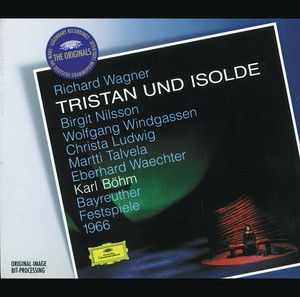 | Tristan und Isolde, WWV 90 / Act 2: "Rette dich, Tristan!" | Richard Wagner, Wolfgang Windgassen, Claude Heater, Eberhard Waechter, Bayreuth Festival Orchestra, Karl Böhm | F♯ Minor | 2 | 11A | 89 BPM | |
 | Symphony No. 10 in E Minor, Op. 93: II. Allegro | Dmitri Shostakovich, Royal Liverpool Philharmonic Orchestra, Vasily Petrenko | B♭ Minor | 6 | 3A | 89 BPM | |
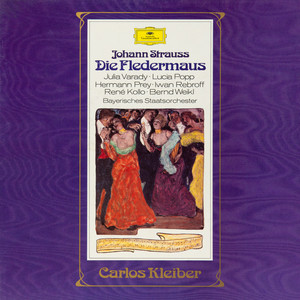 | Die Fledermaus: Overture | Johann Strauss II, Bavarian State Orchestra, Carlos Kleiber | D Major | 2 | 10B | 109 BPM | |
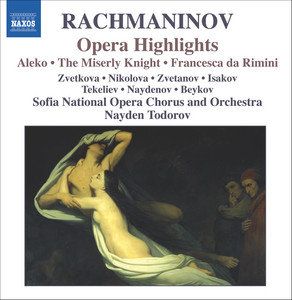 | Aleko: Introduction | Sergei Rachmaninoff, Mariana Zvetkova, Andreana Nikolova, Boiko Zvetanov, Alexander Tekeliev, Peter Naydenov, Sofia National Opera Chorus, Sofia National Opera Orchestra, Nayden Todorov | A Major | 0 | 11B | 177 BPM | |
 | Le Prophète: Coronation March | Giacomo Meyerbeer, Leonard Bernstein, New York Philharmonic | E♭ Major | 4 | 5B | 112 BPM | |
 | Nicolai: The Merry Wives of Windsor: Overture | Otto Nicolai, Wilhelm Furtwängler, Wiener Philharmoniker | G Minor | 4 | 6A | 139 BPM | |
 | Scheherezade, Op. 35: I. The Sea and Sinbad's Ship | Nikolai Rimsky-Korsakov, Pelin Halkacı Alkın, Sascha Goetzel, Borusan Istanbul Philharmonic Orchestra | E Minor | 1 | 9A | 70 BPM | |
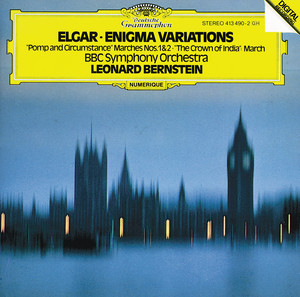 | Enigma Variations, Op. 36: Var. 5. Moderato "R.P.A." | Edward Elgar, BBC Symphony Orchestra, Leonard Bernstein | C Minor | 0 | 5A | 83 BPM | |
 | Das Rheingold, WWV 86A / Erste Szene: "Nur wer der Minne Macht entsagt" | Richard Wagner, Helen Donath, Edda Moser, Anna Reynolds, Berliner Philharmoniker, Herbert von Karajan | D Major | 1 | 10B | 86 BPM | |
 | Luonnotar, Op. 70 | Jean Sibelius, Soile Isokoski, Gothenburg Symphony Orchestra, Neeme Järvi | F♯ Minor | 1 | 11A | 132 BPM | |
 | Eugene Onegin, Op. 24, TH. 5 / Act II: (Scene 1) Entr'acte and Waltz With Chorus. "Vot tak syurpriz!" | Pyotr Ilyich Tchaikovsky, Neil Shicoff, Thomas Allen, Jürgen Hartfiel, Staatskapelle Dresden, James Levine, MDR Leipzig Radio Chorus | E Minor | 2 | 9A | 78 BPM | |
 | Carmina Burana: XXIV. Ave formosissima | Carl Orff, Chor der Deutschen Oper Berlin, Orchester der Deutschen Oper Berlin, Eugen Jochum | E Minor | 3 | 9A | 172 BPM | |
 | Bizet: Carmen, WD 31, Act 4: "Les voici ! Voici le quadrille !" (Chœur) | Georges Bizet, Michel Plasson, La Lauzeta, Les Éléments, Orchestre National Du Capitole De Toulouse | D♭ Minor | 2 | 12A | 93 BPM | |
 | La Gioconda / Act 1: Preludio | Amilcare Ponchielli, National Philharmonic Orchestra, Bruno Bartoletti | F Major | 0 | 7B | 133 BPM | |
 | Taras Bulba: 3. The Prophecy And The Death Of Taras Bulba | Leoš Janáček, Bavarian Radio Symphony Orchestra, Rafael Kubelik | D♭ Major | 3 | 3B | 132 BPM | |
 | Symphony No. 41 in C Major, K. 551 "Jupiter": IV. Finale. Molto allegro | Wolfgang Amadeus Mozart, Wiener Philharmoniker, Karl Böhm | G Major | 2 | 9B | 141 BPM | |
 | Vier letzte Lieder, TrV 296: 1. Frühling | Richard Strauss, Jessye Norman, Gewandhausorchester, Kurt Masur | A Major | 3 | 11B | 83 BPM | |
 | Roma, WD 37: I. Andante tranquillo - Allegro agitato - Andante | Georges Bizet, Jean-Luc Tingaud, RTÉ National Symphony Orchestra | C Major | 1 | 8B | 172 BPM | |
 | Gurrelieder, Pt. 3: No. 22, Seht die Sonne (Mixed Chorus) | Arnold Schoenberg, Wiener Philharmoniker, Claudio Abbado, Wiener Staatsopernchor, Dietrich Gerpheide, Arnold Schoenberg Chor, Erwin Ortner, Slovak Philharmonic Chorus, Jan Rozehnal | E Major | 3 | 12B | 89 BPM | |
 | Symphony No. 5 in D Minor, Op. 47: IV. Allegro non troppo - 2017 Remastered Version | Dmitri Shostakovich, Leonard Bernstein, New York Philharmonic | B♭ Major | 4 | 6B | 106 BPM | |
 | L'elisir d'amore: Overture (Preludio) | Gaetano Donizetti, English Chamber Orchestra, Richard Bonynge | D Major | 0 | 10B | 169 BPM | |
 | Rienzi, WWV 49: Overture | Richard Wagner, Wiener Philharmoniker, Karl Böhm | D Major | 3 | 10B | 103 BPM | |
 | Symphony No. 9 in E Minor, Op. 95 "From the New World": III. Scherzo. Molto vivace | Antonín Dvořák, New York Philharmonic, Alan Gilbert | C Major | 1 | 8B | 121 BPM | |
 | Die Walküre, Act I Scene 1: Wes Herd dies auch sei, hier muss ich rasten – Kühlende Labung gab mir der Quell | Richard Wagner, Gundula Janowitz, Jon Vickers, Berliner Philharmoniker, Herbert von Karajan | B♭ Major | 0 | 6B | 88 BPM |
- ISRC
- DEN960200723
- Label
- L-M Records/RCA Records