- BPM
- 85
- Key
- G Major
- Camelot
- 9B
Holberg Suite, Op. 40: V. Rigaudon (Allegro con brio) by Edvard Grieg, Gothenburg Symphony Orchestra, Neeme Järvi Song Details
"Holberg Suite, Op. 40: V. Rigaudon (Allegro con brio)" by Edvard Grieg, Gothenburg Symphony Orchestra, Neeme Järvi had its release date on January 1, 2001. With this song being around four minutes long, at 4:01, the duration of this song is pretty average compared to other songs. This track is safe for children and doesn't appear to contain any foul language, since the "Explicit" tag was not present in this track. The track order of this song in Edvard Grieg, Gothenburg Symphony Orchestra, Neeme Järvi's "Grieg: Complete Music with Orchestra" album is number 5 out of 102. On top of that, Germany appears to be the country where this track was created. Holberg Suite, Op. 40: V. Rigaudon (Allegro con brio) is below average in popularity right now. In our opinion, the overall tone is not very danceable and projects negative sounds, such as being sad, depressed, or angry.
BPM and Tempo
We consider the tempo marking of Holberg Suite, Op. 40: V. Rigaudon (Allegro con brio) by Edvard Grieg, Gothenburg Symphony Orchestra, Neeme Järvi to be Andante (at a walking pace) because the track has a tempo of 85 BPM, a half-time of 42BPM, and a double-time of 170 BPM. Based on that, the speed of the song's tempo is slow. Activities such as, yoga or pilates, can go well with this song. The time signature for this track is 4/4.
Music Key
G Major is the music key of this track. This also means that this song has a camelot key of 9B. So, the perfect camelot match for 9B would be either 9B or 10A. While, 10B can give you a low energy boost. For moderate energy boost, you would use 6B and a high energy boost can either be 11B or 4B. Though, if you want a low energy drop, you should looking for songs with either a camelot key of 9A or 8B will give you a low energy drop, 12B would be a moderate one, and 7B or 2B would be a high energy drop. Lastly, 6A allows you to change the mood.
Want to find the BPM and music key for other songs? Check out our BPM and Key Finder page!
- Popularity
- 37%
- Loudness
- -27.232 dB
- Acousticness
- 87%
- Danceability
- 14%
- Energy
- 3%
- Instrumentalness
- 82%
- Liveness
- 16%
- Loudness
- 55%
- Speechiness
- 5%
- Valence
- 3%
Recommendations
| Track | Artist | Key | Energy | Camelot | BPM | ||
|---|---|---|---|---|---|---|---|
 | Peer Gynt Suite No.2 op. 55 Abduction and Ingrid's Lament Allegro furioso-Andante doloroso) | Academy of St. Martin in the Fields | G Minor | 0 | 6A | 133 BPM | |
 | Gottes Zeit ist die allerbeste Zeit, BWV 106 "Actus tragicus": I. Sonatina | Johann Sebastian Bach, Márta Kurtág, György Kurtág | F Major | 3 | 7B | 102 BPM | |
 | 13 Pieces for Piano, Op. 76: Elegiaco, No. 10 | Jean Sibelius, Leif Ove Andsnes | E Major | 0 | 12B | 169 BPM | |
 | Waltz No. 19 in A Minor, KK IVb (Version for Harp in A Flat Minor) | Frédéric Chopin, Magdalena Hoffmann | A♭ Minor | 1 | 1A | 127 BPM | |
| Holberg Suite, opus 40: Prelude (Allegro vivace) | Academy of St. Martin in the Fields | G Major | 1 | 9B | 76 BPM | |
 | The Planets, Op. 32: II. Venus, the Bringer of Peace | Gustav Holst, Berliner Philharmoniker, Herbert von Karajan | F Minor | 0 | 4A | 85 BPM | |
 | Rhapsody on a Theme of Paganini, Op. 43: Variation 18 | Sergei Rachmaninoff, Bernd Glemser, Polish National Radio Symphony Orchestra, Antoni Wit | D♭ Major | 1 | 3B | 76 BPM | |
 | Morgen, Op. 27 No. 4 (Arr. Reger for Piano) | Richard Strauss, Angela Hewitt | A Major | 2 | 11B | 143 BPM | |
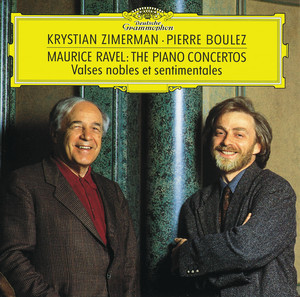 | Piano Concerto in G Major, M. 83: II. Adagio assai | Maurice Ravel, Krystian Zimerman, Cleveland Orchestra, Pierre Boulez | E Major | 0 | 12B | 74 BPM | |
 | Sailing By | Ronald Binge, Slovak Radio Symphony Orchestra, Ernest Tomlinson | F Major | 0 | 7B | 80 BPM | |
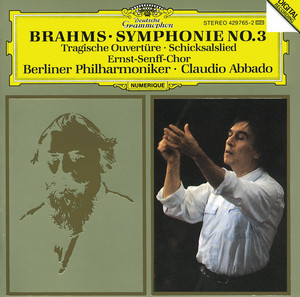 | Symphony No. 3 in F Major, Op. 90: III. Poco allegretto | Johannes Brahms, Berliner Philharmoniker, Claudio Abbado | C Minor | 0 | 5A | 101 BPM | |
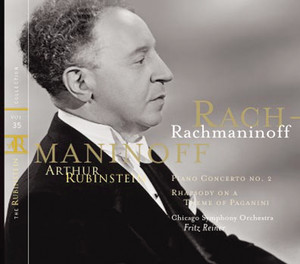 | Piano Concerto No. 2 in C Minor, Op. 18: I. Moderato | Sergei Rachmaninoff, Arthur Rubinstein, Fritz Reiner | C Minor | 1 | 5A | 71 BPM | |
 | Panis Angelicus (Arr. Leopold Stokowski) | César Franck, Matthias Bamert, BBC Philharmonic | A Major | 1 | 11B | 65 BPM | |
 | Rachmaninov: 10 Preludes, Op. 23: No. 5 in G Minor | Sergei Rachmaninoff, Nikolai Lugansky | G Minor | 1 | 6A | 113 BPM | |
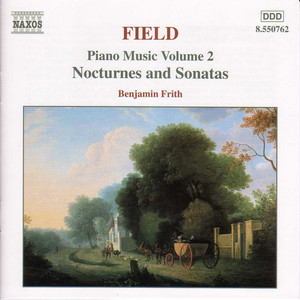 | Nocturne No. 12 In G Major, H. 58d: Nocturne No. 12 In G Major | Benjamin Frith, John Field | G Major | 0 | 9B | 125 BPM | |
 | Dance of the Hours from Act III of "La Gioconda" | Amilcare Ponchielli, Philadelphia Orchestra, Eugene Ormandy | E Major | 1 | 12B | 130 BPM | |
 | Barber: Adagio for Strings | Samuel Barber, Sir Simon Rattle, Berliner Philharmoniker | B♭ Minor | 1 | 3A | 73 BPM | |
 | Andante Festivo | Jean Sibelius, Gothenburg Symphony Orchestra, Neeme Järvi | G Major | 1 | 9B | 86 BPM | |
 | Trio Sonata for 2 Violins and Continuo in G Minor, HWV 393 "Dresden" No. 2: III. Largo (Arr. for Oboe, Violin, Harpsichord and Orchestra by Andreas Tarkmann) | George Frideric Handel, Albrecht Mayer, Sinfonia Varsovia, Jakub Haufa, Monika Razynska | B♭ Major | 2 | 6B | 143 BPM | |
 | "The Trout" from Quintet for Strings and Piano, D 667, Op. 114 | Ensemble Piacevole | D Major | 1 | 10B | 121 BPM | |
 | Peer Gynt Suite No. 1, Op. 46: II. The Death of Åse - Recorded 1982 | Edvard Grieg, Berliner Philharmoniker, Herbert von Karajan | G Major | 0 | 9B | 45 BPM | |
 | Orfeo ed Euridice, Wq. 30 / Act II: Dance of the Blessed Spirits (Arr. by Mathieu Herzog for Cello and Strings) | Christoph Willibald Gluck, Camille Thomas, Brussels Philharmonic, Mathieu Herzog | B Minor | 1 | 10A | 87 BPM | |
 | Serenade for String Orchestra in C Major, Op. 48, TH 48: II. Valse | Pyotr Ilyich Tchaikovsky, The Russian Virtuosi of Europe, Yuri Zhislin | G Major | 2 | 9B | 98 BPM | |
 | Humoresque No. 7 in G-flat Major, Op. 101 | Boston Symphony Orchestra, Yo-Yo Ma, Seiji Ozawa, Itzhak Perlman | F♯ Major | 1 | 2B | 83 BPM | |
 | Rinaldo, HWV 7: Lascia ch'io pianga (Arr. for Piano) | George Frideric Handel, Martin Stadtfeld | F Major | 0 | 7B | 68 BPM |
- ISRC
- DEF059202145
- Label
- L-M Records/RCA Records