- BPM
- 125
- Key
- B♭ Major
- Camelot
- 6B
Tempo di valzer, RZ 212 by Riccardo Zandonai, Stefano Guarino Song Details
"Tempo di valzer, RZ 212" by Riccardo Zandonai, Stefano Guarino had its release date on July 1, 2014. The duration of This song is about two minutes long, specifically at 2:28. This song does not appear to have any foul language. Tempo di valzer, RZ 212's duration is considered a little bit shorter than the average duration of a typical track. There are a total of 29 in the song's album "Riccardo Zandonai: Musica da camera e per piccola orchestra". In this album, this song's track order is #2. Furthermore, we believe that the track originated from Italy. Based on our statistics, Tempo di valzer, RZ 212's popularity is unknown right now. In our opinion, the overall tone is not very danceable and projects negative sounds, such as being sad, depressed, or angry.
BPM and Tempo
With Tempo di valzer, RZ 212 by Riccardo Zandonai, Stefano Guarino having a BPM of 125 with a half-time of 62 BPM and a double-time of 250 BPM, we would consider this track to have a Allegro (fast, quick, and bright) tempo marking. Because of this, we believe that the song has an overall fast tempo. Looking at the BPM of this song, this song might go great with walking. The time signature for this track is 4/4.
Music Key
This song has a musical key of B♭ Major. Or for those who are familiar with the camelot wheel, this song has a camelot key of 6B. So, the perfect camelot match for 6B would be either 6B or 7A. While, 7B can give you a low energy boost. For moderate energy boost, you would use 3B and a high energy boost can either be 8B or 1B. Though, if you want a low energy drop, you should looking for songs with either a camelot key of 6A or 5B will give you a low energy drop, 9B would be a moderate one, and 4B or 11B would be a high energy drop. Lastly, 3A allows you to change the mood.
Want to find the BPM and music key for other songs? Check out our BPM and Key Finder page!
- Popularity
- 0%
- Loudness
- -23.353 dB
- Acousticness
- 99%
- Danceability
- 32%
- Energy
- 12%
- Instrumentalness
- 93%
- Liveness
- 10%
- Loudness
- 61%
- Speechiness
- 4%
- Valence
- 5%
Recommendations
| Track | Artist | Key | Energy | Camelot | BPM | ||
|---|---|---|---|---|---|---|---|
 | Notti d'agosto, RZ 96 | Riccardo Zandonai, Margherita Guarino, Stefano Guarino | B♭ Major | 1 | 6B | 125 BPM | |
 | Francesca da Rimini, Op. 4, Act III: Ah la parola che i miei occhi incontrano! | Riccardo Zandonai, Martin Mühle, Christina Vasileva, Philharmonisches Orchester Freiburg, Fabrice Bollon | D Minor | 2 | 7A | 88 BPM | |
 | Petite messe solennelle: Gratias agimus tibi | Gioachino Rossini, Orchestre de chambre de Paris, Ottavio Dantone, Delphine Galou, Michael Spyres, Alexander Vinogradov | A Major | 2 | 11B | 111 BPM | |
 | Francesa da Rimini, Act III: "Inghirlandata di violette m'appariste ieri" | Riccardo Zandonai, Plácido Domingo, Renata Scotto, James Levine, Metropolitan Opera Orchestra | F♯ Minor | 1 | 11A | 76 BPM | |
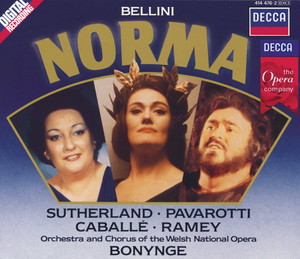 | Norma / Act 1: Ah! bello a me ritorna | Vincenzo Bellini, Dame Joan Sutherland, Samuel Ramey, Welsh National Opera Chorus, Welsh National Opera Orchestra, Richard Bonynge | F Major | 2 | 7B | 78 BPM | |
 | Penella: Don Gil de Alcalá: "Bendita cruz" | Lisette Oropesa, Óliver Díaz, Orquesta Sinfonica de Madrid | D Major | 1 | 10B | 81 BPM | |
 | I Puritani / Act 1: Ferma! Invan, invan rapir pretendi! | Vincenzo Bellini, Piero Cappuccilli, Luciano Pavarotti, Anita Caminada, Chorus of the Royal Opera House, Covent Garden, London Symphony Orchestra, Richard Bonynge | A Major | 3 | 11B | 172 BPM | |
| Giménez & Vives: El húsar de la guardia: "Un pobre nido" | Lisette Oropesa, Óliver Díaz, Orquesta Sinfonica de Madrid | B♭ Major | 1 | 6B | 127 BPM | |
 | Puccini: Turandot, Act 1: "Figlio, che fai?" (Timur, Calaf, Liù, Il principe di Persia, Coro) | Giacomo Puccini, Antonio Pappano, Coro dell'Accademia Nazionale Di Santa Cecilia, Ermonela Jaho, Francesco Toma, Jonas Kaufmann, Michele Pertusi, Orchestra dell'Accademia Nazionale di Santa Cecilia | G Major | 1 | 9B | 150 BPM | |
 | Bellini: I puritani: "Caro, non ho parola ch’esprima il mio contento" (Elvira, Arturo) | Vincenzo Bellini, Dresdner Philharmonie, Riccardo Frizza | D Major | 5 | 10B | 136 BPM | |
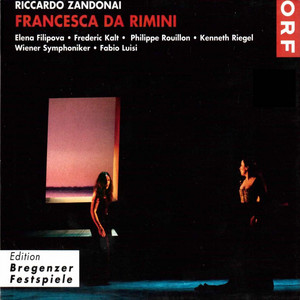 | Francesca da Rimini, Op. 4, Act III, Scene 5: Marzo è giunto, e febbraio gito se n'è col ghiado (Garsenda, Biancofiore, Adonella, Altichiara, Francesca) | Riccardo Zandonai, Wiener Symphoniker, Fabio Luisi, Elena Filipova, Tunde Franko, Anita Bader, Jaroslava Horska, Jolana Fogasova | D♭ Major | 2 | 3B | 123 BPM | |
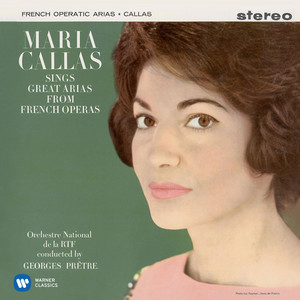 | Saint-Saëns: Samson et Dalila, Act 2: "Samson, recherchant ma présence...Amour! viens aider ma faiblesse!" (Dalila) | Camille Saint-Saëns, Maria Callas, Georges Prêtre, French National Radio Orchestra | A♭ Major | 2 | 4B | 83 BPM | |
| Francesca da Rimini, Op. 4, Act III, Scene 1: Dama, abbiate ne pietà (Francesca, Garsenda, Biancofiore, Adonella, Smaragdi) | Riccardo Zandonai, Wiener Symphoniker, Fabio Luisi, Elena Filipova, Tunde Franko, Anita Bader, Jaroslava Horska, Lorena Espina | D Minor | 0 | 7A | 89 BPM | |
 | Soy Dalí Excerpt | Hermanos Ferrando, Ignacio Ferrando, Jorge Ferrando | B♭ Major | 1 | 6B | 112 BPM | |
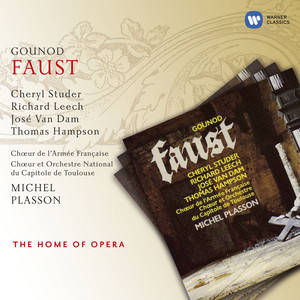 | Gounod: Faust, Act 5: "Doux nectar dans ton ivresse" (Chœur, Mephistophélès, Faust) | Charles Gounod, Michel Plasson, Chœur de l'Armée française, Choeur Du Capitole De Toulouse, José van Dam, Richard Leech, Orchestre Du Capitole De Toulouse | A Minor | 1 | 8A | 94 BPM | |
 | Puccini : Madama Butterfly : Act 1 "Dipende dal grado di cottura... amore o grillo" [Pinkerton] | Giacomo Puccini, José Cura, Plácido Domingo, Philharmonia Orchestra | D♭ Major | 1 | 3B | 67 BPM | |
 | Cendrillon: Faites-vous très belles | Jules Massenet, Philharmonia Orchestra, Julius Rudel | B♭ Major | 1 | 6B | 115 BPM | |
 | Lucia di Lammermoor / Act 3: "Oh! qual funesto avvenimento!" | Gaetano Donizetti, Nicolai Ghiaurov, Chorus of the Royal Opera House, Covent Garden, Orchestra of the Royal Opera House, Covent Garden, Richard Bonynge | F♯ Minor | 2 | 11A | 81 BPM | |
 | Gianni Schicchi: "Ai miei cugioni Zita e Simone" | Giacomo Puccini, Ewa Podles, Enrico Fissore, Roberto Alagna, Ricardo Cassinelli, Barbara Frittoli, Barbara Guerrini, Giorgio Giorgetti, Orazio Mori, Nicoletta Curiel, Coro Di Voci Bianchi "Guido Monaco" Di Prato, Coro del Maggio Musicale Fiorentino, Orchestra del Maggio Musicale Fiorentino, Bruno Bartoletti | C Major | 0 | 8B | 97 BPM | |
 | Turandot / Act 1: Silenzio, olà! (Coro, Ping, Pang, Pong, Calaf, Timur) | Giacomo Puccini, Heinz Zednik, Francisco Araiza, Plácido Domingo, Gottfried Hornik, Ruggero Raimondi, Wiener Philharmoniker, Herbert von Karajan, Vienna State Opera Chorus | F♯ Minor | 0 | 11A | 66 BPM | |
 | Zwei Scenen für Singstimme und Orchester, Op. 199: No. 2, Die Hirtin | Joachim Raff, Therese Schleiden, Lena-Lisa Wüstendörfer, Marie-Claude Chappuis, Swiss Orchestra | C Major | 1 | 8B | 81 BPM | |
 | Puccini : La bohème : Act 3 "Donde lieta uscì" [Mimì] | Giacomo Puccini, Cristina Gallardo-Domas, Maurizio Barbacini, Munich Radio Orchestra, James Conlon, Orchestre National De France | D♭ Major | 0 | 3B | 87 BPM | |
 | Il Barbiere di Siviglia, Act I, Scene One: Ecco ridente in cielo (Conte) | Gioachino Rossini, Alceo Galliera, Philharmonia Orchestra & Chorus, Luigi Alva | C Major | 1 | 8B | 130 BPM | |
 | Carmen, Act I: Finale. Le lieutenant! Prenez garde! | Georges Bizet, Jean Barney, Jean-Noel Sissia, Maria Laborit, Berliner Philharmoniker, Herbert von Karajan | D♭ Major | 0 | 3B | 175 BPM | |
 | Puccini: Turandot, Act 1: "Fermo! che fai? T'arresta!" (Coro, Calaf, Pong, Pang, Ping) | Giacomo Puccini, Francesco Molinari-Pradelli, Franco Corelli, Franco Ricciardi, Guido Mazzini, Piero de Palma, Orchestra Del Teatro Dell'Opera Di Roma | D♭ Major | 0 | 3B | 109 BPM |
- ISRC
- ITD553000618
- Label
- L-M Records/RCA Records