- BPM
- 98
- Key
- F Minor
- Camelot
- 4A
Des heures passent, Op. 1: II. Joyeuses by Albert Roussel, Emanuele Torquati Song Details
Albert Roussel, Emanuele Torquati's 'Des heures passent, Op. 1: II. Joyeuses' had a release date set for May 23, 2013. The duration of This song is about two minutes long, specifically at 2:21. This song does not appear to have any foul language. Des heures passent, Op. 1: II. Joyeuses's duration is considered a little bit shorter than the average duration of a typical track. There are a total of 24 in the song's album "Roussel: Promenade Sentimentale, Complete Piano Music". In this album, this song's track order is #2. Furthermore, we believe that the track originated from Netherlands. In terms of popularity, Des heures passent, Op. 1: II. Joyeuses is currently unknown. In our opinion, the overall tone is not very danceable and projects negative sounds, such as being sad, depressed, or angry.
BPM and Tempo
With Des heures passent, Op. 1: II. Joyeuses by Albert Roussel, Emanuele Torquati having a BPM of 98 with a half-time of 49 BPM and a double-time of 196 BPM, we would consider this track to have a Andante (at a walking pace) tempo marking. Because of this, we believe that the song has an overall slow tempo. The time signature for this track is 4/4.
Music Key
F Minor is the music key of this track. Which also means that the camelot key for this song is 4A. So, the perfect camelot match for 4A would be either 4A or 3B. While, a low energy boost can consist of either 4B or 5A. For moderate energy boost, you would use 1A and a high energy boost can either be 6A or 11A. However, if you are looking for a low energy drop, finding a song with a camelot key of 3A would be a great choice. Where 7A would give you a moderate drop, and 2A or 9A would be a high energy drop. Lastly, 7B allows you to change the mood.
Want to find the BPM and music key for other songs? Check out our BPM and Key Finder page!
- Popularity
- 0%
- Loudness
- -25.701 dB
- Acousticness
- 99%
- Danceability
- 38%
- Energy
- 7%
- Instrumentalness
- 86%
- Liveness
- 10%
- Loudness
- 57%
- Speechiness
- 3%
- Valence
- 20%
Recommendations
| Track | Artist | Key | Energy | Camelot | BPM | ||
|---|---|---|---|---|---|---|---|
 | Lekeu: Adagio pour quatuor d'orchestre, Op. 3 | Guillaume Lekeu, Armin Jordan, Orchestre Philharmonique de Monte-Carlo | C Major | 3 | 8B | 123 BPM | |
 | Poèmes de Ronsard pour flûte et voix: I. Rossignol | Albert Roussel, Michel Moragues, Sandrine Piau | G Minor | 0 | 6A | 78 BPM | |
 | Pulcinella, K 034: II. Serenata | Igor Stravinsky, Josep Pons, Orquestra De Cambra Teatre Lliure | C Minor | 0 | 5A | 77 BPM | |
 | Le sacre du printemps / Pt. 1: L'Adoration de la terre: V. Jeux des cités rivales | Igor Stravinsky, Orchestre de Paris, Klaus Mäkelä | C Minor | 3 | 5A | 110 BPM | |
 | Stille Musik: I. Walzer des Augenblicks | Valentin Silvestrov, Munich Chamber Orchestra | A Minor | 0 | 8A | 60 BPM | |
 | Liederkreis, Op. 39: No. 7, Auf einer Burg (Arr. Rot for Cello and Orchestra) | Robert Schumann, Kian Soltani, Camerata Salzburg, Gregory Ahss | E♭ Major | 3 | 5B | 140 BPM | |
 | Shostakovich: Piano Concerto No. 2 in F Major, Op. 102: I. Allegro | Dmitri Shostakovich, Elisabeth Leonskaja, Hugh Wolff, Saint Paul Chamber Orchestra | B♭ Major | 2 | 6B | 77 BPM | |
 | Violin Concerto No. 2 in D Minor, Op. 61: II. Andantino sostenuto | Karol Szymanowski, Warmia Symphonic Orchestra, Silvano Frontalini, Beatrice Antonionini | A♭ Major | 4 | 4B | 103 BPM | |
 | Max Bruch Romanze Op.85 | Christian Yoo | F Major | 1 | 7B | 140 BPM | |
 | Capriol Suite: V. Pieds-en-l'air | Peter Warlock, Büyükada Ensemble, James Ross | G Major | 2 | 9B | 142 BPM | |
 | Messiaen: Fête des belles eaux: VIII. Feux d'artifice final | Olivier Messiaen, Jeanne Loriod, Sextuor Jeanne Loriod | B Major | 2 | 1B | 172 BPM | |
 | Petite suite I. En bateau - Andantino En bateau - Andantino I - En bateu (Andantino) | Orchestra Sinfonica Abruzzese, Umberto Clerici, Marzio Conti | G Major | 0 | 9B | 96 BPM | |
 | From the Bohemian Forest, Op. 68: No. 5, Waldesruhe (Version for Cello and Orchestra) | Antonín Dvořák, Raphaël Jouan, Orchestre national de Metz Grand Est, David Reiland | G Major | 1 | 9B | 66 BPM | |
 | Empty Abyss | Orithia | A Minor | 0 | 8A | 76 BPM | |
 | Symphony No. 8: III. Volante | Mihkel Kerem, Royal Liverpool Philharmonic Orchestra, Andrew Manze | G Major | 1 | 9B | 66 BPM | |
 | Symphony No. 1 in E Major, Op. 26: III. Lento | Alexander Scriabin, Danish National Symphony Orchestra, Fabio Luisi | B♭ Minor | 2 | 3A | 86 BPM | |
 | Symphony No. 14, "Morgenen" (the Morning), BVN 336: II. Upaagtede morgenstjerner [Unnoticed morning stars] | Rued Langgaard, Danish National Choir, Danish National Symphony Orchestra, Thomas Dausgaard | F Major | 0 | 7B | 81 BPM | |
 | Escenas | Gabriel Bouche Caro, Clare Monfredo, Eric Schultz | A Minor | 1 | 8A | 88 BPM | |
 | Jūra, MKČ 102: III. Development | Mikalojus Konstantinas Čiurlionis, Lithuanian National Symphony Orchestra, Mirga Gražinytė-Tyla | A Minor | 0 | 8A | 85 BPM | |
 | Variations on a theme by Haydn, Op. 56a "St. Anthony Variations": Var. IV | Johannes Brahms, Pittsburgh Symphony Orchestra, Marek Janowski | C Major | 1 | 8B | 60 BPM | |
 | Concerto for Violin and Cello, Op. 102 in A Minor: II. Andante | Johannes Brahms, Leoš Čepický, Michal Kaňka, Stanislav Vavřínek, Komorní filharmonie Pardubice | D Major | 1 | 10B | 96 BPM | |
 | Hartke: Netsuke "6 Movements for Violin and Piano": No. 6, Jewel of Widsom with Mountain Pavilions | Stephen Hartke, Augustin Hadelich, Orion Weiss | D Major | 2 | 10B | 104 BPM | |
 | Piano Quartet No. 1 in C Minor, Op. 15: III. Adagio | Gabriel Fauré, Trio Wanderer, Antoine Tamestit | B♭ Major | 2 | 6B | 104 BPM | |
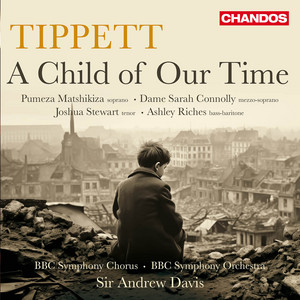 | A Child of our Time, Part I: The world turns on its dark side (Chorus) | Michael Tippett, BBC Symphony Chorus, BBC Symphony Orchestra, Andrew Davis | E Minor | 0 | 9A | 64 BPM | |
 | Children's Corner (arr. A. Caplet for orchestra): Serenade for the Doll | Andre Caplet, Claude Debussy, Rheinland-Pfalz State Philharmonic Orchestra, Leif Segerstam | D♭ Minor | 0 | 12A | 131 BPM |
- ISRC
- NLY331209394
- Label
- L-M Records/RCA Records