- BPM
- 140
- Key
- A Major
- Camelot
- 11B
Delius: Brigg Fair "An English Rhapsody": Transition by Frederick Delius, Sir Thomas Beecham, Royal Philharmonic Orchestra Song Details
"Delius: Brigg Fair "An English Rhapsody": Transition" by Frederick Delius, Sir Thomas Beecham, Royal Philharmonic Orchestra had its release date on February 7, 2011. With This song being less than two minutes long, at 1:04, we are fairly confident that this song is not explicit and is safe for all ages. Based on the duration of this song, this song duration is much smaller than the average song duration. There are a total of 88 in the song's album "Sir Thomas Beecham: The English Collection". In this album, this song's track order is #18. Furthermore, we believe that the track originated from United Kingdom. Based on our statistics, Delius: Brigg Fair "An English Rhapsody": Transition's popularity is unknown right now. In our opinion, the overall tone is not very danceable and projects negative sounds, such as being sad, depressed, or angry.
BPM and Tempo
With Delius: Brigg Fair "An English Rhapsody": Transition by Frederick Delius, Sir Thomas Beecham, Royal Philharmonic Orchestra having a BPM of 140 with a half-time of 70 BPM and a double-time of 280 BPM, we would consider this track to have a Allegro (fast, quick, and bright) tempo marking. Because of this, we believe that the song has an overall fast tempo. Looking at the BPM of this song, this song might go great with jogging or cycling. The time signature for this track is 1/4.
Music Key
A Major is the music key of this track. Or for those who are familiar with the camelot wheel, this song has a camelot key of 11B. So, the perfect camelot match for 11B would be either 11B or 12A. While, 12B can give you a low energy boost. For moderate energy boost, you would use 8B and a high energy boost can either be 1B or 6B. Though, if you want a low energy drop, you should looking for songs with either a camelot key of 11A or 10B will give you a low energy drop, 2B would be a moderate one, and 9B or 4B would be a high energy drop. Lastly, 8A allows you to change the mood.
Want to find the BPM and music key for other songs? Check out our BPM and Key Finder page!
- Popularity
- 0%
- Loudness
- -16.492 dB
- Acousticness
- 88%
- Danceability
- 16%
- Energy
- 12%
- Instrumentalness
- 92%
- Liveness
- 14%
- Loudness
- 73%
- Speechiness
- 4%
- Valence
- 4%
Recommendations
| Track | Artist | Key | Energy | Camelot | BPM | ||
|---|---|---|---|---|---|---|---|
 | Satie / Orch. Debussy: 3 Gymnopédies: No. 3, Lent et grave | Erik Satie, Sir Simon Rattle, Berliner Philharmoniker | A Minor | 0 | 8A | 82 BPM | |
 | Danzas fantasticas, Op. 22: Ensueno | Joaquín Turina, Orquesta Sinfónica de Castilla y León, Max Darman Bragado | G Major | 0 | 9B | 82 BPM | |
 | Elégie in C Minor, Op. 24 (Arr. Parkin) | Gabriel Fauré, Sheku Kanneh-Mason, Rowena Calvert, Ashok Klouda, Nicholas Trygstad, Caroline Dearnley, Desmond Neysmith, Josephine Knight, Hannah Roberts, Chris Murray, Robert Max | A♭ Major | 0 | 4B | 88 BPM | |
 | Peer Gynt Suite No. 1, Op. 46: II. The Death of Åse - Recorded 1982 | Edvard Grieg, Berliner Philharmoniker, Herbert von Karajan | G Major | 0 | 9B | 45 BPM | |
 | Memories of a Promenade II | Modest Mussorgsky, Vivan Bhatti, Ketan Bhatti, Olga Scheps, Flying Steps | C Minor | 0 | 5A | 72 BPM | |
 | Rodeo: II. Corral Nocturne | Aaron Copland, Detroit Symphony Orchestra, Leonard Slatkin | F Minor | 0 | 4A | 92 BPM | |
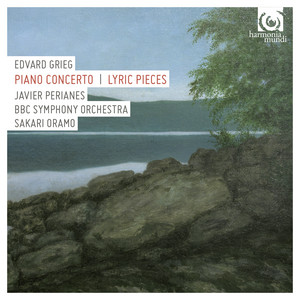 | Piano Concerto in A Minor, Op. 16: II. Adagio | Edvard Grieg, Javier Perianes, BBC Symphony Orchestra, Sakari Oramo | D♭ Major | 0 | 3B | 79 BPM | |
 | Rhapsodie Orientale, Op. 29: 1. Andante | Alexander Glazunov, Orchestre Symphonique de Montréal, Charles Dutoit | D♭ Major | 0 | 3B | 89 BPM | |
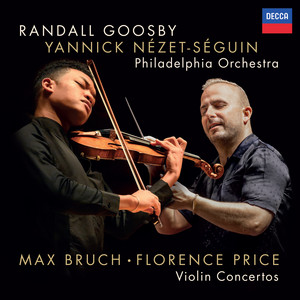 | Adoration (Arr. Gray for Violin & Orchestra) | Florence Beatrice Price, Randall Goosby, Philadelphia Orchestra, Yannick Nézet-Séguin | D Major | 3 | 10B | 74 BPM | |
 | Capriccio brillant, Op. 22: Andante | Felix Mendelssohn, Matthias Kirschnereit, Michael Sanderling, Frankfurt Radio Symphony Orchestra | B Major | 0 | 1B | 91 BPM | |
 | Florida Suite: I. Daybreak - Dance | Frederick Delius, English Northern Philharmonia, David Lloyd-Jones | A Major | 0 | 11B | 100 BPM | |
 | Carnaval, Op. 9: No. 12, Chopin | Robert Schumann, Boris Giltburg | B♭ Minor | 0 | 3A | 92 BPM | |
 | Raymonda, Op. 57: Prélude et la Romanesca | Alexander Glazunov, Xavier De Maistre, Nathalie Stutzmann, WDR Sinfonieorchester | E Minor | 3 | 9A | 104 BPM | |
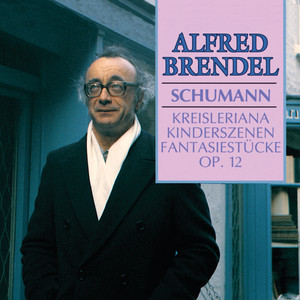 | Kinderszenen, Op. 15: VII. Träumerei | Robert Schumann, Alfred Brendel | F Major | 0 | 7B | 135 BPM | |
| Lyric Pieces, Book VI, Op. 57: No. 6, Hjemve. Andante | Edvard Grieg, Javier Perianes | E Minor | 0 | 9A | 166 BPM | |
 | Bagatelles et impromptus, JB 1:19: VII. Love | Bedřich Smetana, William Howard | A Major | 0 | 11B | 76 BPM | |
 | Pavane, Op. 50 (Version for Piano) | Gabriel Fauré, Jorge Federico Osorio | F♯ Minor | 0 | 11A | 75 BPM | |
 | Rachmaninov: Rhapsody on a Theme of Paganini, Op. 43: Variation XVIII | Sergei Rachmaninoff, Nikolai Lugansky, Sakari Oramo, City Of Birmingham Symphony Orchestra | D♭ Major | 1 | 3B | 61 BPM | |
 | En rêve, Nocturne, S. 207 | Franz Liszt, Marc-André Hamelin | B Major | 0 | 1B | 73 BPM | |
 | On hearing the first Cuckoo in Spring | Frederick Delius, Academy of St. Martin in the Fields, Sir Neville Marriner | G Major | 1 | 9B | 80 BPM | |
 | Sicilienne, Op. 78 | Gabriel Fauré, Harriet Krijgh, Kamilla Isanbaeva | G Minor | 1 | 6A | 123 BPM | |
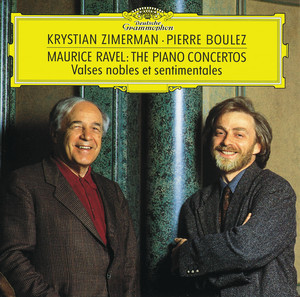 | Piano Concerto in G Major, M. 83: II. Adagio assai | Maurice Ravel, Krystian Zimerman, Cleveland Orchestra, Pierre Boulez | E Major | 0 | 12B | 74 BPM | |
 | 2 Aquarelles: Gaily, but not quick | Frederick Delius, Royal Northern Sinfonia, David Lloyd-Jones | E Minor | 2 | 9A | 104 BPM | |
 | Sibelius: Symphony No. 3, Op. 52: I. Allegro moderato | Jean Sibelius, Sakari Oramo, City Of Birmingham Symphony Orchestra | C Major | 1 | 8B | 127 BPM | |
 | The Walk to the Paradise Garden | Frederick Delius, Royal Liverpool Philharmonic Orchestra, John Wilson | E Major | 1 | 12B | 88 BPM |
- ISRC
- GBAYC1001643
- Label
- L-M Records/RCA Records