- BPM
- 168
- Key
- C Major
- Camelot
- 8B
Bach, JS: Orchestral Suite No. 4 in D Major, BWV 1069: V. Réjouissance by Johann Sebastian Bach, Jean-François Paillard, Maurice André, Marcel Lagorce, Jacques Mas, Pierre Pierlot, Claude Maisonneuve, Lucien Debray, Paul Hongne, Orchestre de chambre Jean-François Paillard Song Details
On March 25, 2022, the song "Bach, JS: Orchestral Suite No. 4 in D Major, BWV 1069: V. Réjouissance" was released by Johann Sebastian Bach, Jean-François Paillard, Maurice André, Marcel Lagorce, Jacques Mas, Pierre Pierlot, Claude Maisonneuve, Lucien Debray, Paul Hongne, Orchestre de chambre Jean-François Paillard. The duration of This song is about two minutes long, specifically at 2:46. This song does not appear to have any foul language. Bach, JS: Orchestral Suite No. 4 in D Major, BWV 1069: V. Réjouissance's duration is considered a little bit shorter than the average duration of a typical track. The song is number 122 out of 169 in Bach: Brandenburg Concertos, Keyboard Concertos, Violin Concertos & Orchestral Suites by Johann Sebastian Bach, Jean-François Paillard. Going off of the ISRC code of this track, we detected that the origin of this track is from France. The popularity of Bach, JS: Orchestral Suite No. 4 in D Major, BWV 1069: V. Réjouissance is currently unknown right now. The mood doesn't appear to be that danceable, but it still produces a high amount of positive energy.
BPM and Tempo
The tempo marking of Bach, JS: Orchestral Suite No. 4 in D Major, BWV 1069: V. Réjouissance by Johann Sebastian Bach, Jean-François Paillard, Maurice André, Marcel Lagorce, Jacques Mas, Pierre Pierlot, Claude Maisonneuve, Lucien Debray, Paul Hongne, Orchestre de chambre Jean-François Paillard is Vivace (lively and fast), since this song has a tempo of 168 BPM. With that information, we can conclude that the song has a fast tempo. The time signature for this track is 4/4.
Music Key
This song is in the music key of C Major. This also means that this song has a camelot key of 8B. So, the perfect camelot match for 8B would be either 8B or 9A. While, 9B can give you a low energy boost. For moderate energy boost, you would use 5B and a high energy boost can either be 10B or 3B. Though, if you want a low energy drop, you should looking for songs with either a camelot key of 8A or 7B will give you a low energy drop, 11B would be a moderate one, and 6B or 1B would be a high energy drop. Lastly, 5A allows you to change the mood.
Want to find the BPM and music key for other songs? Check out our BPM and Key Finder page!
- Popularity
- 0%
- Loudness
- -17.027 dB
- Acousticness
- 66%
- Danceability
- 20%
- Energy
- 40%
- Instrumentalness
- 89%
- Liveness
- 7%
- Loudness
- 72%
- Speechiness
- 3%
- Valence
- 90%
Recommendations
| Track | Artist | Key | Energy | Camelot | BPM | ||
|---|---|---|---|---|---|---|---|
 | 2 Morceaux caractéristiques, Op. 164, B. 36: No. 2, Tango (Arr. for Chamber Ensemble by Anonymous) | Isaac Albéniz, Consort Ripieno Concertino | G Major | 1 | 9B | 94 BPM | |
 | Concerto Grosso in D Major, Op. 6 No. 4: II. Allegro | Arcangelo Corelli, Jordi Savall, Le Concert Des Nations | D♭ Major | 3 | 3B | 133 BPM | |
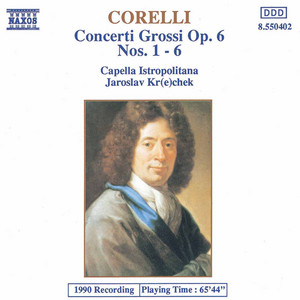 | Concerto Grosso In D Major, Op. 6, No. 1 : III. Largo | Arcangelo Corelli, Daniela Ruso, Anna Holbling, Ludovit Kanta, Quido Holbling, Capella Istropolitana | D Major | 1 | 10B | 78 BPM | |
 | Keyboard Sonata in B Minor, Kk. 87 | Domenico Scarlatti, Julius Asal | B Minor | 0 | 10A | 69 BPM | |
 | Violin Concerto in E Major, BWV 1042: III. Allegro Assai | Arthur Grumiaux, Zurich Chamber Orchestra, Johann Sebastian Bach, Edmond De Stoutz | E Major | 3 | 12B | 86 BPM | |
 | The Well-Tempered Clavier, Book I, BWV 846-869 - Prelude No. 1 in C Major, BWV 846 | Classical Coterie | C Major | 0 | 8B | 217 BPM | |
 | Concerto for 2 Pianos in E-Flat Major, K. 365: III. Rondo. Allegro moderato | Wolfgang Amadeus Mozart, Alfred Brendel, Imogen Cooper, Academy of St. Martin in the Fields, Sir Neville Marriner | E♭ Major | 2 | 5B | 87 BPM | |
 | Orfeo ed Euridice, Wq. 30: Dance of the Blessed Spirits "Melody" (Arr. Sgambati for Piano) | Christoph Willibald Gluck, Yuja Wang | D Minor | 0 | 7A | 70 BPM | |
 | Giulio Cesare, HWV 17: Se pieta de mi non senti (Arr. for Piano) | George Frideric Handel, Martin Stadtfeld | F Minor | 1 | 4A | 83 BPM | |
 | Bach, C.P.E.: Cello Concerto No. 3 in A Major, Wq. 172, H. 439 (Cadenzas by Anner Bylsma): III. Allegro assai | Carl Philipp Emanuel Bach, Anner Bylsma, Orchestra of the Age of Enlightenment, Gustav Leonhardt | A♭ Minor | 1 | 1A | 75 BPM | |
 | Lieder ohne Worte, Op. 19b: Lieder ohne Worte (Song without Words) No. 6 in G Minor, Op. 19, No. 6, "Venezianisches Gondellied" [Venetian Gondola Song] | Felix Mendelssohn, Péter Nagy | G Major | 0 | 9B | 101 BPM | |
 | Chromatic Fantasy and Fuge, In D Minor BWV 903, Chromatische Fantasie and Fuge, D Moll BWV 903: Fantasie | Pieter-Jan Belder, Arts Music Recording, Rotterdam, Johann Sebastian Bach | C Minor | 3 | 5A | 76 BPM | |
 | Bleib bei uns, denn es will Abend werden, BWV 6: Chorale. Beweis dein Macht, Herr Jesu Christ (Chorus) | Johann Sebastian Bach, Yukari Nonoshita, Robin Blaze, James Gilchrist, Dominik Worner, Bach Collegium Japan Chorus, Bach Collegium Japan, Masaaki Suzuki | F♯ Minor | 0 | 11A | 102 BPM | |
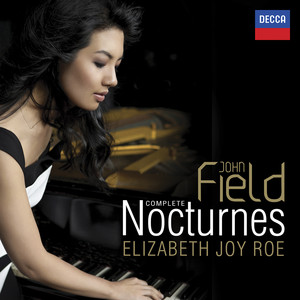 | Nocturne No. 5 in B-Flat Major, H. 37 | John Field, Elizabeth Joy Roe | B♭ Major | 0 | 6B | 65 BPM | |
 | Suite en ré: Les niais de Sologne | Jean-Philippe Rameau, Natacha Kudritskaya | E Major | 2 | 12B | 103 BPM | |
 | Oboe Concerto in D Minor, Op. 9 No. 2: II. Adagio | Tomaso Albinoni, David Reichenberg, The English Concert, Trevor Pinnock | A Major | 1 | 11B | 68 BPM | |
 | Partita No. 1 in B-Flat Major, BWV 825: I. Praeludium | Johann Sebastian Bach, Yuan Sheng | B♭ Major | 1 | 6B | 100 BPM | |
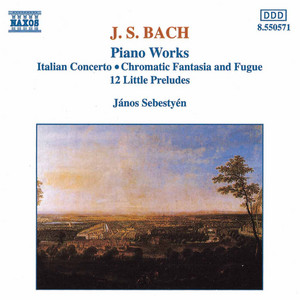 | Chromatic Fantasia And Fugue In D Minor, BWV 903 : Fugue | Janos Sebestyen, Johann Sebastian Bach | D Minor | 3 | 7A | 88 BPM | |
 | Concerto for 3 Harpsichords, Strings, and Continuo No. 2 in C, BWV 1064: 3. Allegro | Johann Sebastian Bach, Ton Koopman, Tini Mathot, Friederike Ernst, Amsterdam Baroque Orchestra | B Major | 3 | 1B | 82 BPM | |
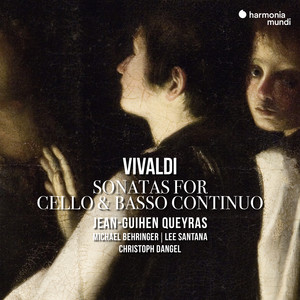 | Cello Sonata in E Minor, RV 40: III. Largo | Antonio Vivaldi, Jean-Guihen Queyras, Michael Behringer, Christoph Dangel | F♯ Major | 0 | 2B | 138 BPM | |
 | Flute Sonata in E Minor, BWV 1034: III. Andante | Johann Sebastian Bach, Petri Alanko, Jukka Rautasalo, Anssi Mattila | G Major | 0 | 9B | 104 BPM | |
 | Violin Concerto in C Major, Hob. VIIa:1: II. Adagio | Joseph Haydn, Augustin Hadelich, Kolner Kammerorchester, Helmut Müller-Brühl | F Major | 1 | 7B | 61 BPM | |
 | Orchestral Suite No. 2 in B Minor, BWV 1067: I. Ouverture | Johann Sebastian Bach, Norwegian Baroque Orchestra, Ketil Haugsand | B♭ Minor | 1 | 3A | 101 BPM | |
 | Adagio in E Major, K. 261 | Wolfgang Amadeus Mozart, Pinchas Zukerman, Saint Paul Chamber Orchestra | E Major | 1 | 12B | 100 BPM | |
| Concerto for 3 Harpsichords, Strings, and Continuo No. 2 in C, BWV 1064: 1. (Allegro) | Johann Sebastian Bach, Ton Koopman, Tini Mathot, Friederike Ernst, Amsterdam Baroque Orchestra | B Major | 4 | 1B | 87 BPM |
- ISRC
- FRZ201901616
- Label
- L-M Records/RCA Records