- BPM
- 89
- Key
- D♭ Major
- Camelot
- 3B
String Quartet, M. 35: III. Très lent by Maurice Ravel, Emerson String Quartet Song Details
"String Quartet, M. 35: III. Très lent" by Maurice Ravel, Emerson String Quartet had its release date on January 1, 1986. Since This song is still less than 10 minute long, it is still considered a pretty long duration song compared to the average song length. This song does not appear to be explicit due to the lack of the "E" tag. The song is number 7 out of 8 in Debussy / Ravel: String Quartets by Hector Berlioz, Leonard Bernstein, New York Philharmonic, Ludwig van Beethoven, Emerson String Quartet, Wolfgang Amadeus Mozart, Emerson String Quartet, Emerson String Quartet. Going off of the ISRC code of this track, we detected that the origin of this track is from Germany. String Quartet, M. 35: III. Très lent is not that popular right now. In our opinion, the overall tone is not very danceable and projects negative sounds, such as being sad, depressed, or angry.
BPM and Tempo
The tempo marking of String Quartet, M. 35: III. Très lent by Maurice Ravel, Emerson String Quartet is Andante (at a walking pace), since this song has a tempo of 89 BPM. With that information, we can conclude that the song has a slow tempo. This song can go great with yoga or pilates. The time signature for this track is 4/4.
Music Key
This song is in the music key of D♭ Major. This also means that this song has a camelot key of 3B. So, the perfect camelot match for 3B would be either 3B or 4A. While, 4B can give you a low energy boost. For moderate energy boost, you would use 12B and a high energy boost can either be 5B or 10B. Though, if you want a low energy drop, you should looking for songs with either a camelot key of 3A or 2B will give you a low energy drop, 6B would be a moderate one, and 1B or 8B would be a high energy drop. Lastly, 12A allows you to change the mood.
Want to find the BPM and music key for other songs? Check out our BPM and Key Finder page!
- Popularity
- 17%
- Loudness
- -32.7 dB
- Acousticness
- 97%
- Danceability
- 10%
- Energy
- 2%
- Instrumentalness
- 26%
- Liveness
- 14%
- Loudness
- 45%
- Speechiness
- 5%
- Valence
- 3%
Recommendations
| Track | Artist | Key | Energy | Camelot | BPM | ||
|---|---|---|---|---|---|---|---|
 | Don Quixote, Op. 35: XIV. Finale. The Death of Don Quixote. Sehr ruhig | Richard Strauss, Pierre Fournier, Giusto Cappone, Berliner Philharmoniker, Herbert von Karajan | E♭ Major | 3 | 5B | 102 BPM | |
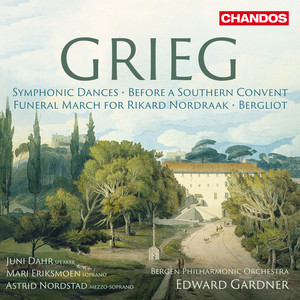 | Symphonic Dances, Op. 64: III. Allegro giocoso | Edvard Grieg, Bergen Philharmonic Orchestra, Edward Gardner | A Major | 1 | 11B | 172 BPM | |
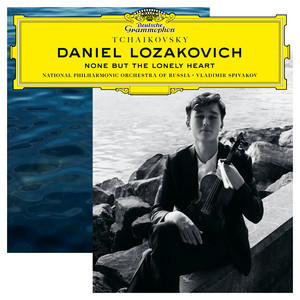 | Violin Concerto in D Major, Op. 35, TH 59: II. Canzonetta. Andante | Pyotr Ilyich Tchaikovsky, Daniel Lozakovich, National Philharmonic Orchestra of Russia, Vladimir Spivakov | E♭ Major | 1 | 5B | 112 BPM | |
 | Pictures At An Exhibition: Cum mortuis in lingua mortua | Modest Mussorgsky, Chicago Symphony Orchestra, Carlo Maria Giulini | B Major | 0 | 1B | 102 BPM | |
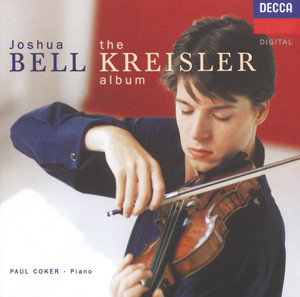 | Tambourin chinois | Fritz Kreisler, Joshua Bell, Paul Coker | G Minor | 2 | 6A | 82 BPM | |
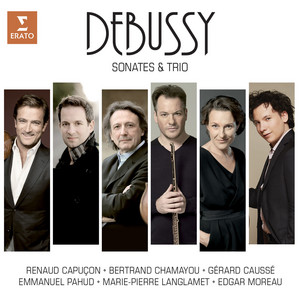 | Debussy: Cello Sonata in D Minor, CD 144, L. 135: I. Prologue | Claude Debussy, Edgar Moreau, Bertrand Chamayou | D Minor | 0 | 7A | 171 BPM | |
 | Poulenc: Piano Concerto, FP 146: I. Allegretto | Francis Poulenc, James Conlon, Rotterdam Philharmonic Orchestra | G Minor | 1 | 6A | 130 BPM | |
 | Dvořák: Piano Trio No. 4 in E Minor, Op. 90, B. 166 "Dumky": VI. Lento maestoso - Vivace | Antonín Dvořák, Beaux Arts Trio | C Minor | 1 | 5A | 109 BPM | |
 | Violin Concerto in D Minor, Op. 47: III. Allegro, ma non tanto | Jean Sibelius, Augustin Hadelich, Hannu Lintu, Royal Liverpool Philharmonic Orchestra | D Major | 3 | 10B | 107 BPM | |
 | String Quartet No. 1 in A Major: III. Scherzo: Prestissimo | Alexander Borodin, Budapest Haydn Quartet | C Major | 2 | 8B | 109 BPM | |
 | Violin Concerto, Op. 48: III. Vivace giocoso | Dmitry Kabalevsky, Neeme Järvi, Royal Scottish National Orchestra, Lydia Mordkovitch | A Minor | 2 | 8A | 90 BPM | |
 | Schoenberg: Verklärte Nacht, Op. 4: II. Molto rallentando (1943 Version) | Arnold Schoenberg, Daniel Barenboim, Chicago Symphony Orchestra | E Major | 2 | 12B | 76 BPM | |
 | Piano Quartet No. 2 in G Minor, Op. 45: I. Allegro molto moderato | Gabriel Fauré, Trio Wanderer, Antoine Tamestit | B♭ Major | 2 | 6B | 104 BPM | |
 | Cello Sonata in G Minor, Op. 19: III. Andante | Sergei Rachmaninoff, Yo-Yo Ma, Emanuel Ax | E♭ Major | 0 | 5B | 85 BPM | |
 | Scheherazade, Op. 35: III. Andantino quasi allegretto "The Young Prince and The Young Princess" | Nikolai Rimsky-Korsakov, New York Philharmonic, Alan Gilbert, Lawrence Rock | G Major | 1 | 9B | 97 BPM | |
| Pictures At An Exhibition: Gnomus | Modest Mussorgsky, Chicago Symphony Orchestra, Carlo Maria Giulini | B Major | 0 | 1B | 99 BPM | |
 | The Planets, Op. 32: III. Mercury, the Winged Messenger | Gustav Holst, Orchestre Symphonique de Montréal, Charles Dutoit | G Major | 0 | 9B | 76 BPM | |
 | Piano Trio No. 1 in B Major, Op. 8: III. Adagio | Johannes Brahms, Maria João Pires, Augustin Dumay, Jian Wang | B Major | 0 | 1B | 84 BPM | |
 | Violin Concerto No. 4 in D Minor, Op. 31: I. Andante - Moderato | Henri Vieuxtemps, Hilary Hahn, Deutsche Kammerphilharmonie Bremen, Paavo Järvi | D Minor | 1 | 7A | 75 BPM | |
 | Pines Of Rome, P. 141: 3. The Pines Of The Janiculum | Ottorino Respighi, Berliner Philharmoniker, Herbert von Karajan | E Major | 0 | 12B | 84 BPM | |
| Piano Quartet No. 1 in C Minor, Op. 15: III. Adagio | Gabriel Fauré, Trio Wanderer, Antoine Tamestit | B♭ Major | 2 | 6B | 104 BPM | |
 | Piano Concerto, FP 146: 3. Rondo à la Française | Francis Poulenc, Pascal Rogé, Philharmonia Orchestra, Charles Dutoit | D♭ Major | 1 | 3B | 96 BPM | |
| Schoenberg: Verklärte Nacht, Op. 4: V. Adagio, molto tranquilo | Arnold Schoenberg, Daniel Barenboim, Chicago Symphony Orchestra, Charles Pikler, John Sharp, Joseph Golan, Li-Kuo Chang, Ruben Gonzalez, Stephen Balderston | E Minor | 1 | 9A | 125 BPM | |
 | Deux Sérénades (Written for Hilary Hahn): No. 1. Sérénade pour mon amour. Moderato | Einojuhani Rautavaara, Hilary Hahn, Orchestre Philharmonique de Radio France, Mikko Franck | A Minor | 1 | 8A | 92 BPM | |
 | Ravel: Suite No. 2 from Daphnis et Chloé, M. 57: III. Danse générale | Maurice Ravel, Yannick Nézet-Séguin, Rotterdam Philharmonic Orchestra | D♭ Major | 4 | 3B | 84 BPM |
- ISRC
- DEF058402973
- Label
- L-M Records/RCA Records