- BPM
- 109
- Key
- D Minor
- Camelot
- 7A
24 Caprices en formes d'etudes: No. 14 in E-Flat Minor by Pierre Rode, Elizabeth Wallfisch Song Details
Pierre Rode, Elizabeth Wallfisch's ' "24 Caprices en formes d'etudes: No. 14 in E-Flat Minor" was released on its scheduled release date, May 19, 2010. With this song being around four minutes long, at 4:10, the duration of this song is pretty average compared to other songs. This track is safe for children and doesn't appear to contain any foul language, since the "Explicit" tag was not present in this track. There are a total of 24 in the song's album "Rode: 24 Caprices en formes d'etudes". In this album, this song's track order is #2. Furthermore, we believe that the track originated from Germany. In terms of popularity, 24 Caprices en formes d'etudes: No. 14 in E-Flat Minor is currently unknown. Since there is more of a neutral sound being played, this makes the track somewhat danceable.
BPM and Tempo
With 24 Caprices en formes d'etudes: No. 14 in E-Flat Minor by Pierre Rode, Elizabeth Wallfisch having a BPM of 109 with a half-time of 54 BPM and a double-time of 218 BPM, we would consider this track to have a Moderato (at a moderate speed) tempo marking. Because of this, we believe that the song has an overall moderate tempo. The time signature for this track is 3/4.
Music Key
This song has a musical key of D Minor. Which also means that the camelot key for this song is 7A. So, the perfect camelot match for 7A would be either 7A or 6B. While, a low energy boost can consist of either 7B or 8A. For moderate energy boost, you would use 4A and a high energy boost can either be 9A or 2A. However, if you are looking for a low energy drop, finding a song with a camelot key of 6A would be a great choice. Where 10A would give you a moderate drop, and 5A or 12A would be a high energy drop. Lastly, 10B allows you to change the mood.
Want to find the BPM and music key for other songs? Check out our BPM and Key Finder page!
- Popularity
- 0%
- Loudness
- -16.32 dB
- Acousticness
- 99%
- Danceability
- 44%
- Energy
- 16%
- Instrumentalness
- 62%
- Liveness
- 13%
- Loudness
- 73%
- Speechiness
- 6%
- Valence
- 55%
Recommendations
| Track | Artist | Key | Energy | Camelot | BPM | ||
|---|---|---|---|---|---|---|---|
 | Danse macabre, Op. 40, R. 171 (Version for Violin & Piano) | Camille Saint-Saëns, Fanny Clamagirand, Vanya Cohen | E♭ Major | 2 | 5B | 107 BPM | |
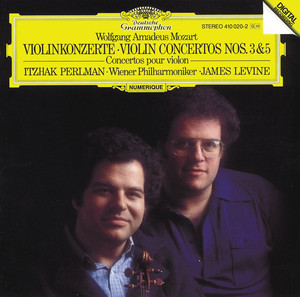 | Violin Concerto No. 5 in A Major, K. 219 "Turkish": I. Allegro aperto (Cadenza Itzhak Perlman) | Wolfgang Amadeus Mozart, Itzhak Perlman, Wiener Philharmoniker, James Levine | A Major | 2 | 11B | 122 BPM | |
 | 8 Pieces, Op. 39: No. 3, Berceuse | Reinhold Glière, Friedemann Eichhorn, Martin Rummel, Alexander Hülshoff | E Minor | 2 | 9A | 82 BPM | |
 | Chanson de matin, Op. 15 No. 2 | Edward Elgar, Geneviève Laurenceau, Jean-Frédéric Neuburger | B♭ Major | 0 | 6B | 137 BPM | |
 | Viola Concerto in C Minor: III. Allegro molto energico | Johann Christian Bach, Henri Casadesus, Nemanja Radulović, Double Sens | G Minor | 3 | 6A | 79 BPM | |
 | Wieniawski: Violin Concerto No. 1 in F-Sharp Minor, Op. 14: II. Preghiera | Henryk Wieniawski, Itzhak Perlman, London Philharmonic Orchestra, Seiji Ozawa | A Major | 0 | 11B | 65 BPM | |
 | Chiquilín de Bachín | Astor Piazzolla, Maria Lindsay, Josephine Allan | E Minor | 2 | 9A | 109 BPM | |
 | Sarasate: Zigeunerweisen, Op. 20 | Pablo de Sarasate, Itzhak Perlman, Abbey Road Ensemble | C Minor | 1 | 5A | 83 BPM | |
 | Haydn: String Quartet in D Major, Op. 64 No. 5, Hob. III:63 "Lark": I. Allegro moderato | Joseph Haydn, Endellion String Quartet | A Major | 0 | 11B | 94 BPM | |
 | Viola Concerto in D Major: II. Adagio | Franz Anton Hoffmeister, Hariolf Schlichtig, Munich Chamber Orchestra | D Minor | 0 | 7A | 175 BPM | |
 | Cello Sonata No. 1 in E Minor, Op. 38 No. 1 (Arr. for 2 Cellos): III. Rondo. Allegretto | Bernhard Romberg, VC2 Cello Duo | E Minor | 1 | 9A | 104 BPM | |
 | Andante e Rondo Ungarese, Op. 35 | Mark Neumann, En-Chi Anna Ho | C Major | 1 | 8B | 94 BPM | |
 | Hungarian Dance No. 6, WoO 1 | Johannes Brahms, Mela Tenenbaum, Anton Nel | G Major | 2 | 9B | 141 BPM | |
 | Wieniawski: 8 Etudes-Caprices, Op. 18: No. 1 in G Minor | Henryk Wieniawski, Itzhak Perlman, Pinchas Zukerman | G Minor | 1 | 6A | 79 BPM | |
 | 24 caprices en formes d'etudes: No. 4 in E Minor | Pierre Rode, Axel Strauss | E Minor | 2 | 9A | 128 BPM | |
 | Sonata for Solo Violin No. 6 in E Major, Op. 27 No. 6 "A Manuel Quiroga": I. Allegro giusto non troppo vivo, allegretto poco scherzando | Eugène Ysaÿe, Tedi Papavrami | A Major | 1 | 11B | 105 BPM | |
| 24 caprices en formes d'etudes: No. 5 in D Major | Pierre Rode, Axel Strauss | D Major | 1 | 10B | 93 BPM | |
 | Violin Sonata No. 2 in G Major, Op. 13: II. Allegretto tranquillo | Edvard Grieg, Frederic Chiu, Pierre Amoyal | D Minor | 2 | 7A | 148 BPM | |
| Leclair: Sonata for 2 Violins in E Minor, Op. 3, No. 5: I. Allegro, ma poco | Jean-Marie Leclair, Itzhak Perlman | E Minor | 2 | 9A | 129 BPM | |
 | Tarantelle, Op. 23 | William Henry Squire, Oliver Gledhill, Tadashi Imai | D Major | 1 | 10B | 141 BPM | |
 | Ribbons of Thunderlight | Bheto VN | C Minor | 3 | 5A | 140 BPM | |
 | Moto perpetuo, Op. 11 | Itzhak Perlman, Samuel Sanders | C Major | 5 | 8B | 182 BPM | |
 | Sonata No. 5 in E Minor, RV 40: II. Allegro | Ashima Scripp, Eleanor Perrone | E♭ Major | 1 | 5B | 93 BPM | |
 | Sonata X in G Major for Two Cellos: I. Andante | Jean Barrière, Patrick Demenga, Thomas Demenga | D Major | 0 | 10B | 178 BPM | |
 | Viola Concerto in G Minor: II. Andante un poco sostenuto | Cecil Forsyth, Baden-Badener Philharmonie, Hartmut Rohde, Pavel Baleff | F Major | 1 | 7B | 75 BPM |
- ISRC
- DEB200412914
- Label
- L-M Records/RCA Records