- BPM
- 77
- Key
- E Major
- Camelot
- 12B
Goodbye, Mr Chips: Finale by Richard Addinsell, Rumon Gamba, BBC Philharmonic Orchestra, Chethams Chamber Choir, Manchester Cathedral Choir Song Details
"Goodbye, Mr Chips: Finale" by Richard Addinsell, Rumon Gamba, BBC Philharmonic Orchestra, Chethams Chamber Choir, Manchester Cathedral Choir had its release date on February 1, 2003. With This song being less than two minutes long, at 1:35, we are fairly confident that this song is not explicit and is safe for all ages. Based on the duration of this song, this song duration is much smaller than the average song duration. There are a total of 18 in the song's album "The Film Music of Richard Addinsell". In this album, this song's track order is #3. Furthermore, we believe that the track originated from United Kingdom. Goodbye, Mr Chips: Finale is unknown right now. In our opinion, the overall tone is not very danceable and projects negative sounds, such as being sad, depressed, or angry.
BPM and Tempo
With Goodbye, Mr Chips: Finale by Richard Addinsell, Rumon Gamba, BBC Philharmonic Orchestra, Chethams Chamber Choir, Manchester Cathedral Choir having a BPM of 77 with a half-time of 38 BPM and a double-time of 154 BPM, we would consider this track to have a Andante (at a walking pace) tempo marking. Because of this, we believe that the song has an overall slow tempo. The time signature for this track is 4/4.
Music Key
This song has a musical key of E Major. Or for those who are familiar with the camelot wheel, this song has a camelot key of 12B. So, the perfect camelot match for 12B would be either 12B or 1A. While, 1B can give you a low energy boost. For moderate energy boost, you would use 9B and a high energy boost can either be 2B or 7B. Though, if you want a low energy drop, you should looking for songs with either a camelot key of 12A or 11B will give you a low energy drop, 3B would be a moderate one, and 10B or 5B would be a high energy drop. Lastly, 9A allows you to change the mood.
Want to find the BPM and music key for other songs? Check out our BPM and Key Finder page!
- Popularity
- 0%
- Loudness
- -20.614 dB
- Acousticness
- 93%
- Danceability
- 23%
- Energy
- 13%
- Instrumentalness
- 93%
- Liveness
- 10%
- Loudness
- 66%
- Speechiness
- 3%
- Valence
- 12%
Recommendations
| Track | Artist | Key | Energy | Camelot | BPM | ||
|---|---|---|---|---|---|---|---|
 | Scottish Fantasy for Violin and Orchestra, Op. 46: I. Introduction: Grave, Adagio cantabile | Max Bruch, Joshua Bell, Academy of St. Martin in the Fields | E♭ Major | 2 | 5B | 60 BPM | |
 | Romance | Gerald Finzi, Royal Ballet Sinfonia, David Lloyd-Jones | A♭ Major | 1 | 4B | 106 BPM | |
 | 8 Slavonic Dances, Op. 72, B. 147: No. 2 in E Minor (Allegretto grazioso) | Antonín Dvořák, Budapest Festival Orchestra, Iván Fischer | B♭ Major | 1 | 6B | 60 BPM | |
 | Der Rosenkavalier: Walzerfolge No. 2, TrV 227a | Seattle Symphony Orchestra | D Minor | 0 | 7A | 98 BPM | |
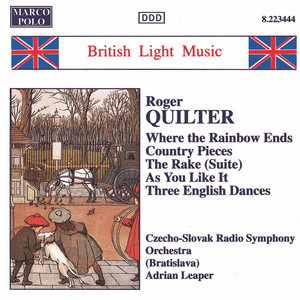 | Where the Rainbow Ends Suite (version for orchestra): No. 1a Rainbow Land | Roger Quilter, Slovak Radio Symphony Orchestra, Adrian Leaper | A Major | 0 | 11B | 69 BPM | |
 | Mahler: Symphony No. 5 in C-Sharp Minor: IV. Adagietto. Sehr langsam (Conclusion) | Gustav Mahler, Sir John Barbirolli, John Barbirolli, New Philharmonia Orchestra | A Minor | 1 | 8A | 77 BPM | |
 | Piano Concerto No. 6 in C Major, H. 49: II. Larghetto | John Field, Miceal O'Rourke, Matthias Bamert, London Mozart Players | E Major | 0 | 12B | 79 BPM | |
 | Peer Gynt Suite No. 1, Op. 46: II. Åse's Death | Edvard Grieg, Wiener Philharmoniker, Zubin Mehta | G Major | 0 | 9B | 99 BPM | |
 | Scheherazade, Op. 35: The Young Prince and the Young Princess | Nikolai Rimsky-Korsakov, Royal Concertgebouw Orchestra, Herman Krebbers, Kirill Kondrashin | G Major | 0 | 9B | 134 BPM | |
 | Mors et Vita: Judex | Charles Gounod, Richard Hickox Orchestra, Richard Hickox | C Minor | 1 | 5A | 95 BPM | |
 | Romance in E-Flat Major, Op. 11 | Gerald Finzi, Royal Northern Sinfonia, Howard Griffiths | A♭ Major | 1 | 4B | 86 BPM | |
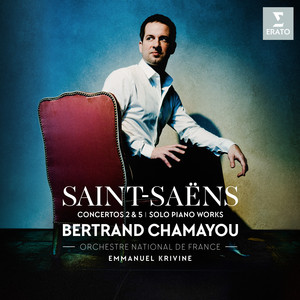 | Saint-Saëns: Piano Concerto No. 2 in G Minor, Op. 22: III. Presto | Camille Saint-Saëns, Bertrand Chamayou, Emmanuel Krivine, Orchestre National De France | C Minor | 4 | 5A | 110 BPM | |
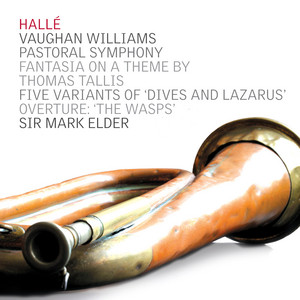 | Five Variants of ‘Dives and Lazarus’ | Ralph Vaughan Williams, Hallé, Sir Mark Elder | B Minor | 1 | 10A | 71 BPM | |
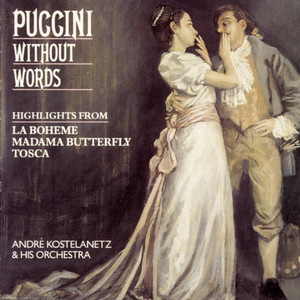 | La bohème: Quando me'n vo' | Giacomo Puccini, Andre Kostelanetz, Andre Kostelanetz & His Orchestra, André Kostelanetz Orchestra | A Minor | 3 | 8A | 77 BPM | |
 | Suite from "The Victorian Kitchen Garden": I. Prelude. Andante pastorale | Paul Reade, Michael Collins, Michael McHale | B♭ Major | 0 | 6B | 67 BPM | |
 | Spartacus: Adagio of Spartacus and Phrygia | Aram Khachaturian, Wiener Philharmoniker | A♭ Major | 1 | 4B | 129 BPM | |
 | Prélude à l'après-midi d'un faune, L. 86 | Claude Debussy, Orchestre National De Lyon, Jun Markl | A♭ Minor | 0 | 1A | 143 BPM | |
 | Voices of Spring, Op. 410 | Johann Strauss II, Leonard Bernstein | B♭ Major | 2 | 6B | 110 BPM | |
 | Woodland Suite: III. Moon-Fairy | George Dyson, BBC Symphony Orchestra, Richard Hickox | A Major | 0 | 11B | 74 BPM | |
 | Masques et bergamasques Suite, Op. 112: I. Ouverture. Allegro molto vivo | Gabriel Fauré, Seattle Symphony Orchestra, Ludovic Morlot | F♯ Minor | 0 | 11A | 80 BPM | |
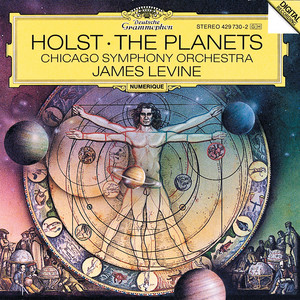 | The Planets, Op. 32: II. Venus, the Bringer of Peace | Gustav Holst, Chicago Symphony Orchestra, James Levine | A♭ Major | 0 | 4B | 71 BPM | |
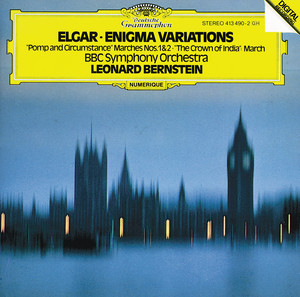 | Enigma Variations, Op. 36: Var. 1. L'istesso tempo "C.A.E." | Edward Elgar, BBC Symphony Orchestra, Leonard Bernstein | G Minor | 0 | 6A | 81 BPM | |
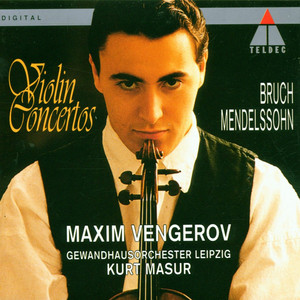 | Bruch : Violin Concerto No.1 in G minor Op.26 : III Finale - Allegro energico | Max Bruch, Maxim Vengerov, Kurt Masur, Gewandhausorchester Leipzig | G Major | 2 | 9B | 90 BPM | |
 | Brahms Symphony No. 3 - 3rd Movement | John Keating/London Symphony Orchestra | C Minor | 1 | 5A | 116 BPM | |
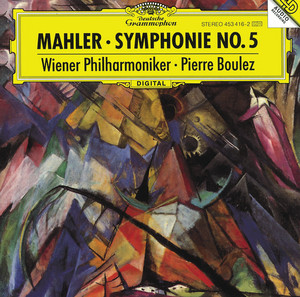 | Symphony No. 5: IV. Adagietto. Sehr langsam | Gustav Mahler, Wiener Philharmoniker, Pierre Boulez | F Major | 0 | 7B | 87 BPM |
- ISRC
- GBLWD0301503
- Label
- L-M Records/RCA Records