- BPM
- 73
- Key
- G Minor
- Camelot
- 6A
Variations and Fugue on a Theme by Handel, Op. 24: Var. 17 (Più mosso) by Johannes Brahms, Seong-Jin Cho Song Details
"Variations and Fugue on a Theme by Handel, Op. 24: Var. 17 (Più mosso)" by Johannes Brahms, Seong-Jin Cho had its release date on February 3, 2023. With This song being less than a minute long, we are pretty confident that this song does not contain any foul language. That being said, this song is pretty short compared to other songs. There are a total of 42 in the song's album "The Handel Project: Handel-Suites & Brahms-Variations". In this album, this song's track order is #31. Furthermore, we believe that the track originated from Germany. Variations and Fugue on a Theme by Handel, Op. 24: Var. 17 (Più mosso) is unknown right now. In our opinion, the overall tone is not very danceable and projects negative sounds, such as being sad, depressed, or angry.
BPM and Tempo
With Variations and Fugue on a Theme by Handel, Op. 24: Var. 17 (Più mosso) by Johannes Brahms, Seong-Jin Cho having a BPM of 73 with a half-time of 36 BPM and a double-time of 146 BPM, we would consider this track to have a Adagio (slowly with great expression) tempo marking. Because of this, we believe that the song has an overall slow tempo. The time signature for this track is 4/4.
Music Key
This song is in the music key of G Minor. Which also means that the camelot key for this song is 6A. So, the perfect camelot match for 6A would be either 6A or 5B. While, a low energy boost can consist of either 6B or 7A. For moderate energy boost, you would use 3A and a high energy boost can either be 8A or 1A. However, if you are looking for a low energy drop, finding a song with a camelot key of 5A would be a great choice. Where 9A would give you a moderate drop, and 4A or 11A would be a high energy drop. Lastly, 9B allows you to change the mood.
Want to find the BPM and music key for other songs? Check out our BPM and Key Finder page!
- Popularity
- 0%
- Loudness
- -31.278 dB
- Acousticness
- 100%
- Danceability
- 37%
- Energy
- 1%
- Instrumentalness
- 92%
- Liveness
- 14%
- Loudness
- 48%
- Speechiness
- 5%
- Valence
- 7%
Recommendations
| Track | Artist | Key | Energy | Camelot | BPM | ||
|---|---|---|---|---|---|---|---|
 | Double Concerto in A Minor, Op. 102 for Violin, Cello and Orchestra: III. Vivace non troppo | Johannes Brahms, Joshua Bell, Steven Isserlis, Academy of St. Martin in the Fields | A Minor | 2 | 8A | 86 BPM | |
 | Lyric Pieces, Book 9, Op. 68: Badnlat (Cradle Song) | Edvard Grieg, Einar Steen-Nøkleberg | B♭ Major | 0 | 6B | 72 BPM | |
 | Sicilienne, Op. 78 | Gabriel Fauré, Ina-Esther Joost Ben-Sasson, Allan Sternfield | F♯ Minor | 1 | 11A | 148 BPM | |
 | Symphony No. 1 in D Major: 2. Kräftig bewegt - Live | Gustav Mahler, Berliner Philharmoniker, Claudio Abbado | A Major | 1 | 11B | 96 BPM | |
 | 21 Hungarian Dances, WoO 1: Hungarian Dance No. 4 in F Minor. Poco sostenuto (Orch. Juon in F-Sharp Minor) | Johannes Brahms, Wiener Philharmoniker, Claudio Abbado | F♯ Minor | 2 | 11A | 80 BPM | |
 | Sonata In G Minor For Cello & Piano, Op. 19: 3. Andante | Sergei Rachmaninoff, Alisa Weilerstein, Inon Barnatan | F Major | 2 | 7B | 82 BPM | |
 | Piano Concerto No. 5 in E-Flat Major, Op. 73 "Emperor": III. Rondo. Allegro ma non troppo - Live | Ludwig van Beethoven, Krystian Zimerman, Wiener Philharmoniker, Leonard Bernstein | E♭ Major | 2 | 5B | 129 BPM | |
 | 4 Pieces, Op. 51: 3. Poème ailé | Alexander Scriabin, Evgeny Kissin | B Major | 0 | 1B | 97 BPM | |
 | Orpheo ed Euridice, Wq. 30, Act II: Dance of the Blessed Spirits | Christoph Willibald Gluck, Eugene Ormandy, Philadelphia Orchestra | D Minor | 1 | 7A | 67 BPM | |
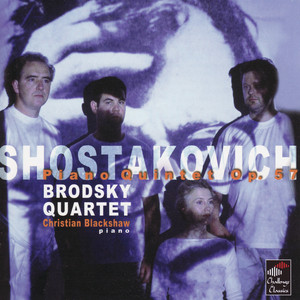 | Five pieces for Two Violins and Piano: I. Prelude- Moderato | Dmitri Shostakovich, Brodsky Quartet, Christian Blackshaw | B Minor | 0 | 10A | 82 BPM | |
 | L'Arlésienne Suite No. 2 (Arr. Guiraud): III. Menuet | Georges Bizet, Orchestre Symphonique de Montréal, Charles Dutoit | E♭ Major | 0 | 5B | 128 BPM | |
 | Shéhérazade, Op. 35: I. The Sea and Sinbad's Ship | Nikolai Rimsky-Korsakov, Sergej Galaktionov, Gianandrea Noseda, Filarmonica Teatro Regio Torino | E Major | 1 | 12B | 136 BPM | |
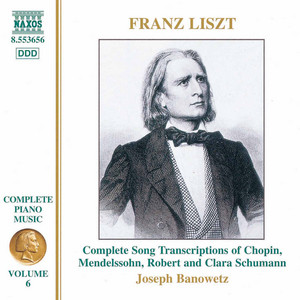 | Chopin - 6 Chants Polonais, S480/R145: No. 2. Fruhling(Wiosna, Spring) | Joseph Banowetz, Franz Liszt | G Major | 1 | 9B | 108 BPM | |
 | Finlandia, Op. 26 | Jean Sibelius, Berliner Philharmoniker, Herbert von Karajan | A♭ Major | 3 | 4B | 67 BPM | |
 | Symphonie espagnole, Op. 21: I. Allegro non troppo | Édouard Lalo, Itzhak Perlman, Orchestre de Paris, Daniel Barenboim | D Minor | 1 | 7A | 75 BPM | |
 | Schwanenlied | Fanny Mendelssohn, Eva Oertle, Consuelo Giulianelli | G Minor | 1 | 6A | 143 BPM | |
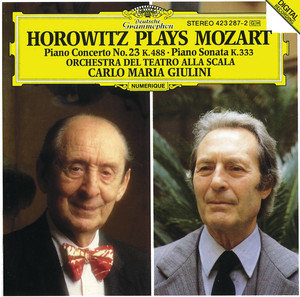 | Piano Concerto No. 23 in A Major, K. 488: II. Adagio | Wolfgang Amadeus Mozart, Vladimir Horowitz, Orchestra Del Teatro Alla Scala, Milano, Carlo Maria Giulini | F♯ Minor | 0 | 11A | 108 BPM | |
 | 3 Romances, Op. 11: I. Andante | Clara Schumann, Yoshiko Iwai | C Major | 0 | 8B | 66 BPM | |
 | Peer Gynt Suite No. 1, Op. 46: II. Åse's Death | Edvard Grieg, Wiener Philharmoniker, Zubin Mehta | G Major | 0 | 9B | 99 BPM | |
 | Variations on a Theme by Haydn, Op. 56a "St. Anthony Variations": I. Theme. Andante | Johannes Brahms, London Philharmonic Orchestra, Marin Alsop | B♭ Major | 0 | 6B | 71 BPM | |
 | Gavotte - Arr. for Cello and Piano | Jean-Baptiste Lully, Mischa Maisky, Pavel Gililov | D Minor | 0 | 7A | 85 BPM | |
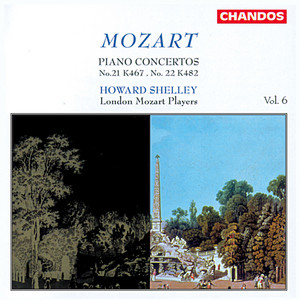 | Piano Concerto No. 21 in C Major, K. 467: II. Andante | Wolfgang Amadeus Mozart, London Mozart Players, Howard Shelley | F Major | 0 | 7B | 179 BPM | |
 | Mazurka in C Minor | Mikhail Glinka, Inga Fiolia | C Minor | 0 | 5A | 111 BPM | |
 | Sicilienne, Op. 78 | Gabriel Fauré, Harriet Krijgh, Kamilla Isanbaeva | G Minor | 1 | 6A | 123 BPM | |
 | Le Festin D'Esope Op. 39 No. 12 | Charles-Valentin Alkan, Igor Roma | E Minor | 2 | 9A | 138 BPM |
- ISRC
- DEN962236718
- Label
- L-M Records/RCA Records