- BPM
- 80
- Key
- G Major
- Camelot
- 9B
Leise, Peterle, leise by WDR Rundfunkorchester Köln, Gesangsquartett Four For Four Song Details
WDR Rundfunkorchester Köln, Gesangsquartett Four For Four's 'Leise, Peterle, leise' had a release date set for December 25, 2009. With This song being less than two minutes long, at 1:49, we are fairly confident that this song is not explicit and is safe for all ages. Based on the duration of this song, this song duration is much smaller than the average song duration. The song is number 17 out of 22 in Abendlieder Für Gesang Und Orchester by WDR Rundfunkorchester Köln, Gesangsquartett Four For Four. Going off of the ISRC code of this track, we detected that the origin of this track is from Germany. Leise, Peterle, leise is unknown right now. In our opinion, the overall tone is not very danceable and projects negative sounds, such as being sad, depressed, or angry.
BPM and Tempo
The tempo marking of Leise, Peterle, leise by WDR Rundfunkorchester Köln, Gesangsquartett Four For Four is Andante (at a walking pace), since this song has a tempo of 80 BPM. With that information, we can conclude that the song has a slow tempo. The time signature for this track is 4/4.
Music Key
The music key of this track is G Major. This also means that this song has a camelot key of 9B. So, the perfect camelot match for 9B would be either 9B or 10A. While, 10B can give you a low energy boost. For moderate energy boost, you would use 6B and a high energy boost can either be 11B or 4B. Though, if you want a low energy drop, you should looking for songs with either a camelot key of 9A or 8B will give you a low energy drop, 12B would be a moderate one, and 7B or 2B would be a high energy drop. Lastly, 6A allows you to change the mood.
Want to find the BPM and music key for other songs? Check out our BPM and Key Finder page!
- Popularity
- 0%
- Loudness
- -15.003 dB
- Acousticness
- 98%
- Danceability
- 29%
- Energy
- 22%
- Instrumentalness
- 13%
- Liveness
- 17%
- Loudness
- 75%
- Speechiness
- 4%
- Valence
- 33%
Recommendations
| Track | Artist | Key | Energy | Camelot | BPM | ||
|---|---|---|---|---|---|---|---|
 | Messiah, HWV 56: No. 44, Hallelujah - Arr. for French Horn | George Frideric Handel, Felix Klieser, CHAARTS Chamber Artists | C Major | 2 | 8B | 114 BPM | |
 | Encore (Final Boss Suite) - Medley | Yoko Shimomura, Hiroki Kikuta, Yasunori Mitsuda, Nobuo Uematsu, WDR Rundfunkorchester Köln, Arnie Roth | C Major | 6 | 8B | 133 BPM | |
 | Masques et bergamasques Suite, Op. 112: I. Ouverture. Allegro molto vivo | Gabriel Fauré, Seattle Symphony Orchestra, Ludovic Morlot | F♯ Minor | 0 | 11A | 80 BPM | |
 | Peer Gynt Suite No. 1, Op. 46. Incidental music to Peer Gynt by Ibsen: I. Morning Mood | Edvard Grieg, WDR Sinfonieorchester Köln, Eivind Aadland | B♭ Major | 0 | 6B | 68 BPM | |
 | Symphony No. 2 in B-Flat Major, Op. 52, MWV A18 "Lobgesang": Ib. Allegretto un poco agitato | Felix Mendelssohn, NDR Radiophilharmonie, Andrew Manze | G Minor | 0 | 6A | 109 BPM | |
 | Humoreske; Op. 101 No. 7 | Antonín Dvořák, I Salonisti | F♯ Major | 1 | 2B | 88 BPM | |
 | Ländler | Charlotte Guldberg, Hans Nielsen | F Major | 2 | 7B | 121 BPM | |
 | Priesterchor aus der Oper " Die Zauberflöte " | Menskes Chöre | D Major | 2 | 10B | 151 BPM | |
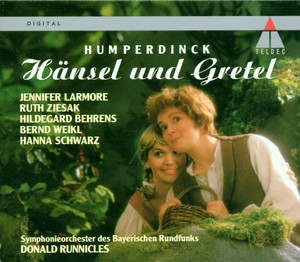 | Humperdinck : Hänsel und Gretel : Act 1 "Brüderchen, komm tanz mit mir" [Gretel, Hänsel] | Engelbert Humperdinck, Donald Runnicles, Bavarian Radio Symphony Orchestra | F Major | 1 | 7B | 92 BPM | |
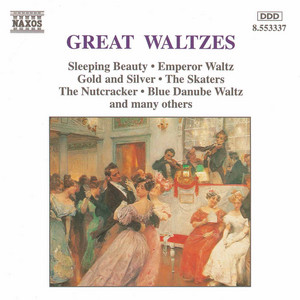 | Gold Und Silber (Gold And Silver), Op. 79 | Slovak Radio Symphony Orchestra, Franz Lehár | C Major | 1 | 8B | 81 BPM | |
 | Frau Luna 1. Akt: XII. 12. Dialog | Paul Lincke, Kathrin Smith, Karl Fäth, Helmuth Froschauer, WDR Rundfunkorchester Köln | D Major | 3 | 10B | 151 BPM | |
![Fra Holbergs tid, Op. 40: V. Rigaudon (From Holberg's Time) [Version for Orchestra] by Edvard Grieg, Malmö Symphony Orchestra, Bjarte Engeset](https://i.scdn.co/image/ab67616d00001e02209b553c5165f53a4a26f5be) | Fra Holbergs tid, Op. 40: V. Rigaudon (From Holberg's Time) [Version for Orchestra] | Edvard Grieg, Malmö Symphony Orchestra, Bjarte Engeset | G Major | 1 | 9B | 134 BPM | |
 | La gazza ladra: "Overture" | Philharmonia Orchestra, Herbert von Karajan | E Major | 2 | 12B | 107 BPM | |
 | 8 aus 12 oder Von der Freiheit, in Begrenzung Schönheit zu entdecken, Op. 36: IV. Rhythmus - UA | Thomas Noettling, Österreichische Kammersymphoniker, Ernst Theis | A Major | 2 | 11B | 77 BPM | |
 | Largo aus der "Neuen Welt" / 9. Sinfonie (Largo from The New World) | Antonín Dvořák, Adrian Leaper | B♭ Minor | 0 | 3A | 75 BPM | |
 | Overture to the Opera Taras Bulba: Sostenuto e maestoso - Allegro non troppo | Mykola Lysenko, Beethoven Orchester Bonn, Stefan Blunier | C Minor | 3 | 5A | 167 BPM | |
 | Die Schlittschuhläufer | Wiener Promenaden-Orchester | A Major | 2 | 11B | 202 BPM | |
 | In stiller Nacht | Johannes Brahms, Dresdner Kreuzchor, Rudolf Mauersberger | D Major | 0 | 10B | 90 BPM | |
 | Der Rosenkavalier: Walzerfolge No. 2, TrV 227a | Seattle Symphony Orchestra | D Minor | 0 | 7A | 98 BPM | |
 | Missa sacra, Op. 147: Gloria | Robert Schumann, Anke Hoffmann, Heinz Heidbüchel, Franz Gerihsen, WDR Rundfunkchor Köln, WDR Rundfunkorchester Köln, Helmuth Froschauer | D Minor | 1 | 7A | 169 BPM | |
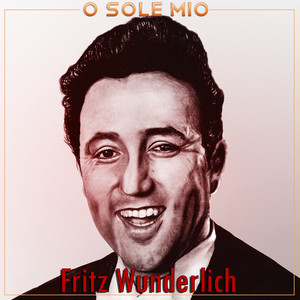 | Trinke, Liebchen (Glücklich ist, wer vergisst) | Fritz Wunderlich | G Major | 4 | 9B | 78 BPM | |
 | Ombra mai fu (from Xerxes) | Fritz Wunderlich, Radio Sinfonie-Orchester Stuttgart, Alfons Rischner | G Major | 3 | 9B | 73 BPM | |
 | Schicksalslied, Op. 54: Orchestral Postlude with Choir (Alternate Version) | Johannes Brahms, Gächinger Kantorei Stuttgart, Bach-Collegium Stuttgart, Helmuth Rilling | A Minor | 1 | 8A | 92 BPM | |
 | Vor der Türe schläft der Baum | WDR Rundfunkorchester Köln, Gesangsquartett Four For Four | G Major | 2 | 9B | 80 BPM | |
 | Concerto No. 1 in E Major, Op. 25: II. Rondo allegretto | Ferdinand Hérold, Angéline Pondepeyre, WDR Rundfunkorchester Köln, Conrad van Alphen | E Major | 1 | 12B | 127 BPM |
- ISRC
- DEE280744717
- Label
- L-M Records/RCA Records