- BPM
- 109
- Key
- A Major
- Camelot
- 11B
L'elisir d'amore / Act 1: "Che vuol dire codesta suonata?" by Gaetano Donizetti, Ambrosian Opera Chorus, English Chamber Orchestra, Richard Bonynge Song Details
Gaetano Donizetti, Ambrosian Opera Chorus, English Chamber Orchestra, Richard Bonynge's 'L'elisir d'amore / Act 1: "Che vuol dire codesta suonata?"' had a release date set for January 1, 1971. With This song being less than two minutes long, at 1:52, we are fairly confident that this song is not explicit and is safe for all ages. Based on the duration of this song, this song duration is much smaller than the average song duration. The song is number 8 out of 30 in Donizetti: L'Elisir d'Amore by Gaetano Donizetti, Dame Joan Sutherland, Luciano Pavarotti, English Chamber Orchestra, Richard Bonynge. Going off of the ISRC code of this track, we detected that the origin of this track is from United Kingdom. In terms of popularity, L'elisir d'amore / Act 1: "Che vuol dire codesta suonata?" is currently not that popular. Although the tone can be danceable to some, this track does projects more of a negative sound rather than a postive one.
BPM and Tempo
The tempo marking of L'elisir d'amore / Act 1: "Che vuol dire codesta suonata?" by Gaetano Donizetti, Ambrosian Opera Chorus, English Chamber Orchestra, Richard Bonynge is Moderato (at a moderate speed), since this song has a tempo of 109 BPM. With that information, we can conclude that the song has a moderate tempo. The time signature for this track is 4/4.
Music Key
This song is in the music key of A Major. This also means that this song has a camelot key of 11B. So, the perfect camelot match for 11B would be either 11B or 12A. While, 12B can give you a low energy boost. For moderate energy boost, you would use 8B and a high energy boost can either be 1B or 6B. Though, if you want a low energy drop, you should looking for songs with either a camelot key of 11A or 10B will give you a low energy drop, 2B would be a moderate one, and 9B or 4B would be a high energy drop. Lastly, 8A allows you to change the mood.
Want to find the BPM and music key for other songs? Check out our BPM and Key Finder page!
- Popularity
- 19%
- Loudness
- -16.049 dB
- Acousticness
- 97%
- Danceability
- 41%
- Energy
- 24%
- Instrumentalness
- 82%
- Liveness
- 21%
- Loudness
- 73%
- Speechiness
- 4%
- Valence
- 35%
Recommendations
| Track | Artist | Key | Energy | Camelot | BPM | ||
|---|---|---|---|---|---|---|---|
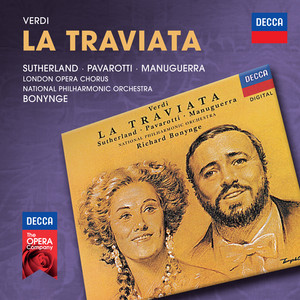 | La traviata, Act I: E strano! – Ah, fors'è lui | Giuseppe Verdi, Dame Joan Sutherland, National Philharmonic Orchestra, Richard Bonynge | F Minor | 0 | 4A | 83 BPM | |
 | Faust, CG 4 / Act 3: "Quel trouble inconnu... Salut! Demeure chaste et pure" | Charles Gounod, Jonas Kaufmann, Prague Philharmonic Orchestra, Marco Armiliato | A♭ Major | 2 | 4B | 80 BPM | |
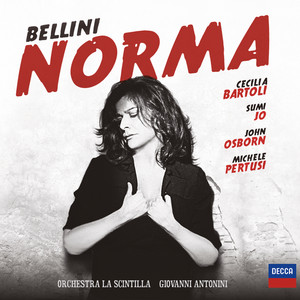 | Norma (Ed. Biondi & Minasi), Act I Scene 1: Me protegge, me difende | Vincenzo Bellini, John Osborn, Reinaldo Macias, International Chamber Vocalists, Orchestra La Scintilla, Giovanni Antonini | E♭ Major | 4 | 5B | 59 BPM | |
 | Der fliegende Holländer, Act III: Willst jenen Tag du nicht dich mehr entsinnen "Cavatina" | Richard Wagner, René Kollo, Chicago Symphony Orchestra, Sir Georg Solti | A Major | 3 | 11B | 87 BPM | |
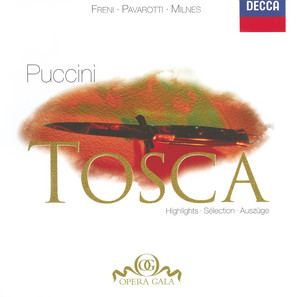 | Tosca, Act II: Io tenni la promessa – E qual via scegliete? – Tosca, finalmente mia! | Giacomo Puccini, Sherrill Milnes, Mirella Freni, National Philharmonic Orchestra, Nicola Rescigno | D Major | 1 | 10B | 92 BPM | |
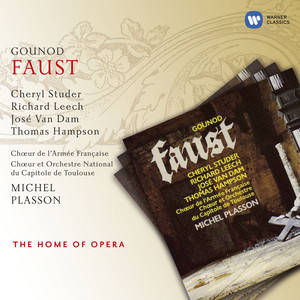 | Gounod: Faust, Act 1: "Ah ! Paresseuse fille qui sommeille encor !" - Chœur des laboureurs. "Aux champs l'aurore nous rappelle" (Chœur, Faust) | Charles Gounod, Michel Plasson, Chœur de l'Armée française, Choeur Du Capitole De Toulouse, Richard Leech, Orchestre Du Capitole De Toulouse | A Minor | 1 | 8A | 94 BPM | |
 | Gianni Schicchi: "Quale aspetto sgomento e desolato!" | Giacomo Puccini, Leo Nucci, Roberto Alagna, Mirella Freni, Ricardo Cassinelli, Ewa Podles, Barbara Frittoli, Barbara Guerrini, Giorgio Giorgetti, Enrico Fissore, Orazio Mori, Nicoletta Curiel, Coro Di Voci Bianchi "Guido Monaco" Di Prato, Coro del Maggio Musicale Fiorentino, Orchestra del Maggio Musicale Fiorentino, Bruno Bartoletti | D♭ Major | 2 | 3B | 138 BPM | |
 | Strauss, R: Der Rosenkavalier, Op. 59, Act I: "Di rigori armato il seno" (Singer) | Richard Strauss, Herbert von Karajan, Nicolai Gedda, Philharmonia Orchestra | D♭ Major | 1 | 3B | 71 BPM | |
 | Ehi, Fiorello ? | Gioachino Rossini, Riccardo Chailly | G Major | 2 | 9B | 132 BPM | |
| Gounod: Faust, Act 5: Trio-finale. "Alerte, alerte, ou vous êtes perdus" - Apothéose. "Sauvée ! Christ est ressuscité" (Méphistophélès, Marguerite, Faust, Chœur) | Charles Gounod, Michel Plasson, Cheryl Studer, Chœur de l'Armée française, Choeur Du Capitole De Toulouse, José van Dam, Richard Leech, Orchestre Du Capitole De Toulouse | D Major | 0 | 10B | 84 BPM | |
 | Non t'amo più | Francesco Paolo Tosti, Luciano Pavarotti, Orchestra del Teatro Comunale di Bologna, Richard Bonynge | B♭ Minor | 1 | 3A | 80 BPM | |
| Der fliegende Holländer, WWV 63 / Act 2: "Summ und Brumm, du gutes Rädchen" | Richard Wagner, Isola Jones, Chicago Symphony Chorus, Chicago Symphony Orchestra, Sir Georg Solti | A Major | 3 | 11B | 87 BPM | |
 | Eugene Onegin, Op. 24, TH.5 / Act 1: Scene and Quartet. "Mesdames! Ya na sebya vzyal smyelost" | Pyotr Ilyich Tchaikovsky, Dmitri Hvorostovsky, Neil Shicoff, Sarah Walker, Orchestre de Paris, Semyon Bychkov | E Major | 1 | 12B | 87 BPM | |
 | Puccini: Tosca, Act 1: "È buona la mia Tosca" (Cavaradossi, Angelotti) | Giacomo Puccini, Victor de Sabata, Franco Calabrese, Giuseppe Di Stefano, Orchestra Del Teatro Alla Scala, Milano | C Minor | 2 | 5A | 78 BPM | |
 | La Bohème / Act 1: "Si sente meglio?" - Live | Giacomo Puccini, Anna Netrebko, Rolando Villazón, Bavarian Radio Symphony Orchestra, Bertrand de Billy | E Major | 2 | 12B | 91 BPM | |
 | Maria Stuarda / Act 1: "Sì, vuol di Francia il Rege" - "Ah, quando all'ara" - "In tal giorno di contento" | Gaetano Donizetti, Agnes Baltsa, Francesco Ellero D'Artegna, Simone Alaimo, Bavarian Radio Chorus, Munich Radio Orchestra, Giuseppe Patanè | G Major | 1 | 9B | 77 BPM | |
 | I Puritani / Act 1: Sai com'arde in petto mio | Vincenzo Bellini, Dame Joan Sutherland, Nicolai Ghiaurov, London Symphony Orchestra, Richard Bonynge | A Major | 2 | 11B | 140 BPM | |
 | Carmen / Act 2: Non, tu ne m'aimes pas! | Georges Bizet, Agnes Baltsa, José Carreras, Berliner Philharmoniker, Herbert von Karajan | C Major | 1 | 8B | 178 BPM | |
 | L'elisir d'amore / Act I: "Udite, udite, o rustici" | Gaetano Donizetti, Enzo Dara, Metropolitan Opera Chorus, Metropolitan Opera Orchestra, James Levine | A Major | 2 | 11B | 129 BPM | |
| Gounod: Faust, Act 3: "Quel trouble inconnu me pénètre !" - Cavatine. "Salut ! Demeure chaste et pure" (Faust) | Charles Gounod, Michel Plasson, Richard Leech, Orchestre Du Capitole De Toulouse | A Minor | 1 | 8A | 94 BPM | |
 | Lucia di Lammermoor / Act 3: "D'immenso giubilo" | Gaetano Donizetti, Chorus of the Royal Opera House, Covent Garden, Orchestra of the Royal Opera House, Covent Garden, Richard Bonynge | E Minor | 0 | 9A | 89 BPM | |
 | Die Fledermaus, Act II: Entr'acte und Chor. Ein Souper uns heute winkt (Chorus) | Johann Strauss II, Friedrich Haider, WDR Rundfunkchor Köln, WDR Rundfunkorchester Köln | F Major | 4 | 7B | 117 BPM | |
 | La Cenerentola / Act 2: Della Fortuna instabile...Sposa - Signor perdona... | Gioachino Rossini, William Matteuzzi, Cecilia Bartoli, Alessandro Corbelli, Enzo Dara, Michele Pertusi, Fernanda Costa, Gloria Banditelli, Coro del Teatro Comunale di Bologna, Orchestra del Teatro Comunale di Bologna, Riccardo Chailly | E Major | 1 | 12B | 92 BPM | |
 | Cavalleria rusticana: Part I: Il cavallo scalpita (Alfio, Chorus, Lucia, Santuzza) | Pietro Mascagni, Maria Callas, Giuseppe Di Stefano, Rolando Panerai, Anna Maria Canali, Ebe Ticozzi, Vittore Veneziani, Milan La Scala Chorus, Orchestra Del Teatro Alla Scala, Milano, Tullio Serafin | C Major | 3 | 8B | 116 BPM | |
 | The Barber of Seville, Act I Scene 2: Fredda ed immobile (Rossina, Count, Barolo, Figaro, Basilio, Berta) | Gioachino Rossini, James Levine, London Symphony Orchestra | A♭ Major | 1 | 4B | 78 BPM |
- ISRC
- GBF077040208
- Label
- L-M Records/RCA Records