- BPM
- 80
- Key
- A♭ Minor
- Camelot
- 1A
Janáček: 3 Moravian Dances: No. 1, Ej, danaj! by Leoš Janáček, Mikhail Rudy Song Details
Leoš Janáček, Mikhail Rudy's 'Janáček: 3 Moravian Dances: No. 1, Ej, danaj!' had a release date set for July 29, 2022. The duration of This song is about two minutes long, specifically at 2:16. This song does not appear to have any foul language. Janáček: 3 Moravian Dances: No. 1, Ej, danaj!'s duration is considered a little bit shorter than the average duration of a typical track. The track order of this song in Leoš Janáček, Mikhail Rudy's "Janáček: Piano Works" album is number 23 out of 29. On top of that, France appears to be the country where this track was created. Janáček: 3 Moravian Dances: No. 1, Ej, danaj! is not that popular right now. Although the tone can be danceable to some, this track does projects more of a negative sound rather than a postive one.
BPM and Tempo
We consider the tempo marking of Janáček: 3 Moravian Dances: No. 1, Ej, danaj! by Leoš Janáček, Mikhail Rudy to be Andante (at a walking pace) because the track has a tempo of 80 BPM, a half-time of 40BPM, and a double-time of 160 BPM. Based on that, the speed of the song's tempo is slow. The time signature for this track is 4/4.
Music Key
This song is in the music key of A♭ Minor. Because this track belongs in the A♭ Minor key, the camelot key is 1A. So, the perfect camelot match for 1A would be either 1A or 12B. While, a low energy boost can consist of either 1B or 2A. For moderate energy boost, you would use 10A and a high energy boost can either be 3A or 8A. However, if you are looking for a low energy drop, finding a song with a camelot key of 12A would be a great choice. Where 4A would give you a moderate drop, and 11A or 6A would be a high energy drop. Lastly, 4B allows you to change the mood.
Want to find the BPM and music key for other songs? Check out our BPM and Key Finder page!
- Popularity
- 5%
- Loudness
- -18.422 dB
- Acousticness
- 99%
- Danceability
- 46%
- Energy
- 12%
- Instrumentalness
- 86%
- Liveness
- 14%
- Loudness
- 69%
- Speechiness
- 5%
- Valence
- 23%
Recommendations
| Track | Artist | Key | Energy | Camelot | BPM | ||
|---|---|---|---|---|---|---|---|
 | Suite d'orchestre dans le style ancien, Op. 2: II. Sarabande. Mesto | Albéric Magnard, Philharmonisches Orchester Freiburg, Fabrice Bollon | G Minor | 0 | 6A | 64 BPM | |
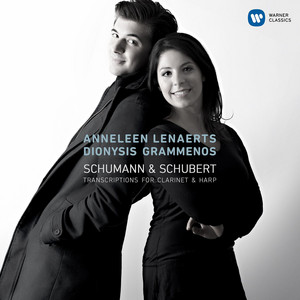 | Schumann: 12 Gedichte aus Liebesfrühling, Op. 37: No. 11: Warum willst du andre fragen | Clara Schumann, Anneleen Lenaerts, Dionysis Grammenos | A♭ Major | 0 | 4B | 71 BPM | |
 | Chant du menestrel for Cello and Orchestra, Op. 71 | Alexander Glazunov, Alexander Rudin, Moscow Symphony Orchestra, Igor Golovschin | F♯ Minor | 0 | 11A | 87 BPM | |
 | Suite No. 1, "Orientale": I. Okenstamning: Adagio | Kurt Atterberg, Ferenc Balogh, Gyorgy Kertesz, Andras Kiss, Ilona Prunyi | B Minor | 1 | 10A | 61 BPM | |
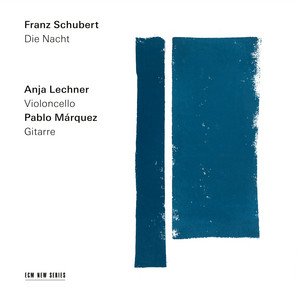 | Die Nacht, D. deest (Arr. Lechner/Márquez for Cello & Guitar) | Franz Schubert, Anja Lechner, Pablo Marquez | G Major | 0 | 9B | 85 BPM | |
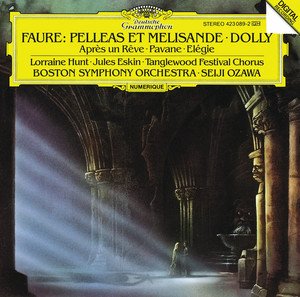 | Pelléas et Mélisande, Op.80: 2. Fileuse. Andantino quasi Allegretto | Gabriel Fauré, Boston Symphony Orchestra, Seiji Ozawa | G Major | 1 | 9B | 88 BPM | |
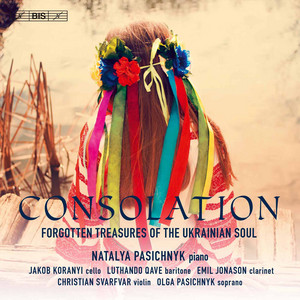 | Bagatelle, Op. 1: No. 1, Allegretto | Valentin Silvestrov, Natalya Pasichnyk | E♭ Major | 0 | 5B | 72 BPM | |
 | Le tombeau de Couperin: 3. Menuet (version for orchestra) | Maurice Ravel, フランス国立リヨン管弦楽団, レナード・スラットキン | A Major | 1 | 11B | 107 BPM | |
 | Crisantemi | Brodsky Quartet | F♯ Minor | 0 | 11A | 75 BPM | |
 | Schluss | Fanny Mendelssohn, Heather Schmidt | E Major | 1 | 12B | 87 BPM | |
 | Liszt: Wiegenlied, S. 198 | Franz Liszt, Bertrand Chamayou | A Minor | 0 | 8A | 62 BPM | |
 | Ravel: Cadence for the Video by Yoann Bourgeois (On Adagio from Ravel's Concerto in G, M. 83) | Maurice Ravel, Alexandre Tharaud | E Major | 1 | 12B | 70 BPM | |
 | Elegies BV 249: VII. Berceuse | Ferruccio Busoni, Igor Levit | C Major | 0 | 8B | 67 BPM | |
 | 3 Romances, Op. 11: I. Andante | Clara Schumann, Yoshiko Iwai | C Major | 0 | 8B | 66 BPM | |
 | String Quartet No. 12 in F major, Op. 96 - "American" B.179: 2. Lento | Antonín Dvořák, Hagen Quartett | D Minor | 1 | 7A | 88 BPM | |
 | 9 Preludes, Op. 1: No. 2 in D Minor. Andante con moto | Karol Szymanowski, Krystian Zimerman | F Major | 1 | 7B | 150 BPM | |
 | 6 Romances sans paroles, Op.76: 6. Meditation | Cécile Chaminade, Daria van den Bercken | A♭ Major | 0 | 4B | 128 BPM | |
 | Liszt: 12 Études d'exécution transcendante, S. 139: No. 3, Paysage | Franz Liszt, Yoav Levanon | F Major | 0 | 7B | 73 BPM | |
 | Berceuse (Version for Cello and Piano): Berceuse (Version for Cello and Piano) | Frank Bridge, Gerald Peregrine, Antony Ingham | B♭ Major | 0 | 6B | 68 BPM | |
 | Piano Concerto in G Major, M. 83: II. Adagio assai | Maurice Ravel, Krystian Zimerman, Cleveland Orchestra, Pierre Boulez | E Major | 0 | 12B | 74 BPM | |
 | 3 Pieces in Old Style: No. 1, Aria | Krzysztof Penderecki, Warsaw Philharmonic Chamber Orchestra, Antoni Wit | B♭ Major | 0 | 6B | 75 BPM | |
 | Ravel: Violin Sonata No. 2 in G Major, M. 77: I. Allegretto | Maurice Ravel, Renaud Capuçon, Frank Braley | G Major | 0 | 9B | 124 BPM | |
 | Keyboard Sonata in F Minor, Kk. 466 - Upright Version | Domenico Scarlatti, Julius Asal | E♭ Major | 0 | 5B | 68 BPM | |
 | 6 Songs, Op. 38: No. 3, Margaritki "Daisies" (Piano Version) | Sergei Rachmaninoff, Howard Shelley | B♭ Major | 0 | 6B | 129 BPM | |
 | Dvorák / Transc. Lenaerts: Rusalka, Op. 114, Act 1: Song to the Moon | Antonín Dvořák, Anneleen Lenaerts | F♯ Major | 0 | 2B | 168 BPM |
- ISRC
- FRZ119001676
- Label
- L-M Records/RCA Records