- BPM
- 99
- Key
- A Major
- Camelot
- 11B
The Rake's Progress, Act I Scene 3: Cabaletta: I go, I go to him (Anne) by Igor Stravinsky, Jayne West, Jon Garrison, Arthur Woodley, John Cheek, Shirley Love, Wendy White, Melvin Lowery, Jeffrey Johnson, Gregg Smith Singers, Orchestra of St. Luke's, Robert Craft Song Details
Igor Stravinsky, Jayne West, Jon Garrison, Arthur Woodley, John Cheek, Shirley Love, Wendy White, Melvin Lowery, Jeffrey Johnson, Gregg Smith Singers, Orchestra of St. Luke's, Robert Craft's ' "The Rake's Progress, Act I Scene 3: Cabaletta: I go, I go to him (Anne)" was released on its scheduled release date, May 26, 2009. The duration of This song is about two minutes long, specifically at 2:47. This song does not appear to have any foul language. The Rake's Progress, Act I Scene 3: Cabaletta: I go, I go to him (Anne)'s duration is considered a little bit shorter than the average duration of a typical track. There are a total of 73 in the song's album "Stravinsky, I.: Rake's Progress (The) [Opera]". In this album, this song's track order is #25. Furthermore, we believe that the track originated from Hong Kong. In terms of popularity, The Rake's Progress, Act I Scene 3: Cabaletta: I go, I go to him (Anne) is currently unknown. Since there is more of a neutral sound being played, this makes the track somewhat danceable.
BPM and Tempo
With The Rake's Progress, Act I Scene 3: Cabaletta: I go, I go to him (Anne) by Igor Stravinsky, Jayne West, Jon Garrison, Arthur Woodley, John Cheek, Shirley Love, Wendy White, Melvin Lowery, Jeffrey Johnson, Gregg Smith Singers, Orchestra of St. Luke's, Robert Craft having a BPM of 99 with a half-time of 50 BPM and a double-time of 198 BPM, we would consider this track to have a Andante (at a walking pace) tempo marking. Because of this, we believe that the song has an overall slow tempo. The time signature for this track is 4/4.
Music Key
This song is in the music key of A Major. Or for those who are familiar with the camelot wheel, this song has a camelot key of 11B. So, the perfect camelot match for 11B would be either 11B or 12A. While, 12B can give you a low energy boost. For moderate energy boost, you would use 8B and a high energy boost can either be 1B or 6B. Though, if you want a low energy drop, you should looking for songs with either a camelot key of 11A or 10B will give you a low energy drop, 2B would be a moderate one, and 9B or 4B would be a high energy drop. Lastly, 8A allows you to change the mood.
Want to find the BPM and music key for other songs? Check out our BPM and Key Finder page!
- Popularity
- 0%
- Loudness
- -21.165 dB
- Acousticness
- 97%
- Danceability
- 41%
- Energy
- 18%
- Instrumentalness
- 0%
- Liveness
- 43%
- Loudness
- 65%
- Speechiness
- 6%
- Valence
- 54%
Recommendations
| Track | Artist | Key | Energy | Camelot | BPM | ||
|---|---|---|---|---|---|---|---|
 | Overture to "A Midsummer Night's Dream", Op. 21: Allegro di molto | Felix Mendelssohn, London Symphony Orchestra, John Eliot Gardiner | E Major | 1 | 12B | 137 BPM | |
 | Symphony No.3 In C Minor, Op.78 "Organ Symphony": 1b. Poco adagio | Camille Saint-Saëns, Simon Preston, Berliner Philharmoniker, James Levine | D♭ Major | 0 | 3B | 80 BPM | |
 | St. Paul's Suite, Op. 29 No. 2: III. Intermezzo | Gustav Holst, English Sinfonia, Howard Griffiths | E Minor | 1 | 9A | 131 BPM | |
 | Also sprach Zarathustra, Op. 30, TrV 176: Das Tanzlied - Das Nachtlied | Richard Strauss, Michel Schwalbé, Berliner Philharmoniker, Herbert von Karajan | C Major | 2 | 8B | 100 BPM | |
 | Polovetsian Dances from Prince Igor: Allegro | Alexander Borodin, George Szell, The Cleveland Orchestra | D Major | 2 | 10B | 108 BPM | |
 | Prokofiev: Suite No. 1 from Romeo and Juliet, Op. 64bis: VII. Death of Tybalt | Sergei Prokofiev, Oslo Philharmonic Orchestra, Mariss Jansons | G Major | 1 | 9B | 122 BPM | |
 | Shéhérazade, Op. 35: I. The Sea and Sinbad's Ship | Nikolai Rimsky-Korsakov, Sergej Galaktionov, Gianandrea Noseda, Filarmonica Teatro Regio Torino | E Major | 1 | 12B | 136 BPM | |
 | Capriccio espagnol, Op. 34: V. Fandango asturiano | Nikolai Rimsky-Korsakov, Seattle Symphony Orchestra, Gerard Schwarz | A Minor | 1 | 8A | 78 BPM | |
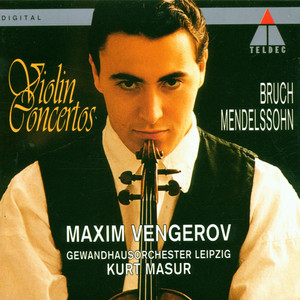 | Mendelssohn: Violin Concerto in E Minor, Op. 64, MWV O14: II. Andante | Felix Mendelssohn, Maxim Vengerov, Kurt Masur, Gewandhausorchester | C Major | 1 | 8B | 96 BPM | |
 | Don Quixote, Op. 35: II. Don Quixote, the Knight of the Sorrowful Countenance – III. Sancha Panza. Maggiore | Richard Strauss, Pierre Fournier, Giusto Cappone, Berliner Philharmoniker, Herbert von Karajan | F Major | 1 | 7B | 206 BPM | |
 | Symphony No. 5: V. Rondo-Finale. Allegro | Gustav Mahler, Wiener Philharmoniker, Pierre Boulez | D Major | 1 | 10B | 115 BPM | |
 | Poulenc: Concerto for Two Pianos in D Minor, FP 61: I. Allegro ma non troppo | Francis Poulenc, James Conlon, Rotterdam Philharmonic Orchestra | E♭ Major | 1 | 5B | 103 BPM | |
 | Also sprach Zarathustra, Op. 30: II. Von den Hinterweltlern | Richard Strauss, Berliner Philharmoniker, Herbert von Karajan | A♭ Major | 0 | 4B | 78 BPM | |
 | Symphony No. 1 in D Major: III. Feierlich und gemessen, ohne zu schleppen - Live | Gustav Mahler, Berliner Philharmoniker, Claudio Abbado | G Minor | 0 | 6A | 56 BPM | |
 | Daphnis et Chloé, M. 57, Pt. 1: III. Danse grotesque de Dorcon | Maurice Ravel, Berliner Philharmoniker, Pierre Boulez | F Major | 1 | 7B | 189 BPM | |
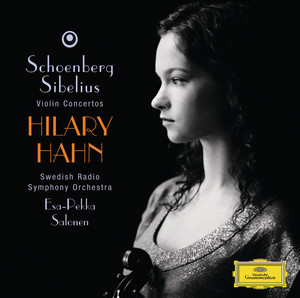 | Violin Concerto, Op. 36: III. Finale. Allegro | Arnold Schoenberg, Hilary Hahn, Swedish Radio Symphony Orchestra, Esa-Pekka Salonen | D♭ Major | 2 | 3B | 124 BPM | |
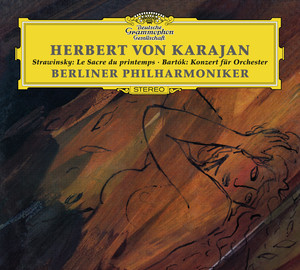 | The Rite of Spring, K15, Pt. 2: XI. Glorification of the Chosen One | Igor Stravinsky, Berliner Philharmoniker, Herbert von Karajan | B♭ Major | 4 | 6B | 134 BPM | |
| Mendelssohn: Violin Concerto in E Minor, Op. 64, MWV O14: III. Allegretto non troppo - Allegro molto vivace | Felix Mendelssohn, Maxim Vengerov, Kurt Masur, Gewandhausorchester | E Major | 2 | 12B | 161 BPM | |
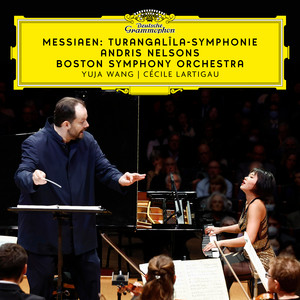 | Turangalîla-Symphonie: I. Introduction | Olivier Messiaen, Yuja Wang, Cécile Lartigau, Boston Symphony Orchestra, Andris Nelsons | B Major | 4 | 1B | 152 BPM | |
| Also sprach Zarathustra, Op.30, TrV 176: Von den Freuden und Leidenschaften | Richard Strauss, Berliner Philharmoniker, Herbert von Karajan | C Minor | 5 | 5A | 150 BPM | |
 | Elegy, Op. 58 | Edward Elgar, English Northern Philharmonia, David Lloyd-Jones | F Minor | 0 | 4A | 84 BPM | |
![Les Noces, Scene 1: The Tresses (At the Bride's House) [the Wedding] by Susan Bickley, Martyn Hill, Alan Ewing, Alison Wells, Simon Joly Chorale, International Piano Quartet, Tristan Fry Percussion Ensemble, Robert Craft](https://i.scdn.co/image/ab67616d00001e02946bbad1fa051db2cacde94d) | Les Noces, Scene 1: The Tresses (At the Bride's House) [the Wedding] | Susan Bickley, Martyn Hill, Alan Ewing, Alison Wells, Simon Joly Chorale, International Piano Quartet, Tristan Fry Percussion Ensemble, Robert Craft | E Major | 2 | 12B | 118 BPM | |
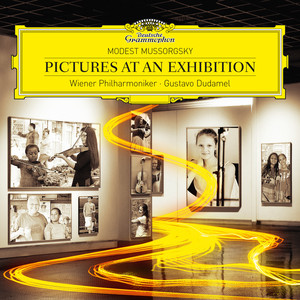 | Pictures at an Exhibition (Orch. Ravel): Promenade I | Modest Mussorgsky, Wiener Philharmoniker, Gustavo Dudamel | F Major | 0 | 7B | 88 BPM | |
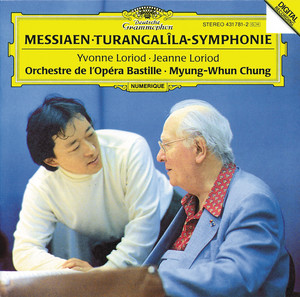 | Turangalîla Symphonie: 1. Introduction | Olivier Messiaen, Yvonne Loriod, Jeanne Loriod, Orchestre de l'Opéra Bastille, Myung-Whun Chung | E♭ Minor | 4 | 2A | 143 BPM | |
 | Petrushka: Danse Russe | Robert Groslot, Belgian Radio and Television Philharmonic Orchestra, Igor Stravinsky | D Minor | 5 | 7A | 80 BPM |
- ISRC
- HKI190908225
- Label
- L-M Records/RCA Records