- BPM
- 117
- Key
- A♭ Minor
- Camelot
- 1A
Variations on There were Three Ravens by Justin Rubin, Lorie Scott, Alexander Chernyshev Song Details
"Variations on There were Three Ravens" by Justin Rubin, Lorie Scott, Alexander Chernyshev had its release date on February 5, 2013. Since This song is still less than 10 minute long, it is still considered a pretty long duration song compared to the average song length. This song does not appear to be explicit due to the lack of the "E" tag. There are a total of 13 in the song's album "Rubin: A Waltz Through the Vapor". In this album, this song's track order is #6. Furthermore, we believe that the track originated from United States. In terms of popularity, Variations on There were Three Ravens is currently unknown. In our opinion, the overall tone is not very danceable and projects negative sounds, such as being sad, depressed, or angry.
BPM and Tempo
With Variations on There were Three Ravens by Justin Rubin, Lorie Scott, Alexander Chernyshev having a BPM of 117 with a half-time of 58 BPM and a double-time of 234 BPM, we would consider this track to have a Moderato (at a moderate speed) tempo marking. Because of this, we believe that the song has an overall moderate tempo. Looking at the BPM of this song, this song might go great with walking. The time signature for this track is 4/4.
Music Key
This song is in the music key of A♭ Minor. Which also means that the camelot key for this song is 1A. So, the perfect camelot match for 1A would be either 1A or 12B. While, a low energy boost can consist of either 1B or 2A. For moderate energy boost, you would use 10A and a high energy boost can either be 3A or 8A. However, if you are looking for a low energy drop, finding a song with a camelot key of 12A would be a great choice. Where 4A would give you a moderate drop, and 11A or 6A would be a high energy drop. Lastly, 4B allows you to change the mood.
Want to find the BPM and music key for other songs? Check out our BPM and Key Finder page!
- Popularity
- 0%
- Loudness
- -16.999 dB
- Acousticness
- 96%
- Danceability
- 34%
- Energy
- 29%
- Instrumentalness
- 88%
- Liveness
- 11%
- Loudness
- 72%
- Speechiness
- 4%
- Valence
- 12%
Recommendations
| Track | Artist | Key | Energy | Camelot | BPM | ||
|---|---|---|---|---|---|---|---|
 | Cello Sonata: II. Capriccio | György Ligeti, Miklós Perényi | G Major | 2 | 9B | 132 BPM | |
 | Ave verum (Improvisation à l'orgue) | Thierry Mechler | F♯ Major | 0 | 2B | 132 BPM | |
 | The Desert Music: Second Movement (Moderate) | Steve Reich, Brooklyn Philharmonic, Michael Tilson Thomas | F♯ Major | 4 | 2B | 123 BPM | |
 | Four Walls Act 1 Scene II | John Cage, Margaret Leng Tan, Joan La Barbara | B Major | 9 | 1B | 134 BPM | |
 | Hungarian Sketches, Sz. 97: IV. Slightly Tipsy | Béla Bartók, Chicago Symphony Orchestra, Pierre Boulez | A♭ Major | 1 | 4B | 55 BPM | |
 | Sinfonietta: 5. Andante con moto - Maestoso - Tempo I - Allegretto - Allegro - Maestoso - Adagio | Leoš Janáček, Bavarian Radio Symphony Orchestra, Rafael Kubelik | E♭ Minor | 3 | 2A | 60 BPM | |
 | Heroes Symphony: Sense of Doubt | Philip Glass, American Composers Orchestra, Dennis Russell Davies | B♭ Minor | 0 | 3A | 140 BPM | |
 | Miserere, Op. 44: 4. Domine Deus noster-Lento. Molto espressivo | Henryk Górecki, Los Angeles Master Chorale, Grant Gershon | G Major | 1 | 9B | 80 BPM | |
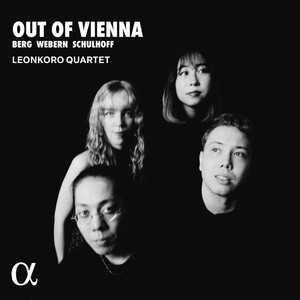 | Lyric Suite: I. Allegretto gioviale | Alban Berg, Leonkoro Quartet | G Minor | 1 | 6A | 81 BPM | |
 | Shaker Loops: Hymning Slews (Version for string orchestra) | John Adams, Bournemouth Symphony Orchestra, Marin Alsop | A Major | 0 | 11B | 81 BPM | |
 | Adams: Harmonielehre, Pt. II: the Anfortas Wound | John Adams, Edo de Waart, San Francisco Symphony | G Minor | 0 | 6A | 67 BPM | |
 | II. — | Giacinto Scelsi, Vienna Radio Symphony Orchestra, Peter Rundel | G Minor | 1 | 6A | 138 BPM | |
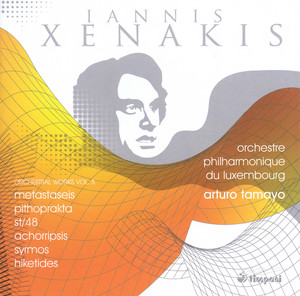 | Metastaseis | Iannis Xenakis, Luxembourg Philharmonic Orchestra, Arturo Tamayo | A Minor | 2 | 8A | 80 BPM | |
 | Requiem: II. Kyrie | György Ligeti, WDR Sinfonieorchester, WDR Rundfunkchor Köln, SWR Vokalensemble Stuttgart, Peter Eötvös | F Minor | 2 | 4A | 65 BPM | |
 | Amiable Conversation | Henry Cowell | G Major | 2 | 9B | 104 BPM | |
 | Summer & Winter | Justin Rubin, Paula Gudmundson, Tim Broscious | A Major | 1 | 11B | 111 BPM | |
 | The Sinking of the Titanic: 5. Hymn III | Gavin Bryars, Gavin Bryars Ensemble | A♭ Major | 1 | 4B | 73 BPM | |
 | Riessler: Family Affair | Michael Riessler, Sabine Meyer, Trio Di Clarone | C Major | 0 | 8B | 74 BPM | |
 | Quatuor pour la fin du Temps: VI. Danse de la fureur, pour les sept trompettes | Olivier Messiaen, Martin Fröst | D♭ Major | 2 | 3B | 107 BPM | |
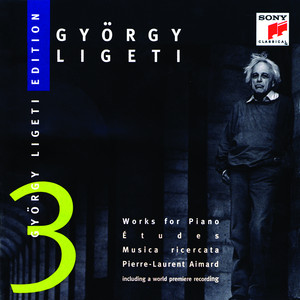 | Études, Book 1: No. 2, Cordes à vide | György Ligeti, Pierre-Laurent Aimard | D♭ Minor | 0 | 12A | 135 BPM | |
 | Le sacre du printemps / Pt. 1: L'Adoration de la terre: VIII. Danse de la terre | Igor Stravinsky, Orchestre de Paris, Klaus Mäkelä | A♭ Minor | 0 | 1A | 84 BPM | |
 | Whispers of Peace | Rylandiaa | G Major | 2 | 9B | 136 BPM | |
 | New York Counterpoint: II. Slow | Steve Reich, Evan Ziporyn | F♯ Minor | 1 | 11A | 90 BPM | |
 | In Nomine (2001) for bass flute, english horn, clarinet, piano, vibraphone, violin, viola and Violoncello | Georg Friedrich Haas, Ensemble Recherche | G Minor | 0 | 6A | 127 BPM | |
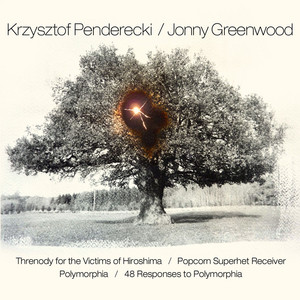 | Greenwood: Popcorn Superhet Receiver:, Pt. 1 | Jonny Greenwood, Krzysztof Penderecki, Marek Mos, AUKSO Orchestra | G Major | 1 | 9B | 86 BPM |
- ISRC
- US29K1384706
- Label
- L-M Records/RCA Records