- BPM
- 88
- Key
- A♭ Major
- Camelot
- 4B
Concerto for 2 Pianos: II. Larghetto by Grażyna Bacewicz, Nicholas Collon, Peter Jablonski, Elisabeth Brauß, Finnish Radio Symphony Orchestra Song Details
"Concerto for 2 Pianos: II. Larghetto" by Grażyna Bacewicz, Nicholas Collon, Peter Jablonski, Elisabeth Brauß, Finnish Radio Symphony Orchestra had its release date on May 5, 2023. This song is about six minutes long, preciously at 6:15, making this song fairly long compared to other songs. The track order of this song in Grażyna Bacewicz, Nicholas Collon, Peter Jablonski, Elisabeth Brauß, Finnish Radio Symphony Orchestra's "Grazyna Bacewicz: Piano Concerto; Concerto for Two Pianos and Orchestra; Overture; Music for Strings, Trumpets and Percussion" album is number 6 out of 10. On top of that, Finland appears to be the country where this track was created. Concerto for 2 Pianos: II. Larghetto is not that popular right now. In our opinion, the overall tone is not very danceable and projects negative sounds, such as being sad, depressed, or angry.
BPM and Tempo
We consider the tempo marking of Concerto for 2 Pianos: II. Larghetto by Grażyna Bacewicz, Nicholas Collon, Peter Jablonski, Elisabeth Brauß, Finnish Radio Symphony Orchestra to be Andante (at a walking pace) because the track has a tempo of 88 BPM, a half-time of 44BPM, and a double-time of 176 BPM. Based on that, the speed of the song's tempo is slow. Activities such as, yoga or pilates, can go well with this song. The time signature for this track is 3/4.
Music Key
This song is in the music key of A♭ Major. This also means that this song has a camelot key of 4B. So, the perfect camelot match for 4B would be either 4B or 5A. While, 5B can give you a low energy boost. For moderate energy boost, you would use 1B and a high energy boost can either be 6B or 11B. Though, if you want a low energy drop, you should looking for songs with either a camelot key of 4A or 3B will give you a low energy drop, 7B would be a moderate one, and 2B or 9B would be a high energy drop. Lastly, 1A allows you to change the mood.
Want to find the BPM and music key for other songs? Check out our BPM and Key Finder page!
- Popularity
- 1%
- Loudness
- -28.978 dB
- Acousticness
- 92%
- Danceability
- 16%
- Energy
- 1%
- Instrumentalness
- 55%
- Liveness
- 13%
- Loudness
- 52%
- Speechiness
- 4%
- Valence
- 3%
Recommendations
| Track | Artist | Key | Energy | Camelot | BPM | ||
|---|---|---|---|---|---|---|---|
 | Five Movements for String Quartet, Op. 5: IV. Sehr langsam | Anton Webern, Leonkoro Quartet | F Major | 2 | 7B | 86 BPM | |
 | Strauss, R: Der Bürger als Edelmann Suite, Op. 60-IIIa: VIII. Vorpsiel | Richard Strauss, Jeffrey Tate, English Chamber Orchestra | F Major | 2 | 7B | 86 BPM | |
 | Sonata for Cello and Piano No. 1 in E Minor, Op. 38: I. Allegro non troppo | Johannes Brahms, Alisa Weilerstein, Inon Barnatan | C Major | 1 | 8B | 134 BPM | |
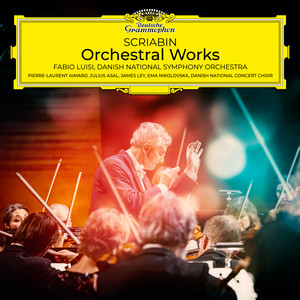 | Piano Concerto in F-Sharp Minor, Op. 20: IIIa. Allegro moderato – Molto meno mosso | Alexander Scriabin, Julius Asal, Danish National Symphony Orchestra, Fabio Luisi | B♭ Minor | 2 | 3A | 86 BPM | |
 | Piano Trio No. 3 in F Minor, Op. 65, B. 130: III. Poco adagio | Antonín Dvořák, Trio 258 | F Major | 2 | 7B | 86 BPM | |
 | String Quartet No. 3 in D Major, Op. 34: III. Sostenuto. Like a Folk Tune | Erich Wolfgang Korngold, Calidore String Quartet | F Major | 2 | 7B | 86 BPM | |
 | Roumanian Folk Dances for Orchestra, BB 76 (Sz. 68): 4. Horn Dance (from Bisztra) | Béla Bartók, Chicago Symphony Orchestra, Sir Georg Solti | D Major | 1 | 10B | 170 BPM | |
 | Piano Concerto in C Major, Op. 39: II. Pezzo giocoso. Vivacemente, ma senza fretta - Live | Ferruccio Busoni, Boston Symphony Orchestra, Sakari Oramo, Kirill Gerstein | F♯ Minor | 2 | 11A | 100 BPM | |
 | Cello Concerto in B Minor, Op. 104: III. Allegro moderato. Original Ending | Antonín Dvořák, Steven Isserlis, Daniel Harding, Mahler Chamber Orchestra | B Major | 0 | 1B | 77 BPM | |
 | Piano Trio in G Minor, Op. 15, JB 1:64: III. Finale. Presto | Bedřich Smetana, Smetana Trio | A Major | 0 | 11B | 88 BPM | |
 | Symphony No. 4, Op. 60 "Symphonie Concertante": III. Allegro non troppo, ma agitato ad ausioso | Karol Szymanowski, Szymon Nehring, Polish National Radio Symphony Orchestra, Marin Alsop | F Major | 2 | 7B | 86 BPM | |
 | Sonata for Violin and Piano in A: 3. Recitativo - Fantasia (Ben moderato - Largamente - Molto vivace) | César Franck, Kaja Danczowska, Krystian Zimerman | D Major | 0 | 10B | 81 BPM | |
 | Marchenbilder (Fairy Tales), Op. 113: III. Rasch | Robert Schumann, Tabea Zimmermann, Hartmut Höll | F Major | 1 | 7B | 82 BPM | |
 | D'un soir triste | Lili Boulanger, Yo-Yo Ma, Kathryn Stott | C Major | 1 | 8B | 81 BPM | |
 | Piano Quintet No. 1: I. Moderato molto espressivo | Grażyna Bacewicz, Ewa Kupiec, Capella Bydgostiensis, Mariusz Smolij | E Minor | 1 | 9A | 148 BPM | |
 | Les biches Suite, FP 36b: IV. Andantino | Francis Poulenc, RTÉ National Symphony Orchestra, Jean-Luc Tingaud | C Major | 0 | 8B | 105 BPM | |
 | Cello Sonata in E Major, Op. 121: I. Allegro espressivo e appassionato | Ignaz Moscheles, Steven Isserlis, Connie Shih | F Major | 2 | 7B | 86 BPM | |
| Lyric Suite: VI. Largo desolato | Alban Berg, Leonkoro Quartet | F Major | 2 | 7B | 86 BPM | |
| Symphony for String Orchestra: II. Adagio | Grażyna Bacewicz, Capella Bydgostiensis, Mariusz Smolij | G Major | 2 | 9B | 95 BPM | |
 | Quartet for Four Violins: III | Grażyna Bacewicz, David Juritz, Victoria Sayles, Richard Milone, Charlotte Scott | E Major | 0 | 12B | 129 BPM | |
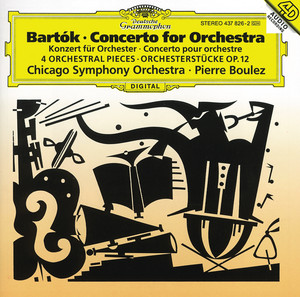 | Concerto for Orchestra, Sz. 116: I. Introduzione (Andante non troppo - Allegro vivace) | Béla Bartók, Chicago Symphony Orchestra, Pierre Boulez | D Major | 1 | 10B | 73 BPM | |
 | 8 Pieces, Op. 83: V. Rumänische Melodie (Andante) | Max Bruch, Philon Trio | F♯ Minor | 0 | 11A | 78 BPM | |
 | Concerto for Viola and Orchestra: I. Andante comodo | William Walton, Edward Gardner, BBC Symphony Orchestra, James Ehnes | A Minor | 1 | 8A | 103 BPM | |
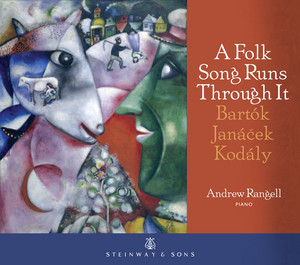 | Romanian Folk Dances, Sz 56: I. Joc cu bata - Allegro moderato | Béla Bartók, Andrew Rangell | G Major | 0 | 9B | 52 BPM | |
 | Piano Concerto No. 3 in C Minor, Op. 32: I. Grave | Sergei Bortkiewicz, David Porcelijn, Stefan Doniga, Janáček Philharmonic Orchestra | B♭ Minor | 1 | 3A | 145 BPM |
- ISRC
- FINDE2300020
- Label
- L-M Records/RCA Records