- BPM
- 130
- Key
- G Major
- Camelot
- 9B
Peer Gynt, Op. 23: Anitra's Dance - Arr. for Hardanger Fiddle & String Orchestra by Tormod Tvete Vik by Edvard Grieg, Ragnhild Hemsing, TrondheimSolistene Song Details
"Peer Gynt, Op. 23: Anitra's Dance - Arr. for Hardanger Fiddle & String Orchestra by Tormod Tvete Vik" by Edvard Grieg, Ragnhild Hemsing, TrondheimSolistene had its release date on February 25, 2022. The duration of This song is about 3 minutes long, at 3:23. Based on our data, This song appears to be safe for all ages and is not considered explicit. This track is about the average length of a typical track. There are a total of 12 in the song's album "Peer Gynt". In this album, this song's track order is #2. Furthermore, we believe that the track originated from Germany. Based on our statistics, Peer Gynt, Op. 23: Anitra's Dance - Arr. for Hardanger Fiddle & String Orchestra by Tormod Tvete Vik's popularity is below average in popularity right now. In our opinion, the overall tone is not very danceable and projects negative sounds, such as being sad, depressed, or angry.
BPM and Tempo
With Peer Gynt, Op. 23: Anitra's Dance - Arr. for Hardanger Fiddle & String Orchestra by Tormod Tvete Vik by Edvard Grieg, Ragnhild Hemsing, TrondheimSolistene having a BPM of 130 with a half-time of 65 BPM and a double-time of 260 BPM, we would consider this track to have a Allegro (fast, quick, and bright) tempo marking. Because of this, we believe that the song has an overall fast tempo. Looking at the BPM of this song, this song might go great with walking. The time signature for this track is 4/4.
Music Key
G Major is the music key of this track. Or for those who are familiar with the camelot wheel, this song has a camelot key of 9B. So, the perfect camelot match for 9B would be either 9B or 10A. While, 10B can give you a low energy boost. For moderate energy boost, you would use 6B and a high energy boost can either be 11B or 4B. Though, if you want a low energy drop, you should looking for songs with either a camelot key of 9A or 8B will give you a low energy drop, 12B would be a moderate one, and 7B or 2B would be a high energy drop. Lastly, 6A allows you to change the mood.
Want to find the BPM and music key for other songs? Check out our BPM and Key Finder page!
- Popularity
- 20%
- Loudness
- -21.193 dB
- Acousticness
- 93%
- Danceability
- 16%
- Energy
- 4%
- Instrumentalness
- 28%
- Liveness
- 12%
- Loudness
- 65%
- Speechiness
- 4%
- Valence
- 4%
Recommendations
| Track | Artist | Key | Energy | Camelot | BPM | ||
|---|---|---|---|---|---|---|---|
 | Clarinet Concerto in A major, K. 622: Clarinet Concerto in A major, K. 622: II. Adagio | Various Artists, David Shifrin, New York Chamber Symphony, Gerard Schwarz | C Major | 1 | 8B | 92 BPM | |
 | Grieg: Piano Concerto in A Minor, Op. 16: I. Allegro molto moderato | Edvard Grieg, Leif Ove Andsnes, Dmitri Kitayenko, Bergen Philharmonic Orchestra | A Minor | 1 | 8A | 131 BPM | |
 | Suite No. 3, P. 172: I. Italiana: Andantino | Ottorino Respighi, RTÉ National Symphony Orchestra | B♭ Major | 1 | 6B | 94 BPM | |
 | Preghiera (Arr. by Fritz Kreisler from Piano Concerto No. 2 in C Minor, Op. 18, 2nd Movement) | Sergei Rachmaninoff, Gidon Kremer, Daniil Trifonov | C Major | 1 | 8B | 104 BPM | |
 | Warsaw Concerto | Richard Addinsell, Jean-Yves Thibaudet, BBC Symphony Orchestra, Hugh Wolff | B Major | 1 | 1B | 76 BPM | |
 | Oboe Concerto in D Minor: II. Adagio | Alessandro Marcello, Jozsef Kiss, Budapest Ferenc Erkel Chamber Orchestra | D Minor | 1 | 7A | 131 BPM | |
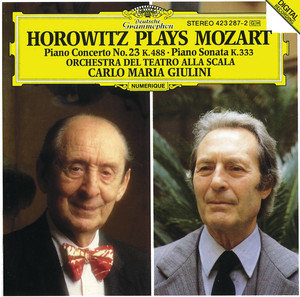 | Piano Concerto No. 23 in A Major, K. 488: II. Adagio | Wolfgang Amadeus Mozart, Vladimir Horowitz, Orchestra Del Teatro Alla Scala, Milano, Carlo Maria Giulini | F♯ Minor | 0 | 11A | 108 BPM | |
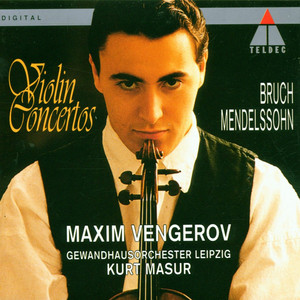 | Bruch: Violin Concerto No. 1 in G Minor, Op. 26: I. Prelude. Allegro moderato | Max Bruch, Maxim Vengerov, Kurt Masur, Gewandhausorchester | E♭ Major | 1 | 5B | 113 BPM | |
 | Ancient Airs & Dances, Suite III, P. 172: IV. Passacaglia (Roncalli) | Ottorino Respighi, Boston Symphony Orchestra, Seiji Ozawa | G Minor | 3 | 6A | 116 BPM | |
 | Wind Quintet in E-Flat Major, Hess 19: II. Adagio maestoso | Ludwig van Beethoven, Ottó Rácz, Jozsef Vajda, Sándor Berki, János Keveházi, Jeno Kevehazi | E♭ Major | 0 | 5B | 62 BPM | |
 | Salut d'amour, Op. 12 (version for orchestra) | Edward Elgar, Slovak Radio Symphony Orchestra, Adrian Leaper | B♭ Major | 1 | 6B | 82 BPM | |
 | Memories of a Promenade II | Modest Mussorgsky, Vivan Bhatti, Ketan Bhatti, Olga Scheps, Flying Steps | C Minor | 0 | 5A | 72 BPM | |
 | Holberg Suite, Op. 40: I. Prelude | Edvard Grieg, Sir Neville Marriner, Academy of St. Martin in the Fields | G Major | 1 | 9B | 70 BPM | |
 | Piano Concerto No. 2 in C Minor, Op. 18: I. Moderato | Sergei Rachmaninoff, Arthur Rubinstein, Fritz Reiner | C Minor | 1 | 5A | 71 BPM | |
 | Lyric Pieces Book V, Op. 54: No. 4 Notturno | Edvard Grieg, Alice Sara Ott | D Major | 2 | 10B | 121 BPM | |
 | Idyl for Strings - Adagio | Leoš Janáček, Hanspeter Gmür, Camerata Romana | G Major | 1 | 9B | 105 BPM | |
 | Pavane, Op. 50 (Version for Piano) | Gabriel Fauré, Jorge Federico Osorio | F♯ Minor | 0 | 11A | 75 BPM | |
 | Rachmaninov: Rhapsody on a Theme of Paganini, Op. 43: Variation XVIII | Sergei Rachmaninoff, Nikolai Lugansky, Sakari Oramo, City Of Birmingham Symphony Orchestra | D♭ Major | 1 | 3B | 61 BPM | |
 | Nocturnes, Op. 27: No. 2 in D-Flat Major | Frédéric Chopin, Arthur Rubinstein | D♭ Major | 0 | 3B | 77 BPM | |
 | 12 Songs, Op. 21: V. Lilacs (Transcr. Rachmaninoff for Solo Piano) | Sergei Rachmaninoff, Sergei Babayan | A♭ Major | 0 | 4B | 78 BPM | |
 | Les Contes d'Hoffmann / Act 4: Entr'acte (Barcarolle) | Jacques Offenbach, Staatskapelle Dresden, Silvio Varviso | D Major | 0 | 10B | 121 BPM | |
 | Flute and Harp Concerto in C Major, K. 299: II. Andantino | Wolfgang Amadeus Mozart, François Leleux, Emmanuel Pahud, Anneleen Lenaerts, Orchestre de chambre de Paris | F Major | 1 | 7B | 99 BPM | |
 | Valse triste, Op. 44 No. 1 | Jean Sibelius, Gothenburg Symphony Orchestra, Neeme Järvi | D♭ Major | 0 | 3B | 67 BPM | |
 | Scheherazade: The Young Prince | Nikolai Rimsky-Korsakov, Lars Hjalmar Joakim | G Major | 1 | 9B | 91 BPM | |
 | 3 Pieces in Old Style: No. 1, Aria | Krzysztof Penderecki, Warsaw Philharmonic Chamber Orchestra, Antoni Wit | B♭ Major | 0 | 6B | 75 BPM |
- ISRC
- DES382209002
- Label
- L-M Records/RCA Records