- BPM
- 178
- Key
- D♭ Major
- Camelot
- 3B
Connais - tu le pays? (Mignon) by Rise Stevens Song Details
"Connais - tu le pays? (Mignon)" by Rise Stevens had its release date on August 24, 2006. With this song being around four minutes long, at 4:26, the duration of this song is pretty average compared to other songs. This track is safe for children and doesn't appear to contain any foul language, since the "Explicit" tag was not present in this track. The track order of this song in Rise Stevens's "Lebendige Vergangenheit - Risë Stevens" album is number 7 out of 15. On top of that, Austria appears to be the country where this track was created. The popularity of Connais - tu le pays? (Mignon) is currently unknown right now. In our opinion, the overall tone is not very danceable and projects negative sounds, such as being sad, depressed, or angry.
BPM and Tempo
We consider the tempo marking of Connais - tu le pays? (Mignon) by Rise Stevens to be Presto (very, very fast) because the track has a tempo of 178 BPM, a half-time of 89BPM, and a double-time of 356 BPM. Based on that, the speed of the song's tempo is fast. The time signature for this track is 4/4.
Music Key
This song has a musical key of D♭ Major. This also means that this song has a camelot key of 3B. So, the perfect camelot match for 3B would be either 3B or 4A. While, 4B can give you a low energy boost. For moderate energy boost, you would use 12B and a high energy boost can either be 5B or 10B. Though, if you want a low energy drop, you should looking for songs with either a camelot key of 3A or 2B will give you a low energy drop, 6B would be a moderate one, and 1B or 8B would be a high energy drop. Lastly, 12A allows you to change the mood.
Want to find the BPM and music key for other songs? Check out our BPM and Key Finder page!
- Popularity
- 0%
- Loudness
- -18.653 dB
- Acousticness
- 99%
- Danceability
- 25%
- Energy
- 10%
- Instrumentalness
- 0%
- Liveness
- 10%
- Loudness
- 69%
- Speechiness
- 5%
- Valence
- 9%
Recommendations
| Track | Artist | Key | Energy | Camelot | BPM | ||
|---|---|---|---|---|---|---|---|
 | Carmen, Act II: Chanson bohème. Les tringles des sistres tintaient | Georges Bizet, Christine Barbaux, Agnes Baltsa, Jane Berbié, Berliner Philharmoniker, Herbert von Karajan | C Major | 1 | 8B | 106 BPM | |
 | Turandot | Renata Tebaldi, Erich Leinsdorf, Orchestra Del Teatro Dell'Opera Di Roma | F♯ Major | 0 | 2B | 84 BPM | |
 | L´amour est un oiseau rebelle (Carmen) | Rise Stevens, Metropolitan Opera Orchester | G Major | 3 | 9B | 79 BPM | |
| En vain pour éviter (Carmen) | Rise Stevens, Metropolitan Opera Orchester | F Minor | 2 | 4A | 175 BPM | |
 | Samson and Delilah (Highlights): Act II, Scene II, "La victoire facile" | Camille Saint-Saëns, Rise Stevens, Jan Peerce, Robert Merrill, Robert Shaw Chorale, NBC Symphony Orchestra, Leopold Stokowski | D Minor | 2 | 7A | 86 BPM | |
 | Les Contes d'Hoffmann, '(The) Tales of Hoffmann' (1993 Digital Remaster): Les oiseaux dans la charmille (Doll's Song) | Jacques Offenbach, Mady Mesple, Orchestre de l'Opéra National de Paris, Jean-Pierre Marty | A♭ Major | 1 | 4B | 82 BPM | |
 | L'italiana in Algeri / Act 1: "Cruda sorte! Amor tiranno!" | Gioachino Rossini, Cecilia Bartoli, Arnold Schoenberg Chor, Vienna Volksoper Orchestra, Giuseppe Patanè | A Major | 1 | 11B | 109 BPM | |
 | Don Giovanni, K. 527: Mi tradì quell'alma ingrata | Wolfgang Amadeus Mozart, Kiri Te Kanawa, Lorin Maazel | B♭ Major | 1 | 6B | 112 BPM | |
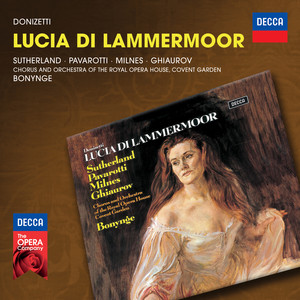 | Lucia di Lammermoor / Act 1: "Regnava nel silenzio" | Gaetano Donizetti, Dame Joan Sutherland, Huguette Tourangeau, Orchestra of the Royal Opera House, Covent Garden, Richard Bonynge | G Minor | 1 | 6A | 86 BPM | |
 | Orfeo ed Euridice, Wq. 30: Act II: Scene II: Recitativo: "O voi, ombre felici" | Christoph Willibald Gluck, Pierre Monteux, Rome Opera Orchestra | A Major | 1 | 11B | 93 BPM | |
| Orfeo ed Euridice, Wq. 30: Act III: Divo Amore, son tue pene | Christoph Willibald Gluck, Pierre Monteux, Rome Opera Orchestra, Lisa della Casa, Roberta Peters, Rise Stevens | E Major | 2 | 12B | 77 BPM | |
 | Mignon: Légères hirondelles | Ambroise Thomas, Rise Stevens, Ezio Pinza, Wilfrid Pelletier | A Major | 4 | 11B | 92 BPM | |
 | Toyland | Rise Stevens | F Major | 1 | 7B | 74 BPM | |
 | Donizetti: Don Pasquale, Act 1: "Quel guardo il cavaliere" (Norina) | Gaetano Donizetti, Riccardo Muti, Mirella Freni, Philharmonia Orchestra | G Major | 1 | 9B | 111 BPM | |
 | Mozart: Così fan tutte, K. 588, Act 1: Aria. "Un'aura amorosa del nostro tesoro" (Ferrando) | Wolfgang Amadeus Mozart, Karl Böhm, Alfredo Kraus, Heinrich Schmidt, Philharmonia Orchestra | A Major | 1 | 11B | 91 BPM | |
| Samson and Delilah (Highlights): Act II, Scene I, "Amour! viens aider ma faiblesse!" | Camille Saint-Saëns, Rise Stevens, Jan Peerce, Robert Merrill, Robert Shaw Chorale, NBC Symphony Orchestra, Leopold Stokowski | D Minor | 2 | 7A | 86 BPM | |
| Rose of the World | Rise Stevens | B♭ Major | 2 | 6B | 64 BPM | |
 | Cui: Prisoner of the Caucasus, Act 2: Aria. "Solntse v nebe yasnom svetit ne tak yarko" (Aboubeker) | César Cui, Ivan Grizounov, Unknown Orchestra | C Major | 2 | 8B | 135 BPM | |
 | Carmen: Au quartier! Pour l'appel! | Georges Bizet, Rise Stevens, Richard Tucker, Fritz Reiner | F♯ Major | 3 | 2B | 132 BPM | |
| Samson and Delilah (Highlights): Act I, Scene I, "Arrêtez, ô mes frères!" | Camille Saint-Saëns, Rise Stevens, Jan Peerce, Robert Merrill, Robert Shaw Chorale, NBC Symphony Orchestra, Leopold Stokowski | C Minor | 5 | 5A | 89 BPM | |
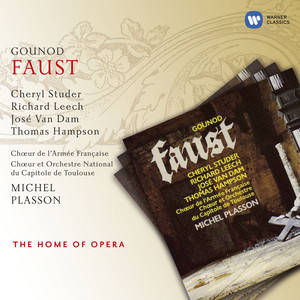 | Gounod: Faust, Act 1: "Rien ! En vain j'interroge" (Faust) | Charles Gounod, Michel Plasson, Richard Leech, Orchestre Du Capitole De Toulouse | A Minor | 1 | 8A | 94 BPM | |
 | Mozart: Don Giovanni, K. 527, Act 1: Duettino. "Là ci darem la mano" (Don Giovanni, Zerlina) | Wolfgang Amadeus Mozart, Riccardo Muti, Susanne Mentzer, William Shimell, Wiener Philharmoniker | A Major | 1 | 11B | 97 BPM | |
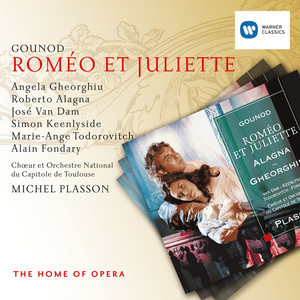 | Romeo and Juliette, Act II: L'amour! l'amour | Charles Gounod, Roberto Alagna, Michel Plasson, Wolff, Orchestre Du Capitole De Toulouse | B♭ Major | 1 | 6B | 84 BPM | |
 | The Princess of Pure Delight | Kenneth Bridges, Rise Stevens, John Reardon, Lady in the Dark Ensemble (1963) | F♯ Minor | 3 | 11A | 146 BPM | |
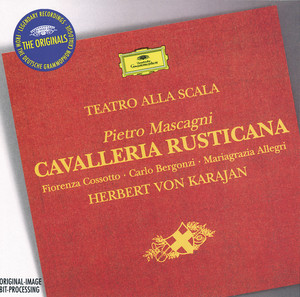 | Cavalleria rusticana: Brindisi. Viva il vino spumeggiante "Drinking Song" | Pietro Mascagni, Adriane Martino, Carlo Bergonzi, Orchestra Del Teatro Alla Scala, Milano, Herbert von Karajan, Coro Del Teatro Alla Scala Di Milano | A♭ Major | 3 | 4B | 126 BPM |
- ISRC
- ATP130255607
- Label
- L-M Records/RCA Records