- BPM
- 62
- Key
- G Major
- Camelot
- 9B
Three Shakespeare Songs: No. 3, Over Hill, Over Dale by Ralph Vaughan Williams, Tenebrae, Nigel Short Song Details
"Three Shakespeare Songs: No. 3, Over Hill, Over Dale" by Ralph Vaughan Williams, Tenebrae, Nigel Short had its release date on September 30, 2016. With This song being less than a minute long, we are pretty confident that this song does not contain any foul language. That being said, this song is pretty short compared to other songs. The track order of this song in Tenebrae, Nigel Short's "Music of the Spheres: Part Songs of the British Isles" album is number 8 out of 20. On top of that, United Kingdom appears to be the country where this track was created. Three Shakespeare Songs: No. 3, Over Hill, Over Dale is not that popular right now. In our opinion, the overall tone is not very danceable and projects negative sounds, such as being sad, depressed, or angry.
BPM and Tempo
We consider the tempo marking of Three Shakespeare Songs: No. 3, Over Hill, Over Dale by Ralph Vaughan Williams, Tenebrae, Nigel Short to be Larghetto (rather broadly) because the track has a tempo of 62 BPM, a half-time of 31BPM, and a double-time of 124 BPM. Based on that, the speed of the song's tempo is slow. The time signature for this track is 3/4.
Music Key
This song has a musical key of G Major. This also means that this song has a camelot key of 9B. So, the perfect camelot match for 9B would be either 9B or 10A. While, 10B can give you a low energy boost. For moderate energy boost, you would use 6B and a high energy boost can either be 11B or 4B. Though, if you want a low energy drop, you should looking for songs with either a camelot key of 9A or 8B will give you a low energy drop, 12B would be a moderate one, and 7B or 2B would be a high energy drop. Lastly, 6A allows you to change the mood.
Want to find the BPM and music key for other songs? Check out our BPM and Key Finder page!
- Popularity
- 9%
- Loudness
- -24.133 dB
- Acousticness
- 100%
- Danceability
- 38%
- Energy
- 19%
- Instrumentalness
- 76%
- Liveness
- 12%
- Loudness
- 60%
- Speechiness
- 8%
- Valence
- 17%
Recommendations
| Track | Artist | Key | Energy | Camelot | BPM | ||
|---|---|---|---|---|---|---|---|
 | English Pastoral Impressions: I. Spring Morning | John Farrar, Alasdair Mitchell, Philharmonic Orchestra, Howard Shelley | E♭ Major | 0 | 5B | 101 BPM | |
 | Sospiri, Op. 70 | Edward Elgar, Academy of St. Martin in the Fields, Sir Neville Marriner | F Major | 1 | 7B | 177 BPM | |
 | Scottish Fantasy for Violin and Orchestra, Op. 46: IV. Finale: Allegro guerriero | Max Bruch, Joshua Bell, Academy of St. Martin in the Fields | E♭ Major | 2 | 5B | 97 BPM | |
 | Valse triste, Op. 44 No. 1 | Jean Sibelius, Berliner Philharmoniker, Herbert von Karajan | G Major | 0 | 9B | 78 BPM | |
 | Skibbereen | Patrick Cassidy | E Minor | 1 | 9A | 84 BPM | |
 | Was mir behagt, ist nur die muntre Jagd, BWV 208, "Hunt Cantata": Aria. Schafe können sicher weiden (Sheep May Safely Graze) [arr. R. Hayman] | Johann Sebastian Bach, Philharmonic Symphony Orchestra, Richard Hayman | D Minor | 2 | 7A | 79 BPM | |
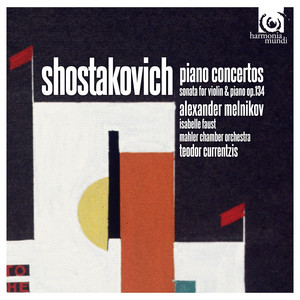 | Piano Concerto No. 2 Op. 102 in F Major: II. Andante | Dmitri Shostakovich, Alexander Melnikov, Mahler Chamber Orchestra, Teodor Currentzis | C Minor | 0 | 5A | 78 BPM | |
 | Vaughan Williams: The Lark Ascending | Ralph Vaughan Williams, Sir Adrian Boult, Hugh Bean, New Philharmonia Orchestra | E Minor | 0 | 9A | 102 BPM | |
 | The Firebird (L'oiseau De Feu) - Suite (1919): Round Dance Of The Princesses | Igor Stravinsky, Orchestre de l'Opéra National de Paris, Myung-Whun Chung | D♭ Minor | 0 | 12A | 82 BPM | |
 | Love's Labour's Lost, Op. 28a: III. Dumaine's Poem | Gerald Finzi, Robert Plane, Royal Northern Sinfonia, Howard Griffiths | G Minor | 1 | 6A | 105 BPM | |
 | Lonely Waters, R. 28 | Ernest John Moeran, Vernon Handley, Ulster Orchestra | F♯ Major | 0 | 2B | 80 BPM | |
 | VII. Introduction (Prelude) | Dmitri Shostakovich, Ukraine National Symphony Orchestra, Theodore Kuchar | D Minor | 3 | 7A | 78 BPM | |
 | Delius: On Hearing the First Cuckoo in Spring | Frederick Delius, Andrew Davis, BBC Symphony Orchestra | D♭ Major | 1 | 3B | 66 BPM | |
 | L'Oiseau de feu, K10: X. Khorovod (Ronde) des princesses | Igor Stravinsky, Orchestre de Paris, Klaus Mäkelä | F Minor | 0 | 4A | 68 BPM | |
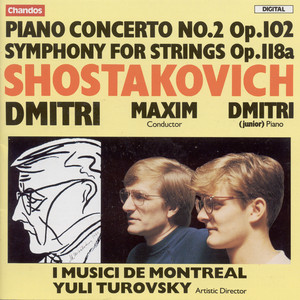 | Piano Concerto No. 2 in F Major, Op. 102: II. Andante | Dmitri Shostakovich, I Musici de Montréal, Maxim Shostakovich | C Minor | 0 | 5A | 177 BPM | |
 | Chanson de nuit, Op.15 No.1 | Edward Elgar, Hallé, Sir Mark Elder | G Major | 0 | 9B | 80 BPM | |
 | Karelia Suite, Op. 11: II. Ballade. Tempo di menuetto | Jean Sibelius, New Zealand Symphony Orchestra, Pietari Inkinen | A Minor | 1 | 8A | 59 BPM | |
 | Dolly Suite, Op. 56: I. Berceuse | Gabriel Fauré, Katia Labèque, Marielle Labèque | E Major | 0 | 12B | 63 BPM | |
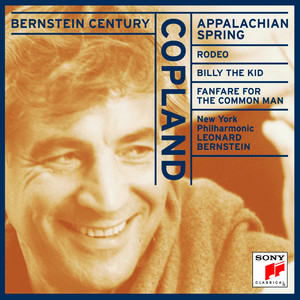 | Appalachian Spring: VI. Meno mosso | Aaron Copland, Leonard Bernstein, New York Philharmonic | A♭ Major | 0 | 4B | 143 BPM | |
| Appalachian Spring: VIII. Coda. Moderato | Aaron Copland, Leonard Bernstein, New York Philharmonic | C Major | 0 | 8B | 106 BPM | |
 | Suite Of Cotswold Folk Dances (1978): Constant Billy | Philip Lane, Royal Ballet Sinfonia, Gavin Sutherland | D Major | 1 | 10B | 96 BPM | |
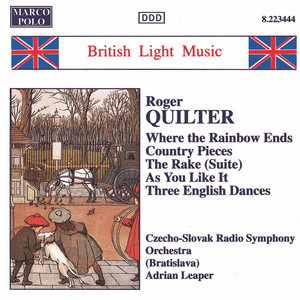 | Where the Rainbow Ends Suite (version for orchestra): No. 1a Rainbow Land | Roger Quilter, Slovak Radio Symphony Orchestra, Adrian Leaper | A Major | 0 | 11B | 69 BPM | |
 | Mahler: Blumine | Gustav Mahler, San Francisco Symphony, Michael Tilson Thomas | C Major | 1 | 8B | 100 BPM | |
| Capriol Suite: 5. Pied-en- l'air | Peter Warlock, Academy of St. Martin in the Fields, Nicholas Kraemer, Sir Neville Marriner | G Major | 1 | 9B | 113 BPM | |
 | Way Out West (Arr. For Oboe) | Diana Doherty | E Major | 1 | 12B | 63 BPM |
- ISRC
- GBLLH1690408
- Label
- L-M Records/RCA Records