- BPM
- 97
- Key
- D♭ Major
- Camelot
- 3B
Vivaldi: Dixit Dominus in D Major, RV 594: III. Virgam virtutis tuae by Antonio Vivaldi, Choir of King's College, Cambridge, Academy of Ancient Music, Deborah Norman, Sarah Fox, Stephen Cleobury Song Details
Antonio Vivaldi, Choir of King's College, Cambridge, Academy of Ancient Music, Deborah Norman, Sarah Fox, Stephen Cleobury's 'Vivaldi: Dixit Dominus in D Major, RV 594: III. Virgam virtutis tuae' had a release date set for March 18, 2002. The duration of This song is about two minutes long, specifically at 2:24. This song does not appear to have any foul language. Vivaldi: Dixit Dominus in D Major, RV 594: III. Virgam virtutis tuae's duration is considered a little bit shorter than the average duration of a typical track. This song is part of Vivaldi Gloria by Antonio Vivaldi, Choir of King's College, Cambridge, Stephen Cleobury. The song's track number on the album is #14 out of 30 tracks. Based on our data, United Kingdom was the country where this track was produced or recorded. In terms of popularity, Vivaldi: Dixit Dominus in D Major, RV 594: III. Virgam virtutis tuae is currently below average in popularity. Although the tone can be danceable to some, this track does projects more of a negative sound rather than a postive one.
BPM and Tempo
Since Vivaldi: Dixit Dominus in D Major, RV 594: III. Virgam virtutis tuae by Antonio Vivaldi, Choir of King's College, Cambridge, Academy of Ancient Music, Deborah Norman, Sarah Fox, Stephen Cleobury has a tempo of 97 beats per a minute, the tempo markings of this song would be Andante (at a walking pace). With Vivaldi: Dixit Dominus in D Major, RV 594: III. Virgam virtutis tuae being at 97 BPM, the half-time would be 48 BPM with a double-time of 194 BPM.In addition, we consider the tempo speed to be pretty slow for this song. The time signature for this track is 3/4.
Music Key
D♭ Major is the music key of this track. Or for those who are familiar with the camelot wheel, this song has a camelot key of 3B. So, the perfect camelot match for 3B would be either 3B or 4A. While, 4B can give you a low energy boost. For moderate energy boost, you would use 12B and a high energy boost can either be 5B or 10B. Though, if you want a low energy drop, you should looking for songs with either a camelot key of 3A or 2B will give you a low energy drop, 6B would be a moderate one, and 1B or 8B would be a high energy drop. Lastly, 12A allows you to change the mood.
Want to find the BPM and music key for other songs? Check out our BPM and Key Finder page!
- Popularity
- 25%
- Loudness
- -20.381 dB
- Acousticness
- 96%
- Danceability
- 51%
- Energy
- 14%
- Instrumentalness
- 0%
- Liveness
- 8%
- Loudness
- 66%
- Speechiness
- 5%
- Valence
- 30%
Recommendations
| Track | Artist | Key | Energy | Camelot | BPM | ||
|---|---|---|---|---|---|---|---|
 | Couperin, F: Troisième leçon de ténèbres pour le Mercredi saint: II. Caph | François Couperin, William Christie, Patricia Petibon, Sophie Daneman, Les Arts Florissants | C Minor | 0 | 5A | 76 BPM | |
 | Handel: Coronation Anthem No. 3, HWV 260 "The King Shall Rejoice": V. Alleluja | George Frideric Handel, Choir of King's College, Cambridge, Academy of Ancient Music, Stephen Cleobury, Alastair Ross | D♭ Major | 3 | 3B | 118 BPM | |
 | Requiem in D Minor, Op. 48: Introït et Kyrie | Gabriel Fauré, Tenebrae, LSO Chamber Ensemble, Nigel Short | B♭ Major | 0 | 6B | 77 BPM | |
 | Purcell : King Arthur : Act 4 "Two daughters of this aged stream are we" [Sopranos] | William Christie | F Minor | 1 | 4A | 70 BPM | |
 | Missa in angustiis "Nelson Mass", Hob. XXII:11 in D minor: Gloria: Qui tollis | Joseph Haydn, Barbara Hendricks, Marjana Lipovsek, Francisco Araiza, Peter Meven, Bavarian Radio Symphony Orchestra, Bavarian Radio Chorus, Sir Colin Davis | B♭ Major | 1 | 6B | 94 BPM | |
 | Purcell: Dido and Aeneas, Z. 626, Act 3: Song and Chorus. "Come Away" (Sailor, Chorus) | Henry Purcell, Emmanuelle Haïm, Le Concert d'Astrée, European Voices, Paul Agnew | A Major | 2 | 11B | 182 BPM | |
 | Magnificat in B flat major: Sicut erat in principio | Francesco Durante, Thomas Hengelbrock | A Major | 2 | 11B | 125 BPM | |
 | Messa di Gloria, Op.posth., Credo: Crucifuxus etiam pro nobis | Giacomo Puccini, London Symphony Chorus, London Symphony Orchestra, Antonio Pappano | C Minor | 0 | 5A | 134 BPM | |
 | The Creation, Hob.XXI,2: Pt. 1, In Splendour Bright is Rising Now | Joseph Haydn, Handel & Haydn Society, Jeremy Ovenden, Harry Christophers | B♭ Major | 1 | 6B | 107 BPM | |
| Ode for the Birthday of Queen Anne (Eternal source of light divine): 1. Eternal source of light divine | George Frideric Handel, Choir of King's College, Cambridge, Cambridge, Academy of Ancient Music, Stephen Cleobury, Susan Gritton, Alastair Ross, Daniel Hyde, Robin Blaze, Pavlo Beznosiuk, Michael George | D♭ Major | 1 | 3B | 172 BPM | |
 | The Tempest, Z. 631, "The Enchanted Island": Masque Of Spirits, Act II, No. 4 (Air) | Thomas Shadwell, Meredith Hall, Aradia Ensemble, Rosemarie van der Hooft, Paul Grindlay, Nils Brown, Brett Polegato, Gillian Keith, Michael Colvin, Henry Purcell, John Dryden | B Major | 2 | 1B | 99 BPM | |
 | Overture No. 7 in D major | Thomas Arne, Academy of Ancient Music, Christopher Hogwood | D♭ Major | 1 | 3B | 72 BPM | |
 | Concerto for 2 Trumpets in C Major, RV 537: III. Allegro | Antonio Vivaldi, Michael Meeks, Crispian Steele-Perkins, City of London Sinfonia, Nicholas Kraemer | G Major | 2 | 9B | 178 BPM | |
 | The Old Bachelor, Z.607: Rondeau - Menuet - Boree - March - Jig | Henry Purcell, Academy of Ancient Music, Christopher Hogwood | B Major | 2 | 1B | 120 BPM | |
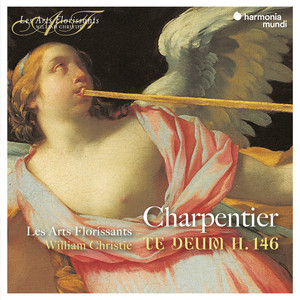 | Assumpta Est Maria, H. 11: II. Kyrie I | Marc-Antoine Charpentier, Véronique Gens, Noemi Rime, Bernard Deletré, Les Arts Florissants, William Christie | D♭ Minor | 1 | 12A | 104 BPM | |
 | Vinci: Artaserse, Act 1: "Vo solcando un mar crudel" (Arbace) | Leonardo Vinci, Diego Fasolis, Philippe Jaroussky, Max Emanuel Cenčić, Franco Fagioli, Valer Barna-Sabadus, I Barocchisti, Yuriy Mynenko, Daniel Behle, Concerto Köln | D♭ Major | 3 | 3B | 83 BPM | |
 | Mass in B Minor, BWV 232: Gratias agimus tibi (Chorus) | Johann Sebastian Bach, Dorothee Mields, Johannette Zomer, Patrick Van Goethem, Jan Kobow, Peter Kooij, Cappella Amsterdam, Orchestra Of The 18th Century, Frans Brüggen | D♭ Major | 3 | 3B | 118 BPM | |
| Te Deum, H. 146: X. "In te Domine speravi" | Marc-Antoine Charpentier, Véronique Gens, Gilles Ragon, Jean-Paul Fouchécourt, Bernard Deletré, Les Arts Florissants, William Christie | D♭ Major | 3 | 3B | 97 BPM | |
 | Gloria in D Major, RV589: 1. Gloria in excelsis | Antonio Vivaldi, Christ Church Cathedral Choir, Oxford, Academy of Ancient Music, Simon Preston | E Minor | 1 | 9A | 79 BPM | |
| Purcell : King Arthur : Act 4 "How happy the lover" [Tenor, Chorus] Ritornello "For love every creature" [Soprano, Bass, Chorus] "In vain are our graces" [Chorus] | William Christie | F Minor | 0 | 4A | 104 BPM | |
 | Magnificat, Wq. 215: Magnificat, Wq. 215: 3. Arie. Quia fecit mihi magna (T) | Carl Philipp Emanuel Bach, Lothar Odinius, Akademie für Alte Musik Berlin, Hans-Christoph Rademann | F♯ Major | 3 | 2B | 139 BPM | |
 | Concerto for Recorder, Oboe and 2 Violins in C Major, RV 87: III. Allegro assai | Antonio Vivaldi, László Kecskeméti, László Hadady, Attila Falvay, Katalin Parkanyi, Gyorgy Kertesz, Borbála Dobozy | C Major | 2 | 8B | 175 BPM | |
 | Hail! bright Cecilia, Z. 328: II. Hail! Bright Cecilia! | Henry Purcell, Collegium Vocale Gent, Philippe Herreweghe, Susan Hamilton, Siri Thornhill, Robin Blaze, Martin van der Zeijst, Mark Padmore, Jonathan Arnold, Jonathan Brown, Peter Harvey | D♭ Major | 1 | 3B | 73 BPM | |
| Te Deum, H. 146: VII. "Aeterna fac cum sanctis tuis" | Marc-Antoine Charpentier, Véronique Gens, Gilles Ragon, Jean-Paul Fouchécourt, Bernard Deletré, Les Arts Florissants, William Christie | B♭ Minor | 1 | 3A | 81 BPM | |
 | Messiah, HWV 56: Part 1: Rejoice greatly, O daughter of Zion (Air) | Nikolaus Harnoncourt | A Major | 1 | 11B | 106 BPM |
- ISRC
- GBAYC0102852
- Label
- L-M Records/RCA Records