- BPM
- 87
- Key
- B♭ Major
- Camelot
- 6B
Piano Concerto in C Major: I. Toccata. Allegro moderato by Ralph Vaughan Williams, Howard Shelley, Royal Philharmonic Orchestra, Vernon Handley Song Details
"Piano Concerto in C Major: I. Toccata. Allegro moderato" by Ralph Vaughan Williams, Howard Shelley, Royal Philharmonic Orchestra, Vernon Handley had its release date on September 1, 2006. Since This song is still less than 10 minute long, it is still considered a pretty long duration song compared to the average song length. This song does not appear to be explicit due to the lack of the "E" tag. This song is part of Vaughan Williams: Piano Concerto – Foulds: Dynamic Triptych, Op. 88 by Howard Shelley, Royal Philharmonic Orchestra, Vernon Handley. The song's track number on the album is #1 out of 6 tracks. Based on our data, United Kingdom was the country where this track was produced or recorded. Piano Concerto in C Major: I. Toccata. Allegro moderato is unknown right now. In our opinion, the overall tone is not very danceable and projects negative sounds, such as being sad, depressed, or angry.
BPM and Tempo
Since Piano Concerto in C Major: I. Toccata. Allegro moderato by Ralph Vaughan Williams, Howard Shelley, Royal Philharmonic Orchestra, Vernon Handley has a tempo of 87 beats per a minute, the tempo markings of this song would be Andante (at a walking pace). With Piano Concerto in C Major: I. Toccata. Allegro moderato being at 87 BPM, the half-time would be 44 BPM with a double-time of 174 BPM.In addition, we consider the tempo speed to be pretty slow for this song. This makes this song perfect for activities such as, yoga or pilates. The time signature for this track is 4/4.
Music Key
This song has a musical key of B♭ Major. Or for those who are familiar with the camelot wheel, this song has a camelot key of 6B. So, the perfect camelot match for 6B would be either 6B or 7A. While, 7B can give you a low energy boost. For moderate energy boost, you would use 3B and a high energy boost can either be 8B or 1B. Though, if you want a low energy drop, you should looking for songs with either a camelot key of 6A or 5B will give you a low energy drop, 9B would be a moderate one, and 4B or 11B would be a high energy drop. Lastly, 3A allows you to change the mood.
Want to find the BPM and music key for other songs? Check out our BPM and Key Finder page!
- Popularity
- 0%
- Loudness
- -25.624 dB
- Acousticness
- 98%
- Danceability
- 14%
- Energy
- 5%
- Instrumentalness
- 88%
- Liveness
- 8%
- Loudness
- 57%
- Speechiness
- 4%
- Valence
- 5%
Recommendations
| Track | Artist | Key | Energy | Camelot | BPM | ||
|---|---|---|---|---|---|---|---|
 | Bernstein: Divertimento for Orchestra: II. Waltz | Leonard Bernstein, Paavo Järvi, City Of Birmingham Symphony Orchestra | G Major | 0 | 9B | 72 BPM | |
 | Sir John in Love: Fantasia on Greensleeves | Ralph Vaughan Williams, Leonard Bernstein, New York Philharmonic, David Nadien | C Minor | 1 | 5A | 105 BPM | |
 | Adoration (Version for Solo Violin and String Orchestra) | Florence Beatrice Price, Daniel Hope, Zürcher Kammerorchester | D Major | 1 | 10B | 80 BPM | |
 | Rimsky-Korsakov: Scheherazade, Op. 35: II. The Kalendar Prince (Excerpt) | Nikolai Rimsky-Korsakov, Riccardo Muti, Philadelphia Orchestra | B Minor | 0 | 10A | 146 BPM | |
 | The Lark Ascending | Ralph Vaughan Williams, Nicola Benedetti, London Philharmonic Orchestra, Andrew Litton | E Minor | 1 | 9A | 89 BPM | |
 | The Holy Boy | John Ireland, Richard Hickox, London Symphony Orchestra | G Minor | 0 | 6A | 101 BPM | |
 | Sospiri, Op. 70 | Edward Elgar, English Chamber Orchestra, Osian Ellis, Paul Goodwin | F Major | 0 | 7B | 113 BPM | |
 | A Severn Rhapsody, Op. 3 | Gerald Finzi, Robert Plane, Royal Northern Sinfonia, Howard Griffiths | C Minor | 0 | 5A | 62 BPM | |
 | Karelia Suite, Op. 11: II. Ballade. Tempo di menuetto | Jean Sibelius, New Zealand Symphony Orchestra, Pietari Inkinen | A Minor | 1 | 8A | 59 BPM | |
 | Polovetsian Dances from Prince Igor: Introduzione | Alexander Borodin, George Szell, The Cleveland Orchestra | A Major | 1 | 11B | 83 BPM | |
 | Panis Angelicus (Arr. Leopold Stokowski) | César Franck, Matthias Bamert, BBC Philharmonic | A Major | 1 | 11B | 65 BPM | |
 | Petite Suite de Concert, Op. 77: III. Un sonnet d'amour | Samuel Coleridge-Taylor, Chineke! Orchestra, Anthony Parnther | D Major | 0 | 10B | 62 BPM | |
 | VII. Introduction (Prelude) | Dmitri Shostakovich, Ukraine National Symphony Orchestra, Theodore Kuchar | D Minor | 3 | 7A | 78 BPM | |
 | Orpheo ed Euridice, Wq. 30, Act II: Dance of the Blessed Spirits | Christoph Willibald Gluck, Eugene Ormandy, Philadelphia Orchestra | D Minor | 1 | 7A | 67 BPM | |
 | Sospiri, Op. 70 | Edward Elgar, Academy of St. Martin in the Fields, Sir Neville Marriner | F Major | 1 | 7B | 177 BPM | |
| Two English Idylls | George Butterworth, Academy of St. Martin in the Fields, Sir Neville Marriner | C Major | 1 | 8B | 89 BPM | |
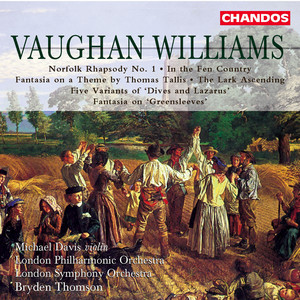 | Norfolk Rhapsody No. 1 | Ralph Vaughan Williams, Bryden Thomson, London Philharmonic Orchestra | E Minor | 1 | 9A | 79 BPM | |
 | Albinoni: Oboe Concerto in D Minor, Op. 9 No. 2: II. Adagio | Tomaso Albinoni, Pierre Pierlot, Claudio Scimone, I Solisti Veneti | B♭ Major | 2 | 6B | 72 BPM | |
 | No. 1, Adagio "Lovely on the Water" | Ralph Vaughan Williams, Gerald Peregrine, Antony Ingham | D Major | 8 | 10B | 129 BPM | |
 | Spitfire Prelude and Fugue | William Walton, English Northern Philharmonia, Paul Daniel | C Major | 3 | 8B | 125 BPM | |
 | Brook Green Suite: II. Air | Gustav Holst, English Sinfonia, Howard Griffiths | E♭ Major | 0 | 5B | 128 BPM | |
 | Symphony No. 3 In C Minor, Op. 78 "Organ Symphony": 1. Adagio - Allegro moderato - Poco adagio | Camille Saint-Saëns, Simon Preston, Berliner Philharmoniker, James Levine | A♭ Major | 1 | 4B | 118 BPM | |
| St. Paul's Suite, Op. 29 No. 2: IV. Finale, "the Dargason" | Gustav Holst, English Sinfonia, Howard Griffiths | D♭ Major | 0 | 3B | 66 BPM | |
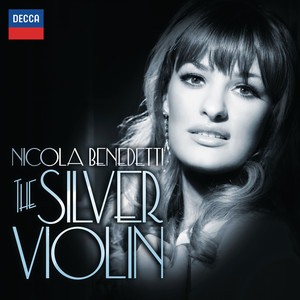 | Ladies In Lavender - Main Theme - (Ladies in Lavender) | Nigel Hess, Nicola Benedetti, Bournemouth Symphony Orchestra, Kirill Karabits | D Major | 2 | 10B | 87 BPM | |
 | Scottish Fantasy for Violin and Orchestra, Op. 46: I. Introduction: Grave, Adagio cantabile | Max Bruch, Joshua Bell, Academy of St. Martin in the Fields | E♭ Major | 2 | 5B | 60 BPM |
- ISRC
- GBAET9248600
- Label
- L-M Records/RCA Records