- BPM
- 67
- Key
- D♭ Major
- Camelot
- 3B
歌曲集「陽気な唄」 II. 酒の唄 by F. プーランク, 村田健司(バリトン・レジェ), 上原ひろ子(ピアノ) Song Details
"歌曲集「陽気な唄」 II. 酒の唄" by F. プーランク, 村田健司(バリトン・レジェ), 上原ひろ子(ピアノ) had its release date on March 31, 1999. The duration of This song is about two minutes long, specifically at 2:05. This song does not appear to have any foul language. 歌曲集「陽気な唄」 II. 酒の唄's duration is considered a little bit shorter than the average duration of a typical track. There is only one song in プーランク歌曲集全101曲, so we believe that "歌曲集「陽気な唄」 II. 酒の唄" is a single. 歌曲集「陽気な唄」 II. 酒の唄 is unknown right now. Although the tone can be danceable to some, this track does projects more of a negative sound rather than a postive one.
BPM and Tempo
The tempo marking of 歌曲集「陽気な唄」 II. 酒の唄 by F. プーランク, 村田健司(バリトン・レジェ), 上原ひろ子(ピアノ) is Adagio (slowly with great expression), since this song has a tempo of 67 BPM. With that information, we can conclude that the song has a slow tempo. The time signature for this track is 3/4.
Music Key
D♭ Major is the music key of this track. This also means that this song has a camelot key of 3B. So, the perfect camelot match for 3B would be either 3B or 4A. While, 4B can give you a low energy boost. For moderate energy boost, you would use 12B and a high energy boost can either be 5B or 10B. Though, if you want a low energy drop, you should looking for songs with either a camelot key of 3A or 2B will give you a low energy drop, 6B would be a moderate one, and 1B or 8B would be a high energy drop. Lastly, 12A allows you to change the mood.
Want to find the BPM and music key for other songs? Check out our BPM and Key Finder page!
- Popularity
- 0%
- Loudness
- -22.514 dB
- Acousticness
- 99%
- Danceability
- 44%
- Energy
- 7%
- Instrumentalness
- 88%
- Liveness
- 9%
- Loudness
- 62%
- Speechiness
- 5%
- Valence
- 6%
Recommendations
| Track | Artist | Key | Energy | Camelot | BPM | ||
|---|---|---|---|---|---|---|---|
 | Handel: Messiah, HWV 56, Pt. 1: No. 12, Pastoral Symphony "Pifa" | George Frideric Handel, Sir Neville Marriner, Academy of St. Martin in the Fields | E♭ Major | 1 | 5B | 108 BPM | |
 | Yesterday's Dreams | Helen Habershon, John Lenehan | F Major | 0 | 7B | 197 BPM | |
 | Suite for Flute and Piano Op. 34 No 1: II Scherzo | Charles-Marie Widor, Emmanuel Pahud, Eric Le Sage | C Major | 1 | 8B | 139 BPM | |
 | 6 Variations on 'Nel cor più non mi sento’, di G. Paisiello in G Major, Op. 42 (REINVENTED for Solo Flute by LUCA ASTOLFONI FOSSI): II. Variation 1 | Johann Baptist Vanhal, Claudio Ferrarini | E♭ Major | 1 | 5B | 108 BPM | |
 | 5 Stücke im Volkston, Op. 102 (Arr. for Oboe & Piano by Stephan Korody-Kreutzer): No. 2, Langsam | Robert Schumann, Nicholas Daniel, Julius Drake | F Major | 0 | 7B | 65 BPM | |
 | Sonatine pour basson et piano: I. Allegro con moto | Alexandre Tansman, Marc Trenel, Pascal Godart | C Major | 1 | 8B | 139 BPM | |
 | Symphony in 3 Movements, K073: II. Andante Interlude | Igor Stravinsky, Orchestre National Bordeaux Aquitaine, Bar Avni | E♭ Major | 1 | 5B | 108 BPM | |
 | Hindemith: Flute Sonata: I. Heiter bewegt | Paul Hindemith, Emmanuel Pahud, Eric Le Sage | F♯ Major | 0 | 2B | 71 BPM | |
 | Andante and Rondo Ungarese for Bassoon and Orchestra, Op.35 | Carl Maria von Weber, Klaus Thunemann, Academy of St. Martin in the Fields, Sir Neville Marriner | C Major | 1 | 8B | 174 BPM | |
 | Heut triumphieret Gottes Sohn, BWV 630 (Arr. for Orchestra by Sir Andrew Davis) | Johann Sebastian Bach, Martyn Brabbins, BBC Philharmonic | E♭ Major | 0 | 5B | 73 BPM | |
 | La cimarosiana: Larghetto | Gian Francesco Malipiero, Orchestra della Svizzera Italiana, Christian Benda | B♭ Major | 0 | 6B | 73 BPM | |
 | I. Adagio ma non troppo | Fanny Mendelssohn, Minguet Quartett | E♭ Major | 1 | 5B | 108 BPM | |
 | Alto Saxophone Sonata in C-Sharp Major (Version for Saxophone & Piano): I. Très modéré, expressif | Fernande Decruck, Asya Fateyeva, Valeria Myrosh | E Major | 1 | 12B | 102 BPM | |
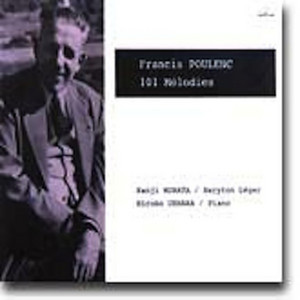 | 歌曲集「2つの詩」 I. アンナの庭 | F. プーランク, 村田健司(バリトン・レジェ), 上原ひろ子(ピアノ) | E Minor | 1 | 9A | 72 BPM | |
 | あなたはこんなふう | F. プーランク, 藤森亮一(チェロ), カール=アンドレアス・コリー(ピアノ) | A Minor | 0 | 8A | 65 BPM | |
 | Prelude a l'apres-midi d'un faune (feat. Andrew Davis) | Jeanne Baxtresser | A♭ Minor | 2 | 1A | 169 BPM | |
 | Sonata For Flute & Piano In C Major: Allegro cantabile | Otar Taktakishvili, Eva Kupiec, Marina Piccinini | C Major | 1 | 8B | 102 BPM | |
 | Gluck: Orphée et Eurydice, Wq. 41, Act 1 Scene 1: Pantomime des nymphes et des bergers | Christoph Willibald Gluck, Orchestre de l'Opéra National de Lyon/Sir John Eliot Gardiner, John Eliot Gardiner, Orchestre De L'Opéra National De Lyon | B Major | 2 | 1B | 110 BPM | |
 | Dukas: Villanelle | Paul Dukas, Dennis Brain, Gerald Moore | C Major | 0 | 8B | 69 BPM | |
 | Saint-Saëns: Clarinet Sonata in E-Flat Major, Op. 167: I. Allegretto | Camille Saint-Saëns, Sabine Meyer, Oleg Maisenberg | E♭ Major | 0 | 5B | 126 BPM | |
 | Grieg: The Mountain Maid, Op. 67: No. 3, Blueberry Slope (Transcr. for Trumpet and Piano) | Edvard Grieg, Tine Thing Helseth, Håvard Gimse | F Major | 1 | 7B | 106 BPM | |
 | Grand duo concertant, Op. 48: I. Allegro con fuoco | Carl Maria von Weber, Jean Johnson, Steven Osborne | E♭ Major | 1 | 5B | 108 BPM | |
 | Punto: Horn Concerto No. 6 in E-Flat Major: III. Rondo. Moderato | Giovanni Punto, Barry Tuckwell, Academy of St. Martin in the Fields, Sir Neville Marriner | E♭ Major | 1 | 5B | 132 BPM | |
| Poulenc: Clarinet Sonata, FP 184: II. Romanza | Francis Poulenc, Sabine Meyer | G Minor | 0 | 6A | 67 BPM | |
 | Suita Concertante-Encounters IV for Viola Clarinet and Chamber Orchestra: II. Allegro | Menachem Wiesenberg, Yuval Gotlibovich, Chen Halevi, Thomas Rösner, Beethoven Philarmonie Orchestra | A Minor | 2 | 8A | 137 BPM |
- ISRC
- JPF699900213
- Label
- L-M Records/RCA Records