- BPM
- 82
- Key
- E Major
- Camelot
- 12B
Vaughan Williams: Job, Scene 4: Job's Dream by Ralph Vaughan Williams, Andrew Davis, BBC Symphony Orchestra Song Details
"Vaughan Williams: Job, Scene 4: Job's Dream" by Ralph Vaughan Williams, Andrew Davis, BBC Symphony Orchestra had its release date on February 14, 1997. With this song being around four minutes long, at 4:01, the duration of this song is pretty average compared to other songs. This track is safe for children and doesn't appear to contain any foul language, since the "Explicit" tag was not present in this track. This song is part of Vaughan Williams: Symphony No. 9 & Job by Ralph Vaughan Williams, Andrew Davis, BBC Symphony Orchestra. The song's track number on the album is #9 out of 16 tracks. Vaughan Williams: Job, Scene 4: Job's Dream is not that popular right now. In our opinion, the overall tone is not very danceable and projects negative sounds, such as being sad, depressed, or angry.
BPM and Tempo
Since Vaughan Williams: Job, Scene 4: Job's Dream by Ralph Vaughan Williams, Andrew Davis, BBC Symphony Orchestra has a tempo of 82 beats per a minute, the tempo markings of this song would be Andante (at a walking pace). With Vaughan Williams: Job, Scene 4: Job's Dream being at 82 BPM, the half-time would be 41 BPM with a double-time of 164 BPM.In addition, we consider the tempo speed to be pretty slow for this song. The time signature for this track is 4/4.
Music Key
This song has a musical key of E Major. Or for those who are familiar with the camelot wheel, this song has a camelot key of 12B. So, the perfect camelot match for 12B would be either 12B or 1A. While, 1B can give you a low energy boost. For moderate energy boost, you would use 9B and a high energy boost can either be 2B or 7B. Though, if you want a low energy drop, you should looking for songs with either a camelot key of 12A or 11B will give you a low energy drop, 3B would be a moderate one, and 10B or 5B would be a high energy drop. Lastly, 9A allows you to change the mood.
Want to find the BPM and music key for other songs? Check out our BPM and Key Finder page!
- Popularity
- 1%
- Loudness
- -24.258 dB
- Acousticness
- 68%
- Danceability
- 12%
- Energy
- 6%
- Instrumentalness
- 83%
- Liveness
- 10%
- Loudness
- 60%
- Speechiness
- 4%
- Valence
- 6%
Recommendations
| Track | Artist | Key | Energy | Camelot | BPM | ||
|---|---|---|---|---|---|---|---|
 | Five Variants of "Dives and Lazarus" | Ralph Vaughan Williams, New Queen's Hall Orchestra, Barry Wordsworth | B Minor | 1 | 10A | 85 BPM | |
 | Appalachian Spring: VIII. Coda. Moderato | Aaron Copland, Leonard Bernstein, New York Philharmonic | C Major | 0 | 8B | 106 BPM | |
 | Scheherezade, Op. 35: III. The Young Prince and the Young Princess | Nikolai Rimsky-Korsakov, Pelin Halkacı Alkın, Sascha Goetzel, Borusan Istanbul Philharmonic Orchestra | G Major | 1 | 9B | 92 BPM | |
 | Bizet / Arr. Guiraud: Carmen Suite No. 1: III. Intermezzo | Georges Bizet, Seiji Ozawa, Orchestre National De France | E♭ Major | 0 | 5B | 74 BPM | |
 | The Firebird Suite (1919 Version): Finale - 2017 Remastered Version | Igor Stravinsky, Leonard Bernstein, New York Philharmonic | E Major | 3 | 12B | 78 BPM | |
 | Scheherazade: Calm at Sea | Nikolai Rimsky-Korsakov, Lars Hjalmar Joakim | E Major | 2 | 12B | 84 BPM | |
 | An Irish Symphony: In the Antrim Hills | Hamilton Harty, RTÉ National Symphony Orchestra, Proinnsias O'Duinn | F Major | 0 | 7B | 79 BPM | |
 | Dido & Aeneas, Z. 626: When I Am Laid in Earth "Dido's Lament" (Transcr. L. Stokowski) | Henry Purcell, Timothy Walden, Bournemouth Symphony Orchestra, José Serebrier | E Major | 0 | 12B | 76 BPM | |
 | A Shropshire Lad | George Butterworth, London Philharmonic Orchestra, Sir Adrian Boult | F Minor | 1 | 4A | 88 BPM | |
 | Henry V: "Touch her Soft Lips and Part" (1944) | William Walton, Itzhak Perlman, John Williams, Boston Pops Orchestra | B Minor | 1 | 10A | 98 BPM | |
 | The Story Of A Flemish Farm Suite: The Flag Flutters In The Wind | RTE Concert Orchestra, Ralph Vaughan Williams | B♭ Major | 1 | 6B | 69 BPM | |
 | Symphony No. 3, "Pastoral Symphony": III. Moderato pesante | Ralph Vaughan Williams, Brendan O'Brien, Patricia Rozario, Bournemouth Symphony Orchestra, Kees Bakels | C Major | 0 | 8B | 88 BPM | |
 | Irish Lament | Ernest John Moeran, Gerald Peregrine, Antony Ingham | D Minor | 0 | 7A | 131 BPM | |
 | The Banks of Green Willow | George Butterworth, BBC National Orchestra Of Wales, Kriss Russman | E Minor | 0 | 9A | 78 BPM | |
| 3 Portraits From England Of Elizabeth: Poet | RTE Concert Orchestra, Ralph Vaughan Williams | A Minor | 0 | 8A | 87 BPM | |
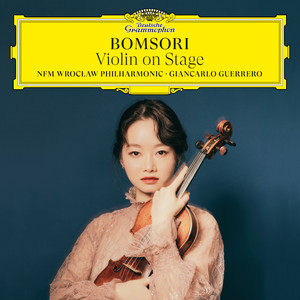 | Thaïs: Méditation | Jules Massenet, Bomsori, NFM Wrocław Philharmonic, Giancarlo Guerrero | D Major | 0 | 10B | 84 BPM | |
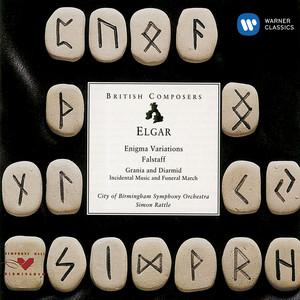 | Elgar: Variations on an Original Theme, Op. 36 "Enigma": Variation IX. Nimrod | Edward Elgar, City Of Birmingham Symphony Orchestra, Sir Simon Rattle | E♭ Major | 1 | 5B | 49 BPM | |
 | Hungarian Dance No.1 in G minor - Orchestrated by Brahms: Allegro molto | Johannes Brahms, Chicago Symphony Orchestra, Daniel Barenboim | G Minor | 2 | 6A | 65 BPM | |
 | Les Beautés Du Diable | François Dompierre, Angèle Dubeau | E Minor | 1 | 9A | 132 BPM | |
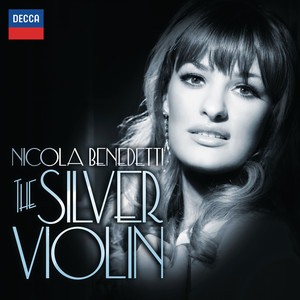 | Die tote Stadt, Act I: Mariettas Lied | Erich Wolfgang Korngold, Nicola Benedetti, Bournemouth Symphony Orchestra, Kirill Karabits | B♭ Major | 3 | 6B | 94 BPM | |
 | 5 Bagatelles, Op. 23a (Arr. L. Ashmore for Clarinet & Strings): No. 3, Carol. Andante semplice | Gerald Finzi, Robert Plane, Royal Northern Sinfonia, Howard Griffiths | B♭ Major | 0 | 6B | 78 BPM | |
 | Polovetsian Dances from Prince Igor: Introduzione | Alexander Borodin, George Szell, The Cleveland Orchestra | A Major | 1 | 11B | 83 BPM | |
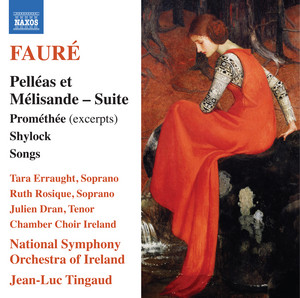 | Pelléas et Mélisande Suite, Op. 80: III. Sicilienne | Gabriel Fauré, RTÉ National Symphony Orchestra, Jean-Luc Tingaud | E♭ Major | 0 | 5B | 94 BPM | |
 | Piano Concerto No. 2 in F Major, Op. 102: II. Andante | Dmitri Shostakovich, Michael Houstoun, New Zealand Symphony Orchestra, Christopher Lyndon-Gee | F Major | 1 | 7B | 147 BPM | |
 | Short Suite: Aria | David Lyon, Royal Ballet Sinfonia, David Lloyd-Jones | G Major | 0 | 9B | 75 BPM |
- ISRC
- This song does not have an ISRC.
- Label
- L-M Records/RCA Records