- BPM
- 108
- Key
- G Major
- Camelot
- 9B
Symphony No. 4, Op. 61: IV. Finale. Andante by Ruth Gipps, Rumon Gamba, BBC National Orchestra Of Wales Song Details
"Symphony No. 4, Op. 61: IV. Finale. Andante" by Ruth Gipps, Rumon Gamba, BBC National Orchestra Of Wales had its release date on September 1, 2018. This song appears to be safe for all ages as it is not explicit. The track order of this song in Ruth Gipps, Rumon Gamba, BBC National Orchestra Of Wales's "Gipps: Symphonies Nos. 2 & 4, Song for Orchestra & Knight in Armour" album is number 4 out of 14. On top of that, United Kingdom appears to be the country where this track was created. In terms of popularity, Symphony No. 4, Op. 61: IV. Finale. Andante is currently unknown. In our opinion, the overall tone is not very danceable and projects negative sounds, such as being sad, depressed, or angry.
BPM and Tempo
We consider the tempo marking of Symphony No. 4, Op. 61: IV. Finale. Andante by Ruth Gipps, Rumon Gamba, BBC National Orchestra Of Wales to be Andante (at a walking pace) because the track has a tempo of 108 BPM, a half-time of 54BPM, and a double-time of 216 BPM. Based on that, the speed of the song's tempo is moderate. The time signature for this track is 4/4.
Music Key
This song has a musical key of G Major. This also means that this song has a camelot key of 9B. So, the perfect camelot match for 9B would be either 9B or 10A. While, 10B can give you a low energy boost. For moderate energy boost, you would use 6B and a high energy boost can either be 11B or 4B. Though, if you want a low energy drop, you should looking for songs with either a camelot key of 9A or 8B will give you a low energy drop, 12B would be a moderate one, and 7B or 2B would be a high energy drop. Lastly, 6A allows you to change the mood.
Want to find the BPM and music key for other songs? Check out our BPM and Key Finder page!
- Popularity
- 0%
- Loudness
- -27.577 dB
- Acousticness
- 96%
- Danceability
- 18%
- Energy
- 2%
- Instrumentalness
- 81%
- Liveness
- 8%
- Loudness
- 54%
- Speechiness
- 4%
- Valence
- 3%
Recommendations
| Track | Artist | Key | Energy | Camelot | BPM | ||
|---|---|---|---|---|---|---|---|
 | Holst: St. Paul's Suite, Op. 29 No. 2: IV. Finale. The Dargason | Gustav Holst, Sir Neville Marriner, Academy of St. Martin in the Fields | B♭ Major | 4 | 6B | 113 BPM | |
 | Pelléas et Mélisande, Op. 80: II. Fileuse. Andantino quasi Allegretto | Gabriel Fauré, Frankfurt Radio Symphony Orchestra, Paavo Järvi | G Major | 0 | 9B | 129 BPM | |
 | Night (Arr. for Cello & Piano by Tom Poster) | Florence Beatrice Price, Laura van der Heijden, Jâms Coleman | G Major | 0 | 9B | 86 BPM | |
 | Delius: Irmelin Prelude | Frederick Delius, Sir John Barbirolli, London Symphony Orchestra | D Major | 1 | 10B | 87 BPM | |
 | Concerto in E-Flat Major, Op. 1: II. Adagio | Bernhard Henrik Crusell, Michael Collins, Swedish Chamber Orchestra | A♭ Major | 0 | 4B | 120 BPM | |
 | Clarinet Concertino: II. Toada. Andantino non troppo | Francisco Mignone, Ovanir Buosi, Orquestra Sinfônica do Estado de São Paulo, Giancarlo Guerrero | C Major | 2 | 8B | 144 BPM | |
 | Copland: Symphony No. 3: III. Andantino quasi allegretto - | Aaron Copland, San Francisco Symphony, Michael Tilson Thomas | E Minor | 0 | 9A | 71 BPM | |
 | Petite suite de concert, Op. 77: II. Demande et reponse | Samuel Coleridge-Taylor, Chicago Sinfonietta, Paul Freeman | G Major | 0 | 9B | 90 BPM | |
 | Symphony in C Major, Op. 46: II. Sehr langsam - | Hans Pfitzner, Seattle Symphony Orchestra, Gerard Schwarz | F Major | 0 | 7B | 87 BPM | |
 | Abendlied, Op. 107 No. 6 | Robert Schumann, Neeme Järvi, Detroit Symphony Orchestra | D♭ Major | 0 | 3B | 78 BPM | |
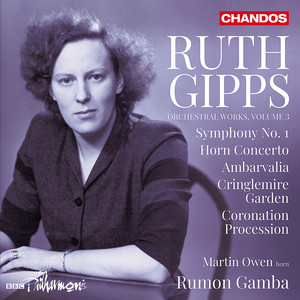 | Horn Concerto, Op. 58: III. Finale | Ruth Gipps, Martin Owen, BBC Philharmonic, Rumon Gamba | F Minor | 0 | 4A | 47 BPM | |
 | Suite: Graceful Dance | Ernest Tomlinson, Royal Northern Sinfonia, David Lloyd-Jones | D Major | 3 | 10B | 133 BPM | |
 | Respighi: Trittico botticelliano, P. 151: I. La Primavera | Ottorino Respighi, Sir Neville Marriner, Academy of St. Martin in the Fields | A Major | 2 | 11B | 137 BPM | |
 | Printemps: I. Tres modéré (Arr. H. Busser for orchestra) | Claude Debussy, フランス国立リヨン管弦楽団, 準・メルクル | E♭ Major | 1 | 5B | 92 BPM | |
 | Ancient Airs & Dances, Suite II, P. 138: III. Campanae parisienses – Aria (Anon/Mersenne) | Ottorino Respighi, Boston Symphony Orchestra, Seiji Ozawa | C Major | 0 | 8B | 74 BPM | |
 | Fontane di Roma, P. 106: I. La fontana di Valle Giulia all'alba | Ottorino Respighi, New York Philharmonic, Giuseppe Sinopoli | F♯ Major | 2 | 2B | 73 BPM | |
 | Sinfonietta, FP 141: I. Allegro con fuoco | Francis Poulenc, RTÉ National Symphony Orchestra, Jean-Luc Tingaud | G Major | 0 | 9B | 111 BPM | |
 | Concerto for Horn and Orchestra, Op. 58: I. Con Moto | Ruth Gipps, David Pyatt, Nicholas Braithwaite, London Philharmonic Orchestra | F♯ Minor | 0 | 11A | 83 BPM | |
 | Variation 6: Sostenuto (quasi adagietto) | Max Reger, New Zealand Symphony Orchestra, Franz-Paul Decker | D Major | 1 | 10B | 74 BPM | |
 | Trio, Op. 10: I. Moderato | Ruth Gipps, Juliana Koch, Julian Bliss, Michael McHale | G Minor | 0 | 6A | 99 BPM | |
| Les biches Suite, FP 36b: II. Adagietto | Francis Poulenc, RTÉ National Symphony Orchestra, Jean-Luc Tingaud | B♭ Major | 1 | 6B | 112 BPM | |
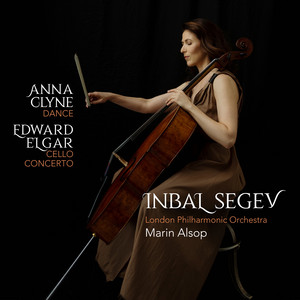 | DANCE: III. in the middle of the fighting | Anna Clyne, Inbal Segev, London Philharmonic Orchestra, Marin Alsop | A Minor | 1 | 8A | 82 BPM | |
 | The New Four Seasons - Spring: II. Shepherd's Wildest Dreams (After Violin Concerto No. 1, Op. 8, RV 269, II. Largo, Arr. by Wolf Kerschek) | Antonio Vivaldi, Niklas Liepe, WDR Funkhausorchester, Patrick Lange | D♭ Minor | 3 | 12A | 95 BPM | |
 | Love's Labour's Lost, Op. 28a: II. Longaville's Sonnet | Gerald Finzi, Robert Plane, Royal Northern Sinfonia, Howard Griffiths | D Minor | 0 | 7A | 94 BPM | |
 | Sibelius : Symphony No.5 in E flat major Op.82 : II Andante mosso, quasi allegretto | Jean Sibelius, Sakari Oramo, City Of Birmingham Symphony Orchestra | G Major | 0 | 9B | 142 BPM |
- ISRC
- GBLWD1803604
- Label
- L-M Records/RCA Records