- BPM
- 86
- Key
- E♭ Major
- Camelot
- 5B
Enigma Variations, Op. 36: Var. 9. Adagio "Nimrod" by Edward Elgar, London Symphony Orchestra, Eugen Jochum Song Details
"Enigma Variations, Op. 36: Var. 9. Adagio "Nimrod"" by Edward Elgar, London Symphony Orchestra, Eugen Jochum had its release date on January 1, 1975. With this song being about 5 minutes long, at This song is fairly a long song compared to the average song length. This song does not have an "Explicit" tag, making it safe for all ages. The song is number 10 out of 25 in Elgar: Enigma Variations – Brahms: Haydn Variations by London Symphony Orchestra, Eugen Jochum. Going off of the ISRC code of this track, we detected that the origin of this track is from Germany. Enigma Variations, Op. 36: Var. 9. Adagio "Nimrod" is not that popular right now. In our opinion, the overall tone is not very danceable and projects negative sounds, such as being sad, depressed, or angry.
BPM and Tempo
The tempo marking of Enigma Variations, Op. 36: Var. 9. Adagio "Nimrod" by Edward Elgar, London Symphony Orchestra, Eugen Jochum is Andante (at a walking pace), since this song has a tempo of 86 BPM. With that information, we can conclude that the song has a slow tempo. This song can go great with yoga or pilates. The time signature for this track is 3/4.
Music Key
E♭ Major is the music key of this track. This also means that this song has a camelot key of 5B. So, the perfect camelot match for 5B would be either 5B or 6A. While, 6B can give you a low energy boost. For moderate energy boost, you would use 2B and a high energy boost can either be 7B or 12B. Though, if you want a low energy drop, you should looking for songs with either a camelot key of 5A or 4B will give you a low energy drop, 8B would be a moderate one, and 3B or 10B would be a high energy drop. Lastly, 2A allows you to change the mood.
Want to find the BPM and music key for other songs? Check out our BPM and Key Finder page!
- Popularity
- 10%
- Loudness
- -21.258 dB
- Acousticness
- 97%
- Danceability
- 9%
- Energy
- 8%
- Instrumentalness
- 87%
- Liveness
- 13%
- Loudness
- 65%
- Speechiness
- 4%
- Valence
- 3%
Recommendations
| Track | Artist | Key | Energy | Camelot | BPM | ||
|---|---|---|---|---|---|---|---|
 | Symphony No. 5: IV. Adagietto. Sehr langsam | Gustav Mahler, Wiener Philharmoniker, Pierre Boulez | F Major | 0 | 7B | 87 BPM | |
 | Notturno in G Minor | Fanny Mendelssohn, Heather Schmidt | G Minor | 1 | 6A | 125 BPM | |
 | Trio Sonata for 2 Violins and Continuo in G Minor, HWV 393 "Dresden" No. 2: III. Largo (Arr. for Oboe, Violin, Harpsichord and Orchestra by Andreas Tarkmann) | George Frideric Handel, Albrecht Mayer, Sinfonia Varsovia, Jakub Haufa, Monika Razynska | B♭ Major | 2 | 6B | 143 BPM | |
 | Gaîté parisienne: Barcarolle | Jacques Offenbach, Berliner Philharmoniker, Herbert von Karajan | D Major | 0 | 10B | 82 BPM | |
 | Variations On An Original Theme, Op.36 "Enigma": 3. R.B.T. (Allegretto) | Edward Elgar, BBC Symphony Orchestra, Leonard Bernstein | G Major | 0 | 9B | 86 BPM | |
 | Piano Concerto No. 2 in C Minor, Op. 18: I. Moderato | Sergei Rachmaninoff, Yuja Wang, Los Angeles Philharmonic, Gustavo Dudamel | G Minor | 3 | 6A | 97 BPM | |
 | Enigma Variations, Op. 36: Var. 9. Adagio "Nimrod" | Edward Elgar, Wiener Philharmoniker, John Eliot Gardiner | E♭ Major | 1 | 5B | 83 BPM | |
 | Poulenc: Concerto for Two Pianos in D Minor, FP 61: II. Larghetto | Francis Poulenc, James Conlon, François-René Duchâble, Jean-Philippe Collard, Rotterdam Philharmonic Orchestra | B♭ Major | 0 | 6B | 84 BPM | |
 | Woodland Suite: III. Moon-Fairy | George Dyson, BBC Symphony Orchestra, Richard Hickox | A Major | 0 | 11B | 74 BPM | |
 | Méditation from Thaïs | Jules Massenet, Nicola Benedetti, London Symphony Orchestra, Daniel Harding | E Minor | 1 | 9A | 89 BPM | |
 | Les Boréades, RCT 31, Acte IV, Scène IV: Entrée pour les Muses, les Zéphyres, les Saisons, les Heures et les Arts | Jean-Philippe Rameau, Teodor Currentzis | D♭ Major | 1 | 3B | 130 BPM | |
 | Symphony No. 6 in B Minor, Op. 74 "Pathétique": IV. Finale. Adagio lamentoso | Pyotr Ilyich Tchaikovsky, Teodor Currentzis, musicAeterna | B Minor | 1 | 10A | 100 BPM | |
 | Sailing By | Ronald Binge, Slovak Radio Symphony Orchestra, Ernest Tomlinson | F Major | 0 | 7B | 80 BPM | |
 | Where the Rainbow Ends Suite (version for orchestra): No. 1a Rainbow Land | Roger Quilter, Slovak Radio Symphony Orchestra, Adrian Leaper | A Major | 0 | 11B | 69 BPM | |
 | Beau soir, L. 6 (L. 84) (Arr. Heifetz for Violin and Piano) | Claude Debussy, Lisa Batiashvili, Yannick Nézet-Séguin | F Minor | 1 | 4A | 79 BPM | |
 | 3 Pieces in Old Style: No. 1, Aria | Krzysztof Penderecki, Warsaw Philharmonic Chamber Orchestra, Antoni Wit | B♭ Major | 0 | 6B | 75 BPM | |
 | Les Contes d'Hoffmann / Act 4: Entr'acte (Barcarolle) | Jacques Offenbach, Staatskapelle Dresden, Silvio Varviso | D Major | 0 | 10B | 121 BPM | |
 | Three Romances for Violin and Piano, Op. 22: I. Andante molto | Clara Schumann, Esther Abrami, Iyad Sughayer | D♭ Major | 2 | 3B | 81 BPM | |
 | Saint-Saëns: Le carnaval des animaux, R 125: XIII. Le cygne | Camille Saint-Saëns, Güher Pekinel, Éric Levionnais, Süher Pekinel | E♭ Major | 1 | 5B | 82 BPM | |
 | Haydn: Cello Concerto No. 1 in C Major, Hob. VIIb, 1: I. Moderato (Cadenza by Britten) | Franz Joseph Haydn, Mstislav Rostropovich, Academy of St. Martin in the Fields | C Major | 1 | 8B | 68 BPM | |
 | Sir John in Love: Fantasia on Greensleeves | Ralph Vaughan Williams, Leonard Bernstein, New York Philharmonic, David Nadien | C Minor | 1 | 5A | 105 BPM | |
 | Delibes: Lakmé, Act 1: Duo des fleurs (Instrumental Version) | Léo Delibes, Camille Berthollet, Romain Dumas, Orchestre National Bordeaux Aquitaine | A Major | 2 | 11B | 82 BPM | |
 | 12 Romances, Op. 21: No. 7, How Fair This Spot (Arr. Sheku Kanneh-Mason for Cello and Piano) | Sergei Rachmaninoff, Sheku Kanneh-Mason, Isata Kanneh-Mason | A Major | 1 | 11B | 89 BPM | |
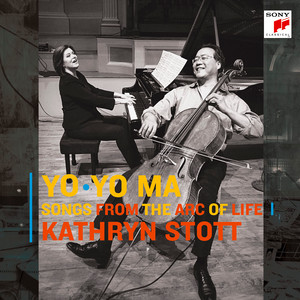 | Was it a Dream?, Op. 37, No. 4 | Jean Sibelius, Yo-Yo Ma, Kathryn Stott | A♭ Minor | 1 | 1A | 74 BPM | |
 | Symphony No. 1 in G Minor, Op. 13, TH 24, "Winter Daydreams": II. Adagio cantabile ma non tanto, "Land of Desolation, Land of Mist | Pyotr Ilyich Tchaikovsky, Mariss Jansons, Oslo Philharmonic Orchestra | B Minor | 2 | 10A | 139 BPM |
- ISRC
- DEF057504520
- Label
- L-M Records/RCA Records