- BPM
- 124
- Key
- F Minor
- Camelot
- 4A
The Lark Ascending: III. Allegretto molto tranquillo by Ralph Vaughan Williams, Hyeyoon Park, Benjamin Grosvenor Song Details
"The Lark Ascending: III. Allegretto molto tranquillo" by Ralph Vaughan Williams, Hyeyoon Park, Benjamin Grosvenor had its release date on October 7, 2022. With this song being around four minutes long, at 3:50, the duration of this song is pretty average compared to other songs. This track is safe for children and doesn't appear to contain any foul language, since the "Explicit" tag was not present in this track. This song is part of Vaughan Williams: The Lark Ascending by Ralph Vaughan Williams, Hyeyoon Park, Benjamin Grosvenor. The song's track number on the album is #3 out of 4 tracks. Based on our data, United Kingdom was the country where this track was produced or recorded. Based on our statistics, The Lark Ascending: III. Allegretto molto tranquillo's popularity is not that popular right now. In our opinion, the overall tone is not very danceable and projects negative sounds, such as being sad, depressed, or angry.
BPM and Tempo
Since The Lark Ascending: III. Allegretto molto tranquillo by Ralph Vaughan Williams, Hyeyoon Park, Benjamin Grosvenor has a tempo of 124 beats per a minute, the tempo markings of this song would be Allegro (fast, quick, and bright). With The Lark Ascending: III. Allegretto molto tranquillo being at 124 BPM, the half-time would be 62 BPM with a double-time of 248 BPM.In addition, we consider the tempo speed to be pretty fast for this song. This makes this song perfect for activities such as, walking. The time signature for this track is 4/4.
Music Key
This song has a musical key of F Minor. Which also means that the camelot key for this song is 4A. So, the perfect camelot match for 4A would be either 4A or 3B. While, a low energy boost can consist of either 4B or 5A. For moderate energy boost, you would use 1A and a high energy boost can either be 6A or 11A. However, if you are looking for a low energy drop, finding a song with a camelot key of 3A would be a great choice. Where 7A would give you a moderate drop, and 2A or 9A would be a high energy drop. Lastly, 7B allows you to change the mood.
Want to find the BPM and music key for other songs? Check out our BPM and Key Finder page!
- Popularity
- 13%
- Loudness
- -28.569 dB
- Acousticness
- 95%
- Danceability
- 24%
- Energy
- 4%
- Instrumentalness
- 78%
- Liveness
- 18%
- Loudness
- 52%
- Speechiness
- 5%
- Valence
- 17%
Recommendations
| Track | Artist | Key | Energy | Camelot | BPM | ||
|---|---|---|---|---|---|---|---|
 | Finlandia, Op. 26 | Jean Sibelius, Thomas Søndergård, BBC National Orchestra Of Wales | A♭ Major | 2 | 4B | 70 BPM | |
 | Film music for Henry V: 2 Pieces for Strings: II. Passacaglia: Death of Falstaff | William Walton, Bournemouth Sinfonietta, Richard Studt | E Minor | 0 | 9A | 79 BPM | |
 | Prelude: Allegro - Meno mosso - Alla breve (Allegro) - Adagio - | Ottorino Respighi, Seattle Symphony Orchestra, Gerard Schwarz | D Major | 1 | 10B | 74 BPM | |
 | String Quartet No. 1 in D Major, Op. 11, TH 111: II. Andante cantabile (Version for String Orchestra) | Pyotr Ilyich Tchaikovsky, Leonard Bernstein, New York Philharmonic | B♭ Major | 1 | 6B | 93 BPM | |
 | Serenade for String Orchestra in C Major, Op. 48, TH 48: II. Valse | Pyotr Ilyich Tchaikovsky, The Russian Virtuosi of Europe, Yuri Zhislin | G Major | 2 | 9B | 98 BPM | |
 | Slow Air | Ralph Vaughan Williams, English Northern Philharmonia, David Lloyd-Jones | E Minor | 1 | 9A | 98 BPM | |
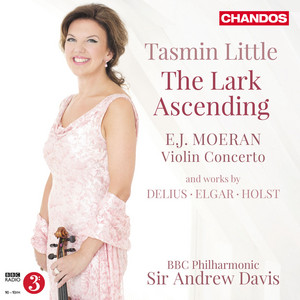 | The Lark Ascending | Ralph Vaughan Williams, Andrew Davis, BBC Philharmonic, BBC Symphony Orchestra, Tasmin Little | E Minor | 0 | 9A | 80 BPM | |
 | Prélude to the Afternoon of a Faun | Claude Debussy, Hanspeter Gmür, Nuremberg Symphony Orchestra | C Major | 9 | 8B | 85 BPM | |
 | Chant du Ménestrel, Op. 71 | Alexander Glazunov, Mstislav Rostropovich, Boston Symphony Orchestra, Seiji Ozawa | B Minor | 0 | 10A | 82 BPM | |
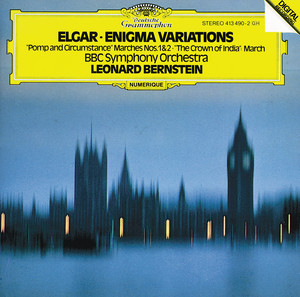 | Enigma Variations, Op. 36: Theme. Andante | Edward Elgar, BBC Symphony Orchestra, Leonard Bernstein | G Minor | 0 | 6A | 113 BPM | |
 | Montgomery Variations: IV. Dawn in Dixie | Margaret Bonds, Kellen Gray, Royal Scottish National Orchestra | D Minor | 0 | 7A | 168 BPM | |
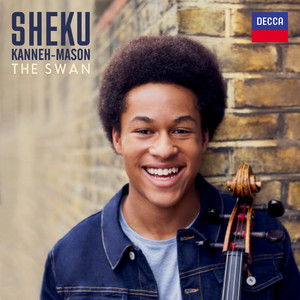 | Le Carnaval des Animaux, R. 125: 13. The Swan (Arr. Hodge for Cello, Harp & Ensemble) | Camille Saint-Saëns, Sheku Kanneh-Mason, Katherine Thomas, CBSO Cellos | G Major | 1 | 9B | 69 BPM | |
 | Suite No. 3, P. 172: I. Italiana: Andantino | Ottorino Respighi, RTÉ National Symphony Orchestra | B♭ Major | 1 | 6B | 94 BPM | |
 | Pavane, Op. 50 | Gabriel Fauré, Sinfonieorchester Basel, Ivor Bolton | F♯ Minor | 0 | 11A | 66 BPM | |
| Enigma Variations, Op. 36: Var. 9. Adagio "Nimrod" | Edward Elgar, BBC Symphony Orchestra, Leonard Bernstein | E♭ Major | 0 | 5B | 79 BPM | |
 | Dolly Suite, Op. 56: I. Berceuse | Gabriel Fauré, Katia Labèque, Marielle Labèque | E Major | 0 | 12B | 63 BPM | |
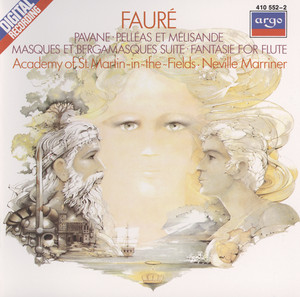 | Pelléas et Mélisande, Op. 80, Suite: I. Prélude | Gabriel Fauré, Academy of St. Martin in the Fields, Sir Neville Marriner | G Major | 1 | 9B | 134 BPM | |
 | Polovetsian Dances from Prince Igor: Introduzione | Alexander Borodin, George Szell, The Cleveland Orchestra | A Major | 1 | 11B | 83 BPM | |
 | Handel / Orch. Hale: Keyboard Suite No. 4 in D Minor, HWV 437: III. Sarabande | George Frideric Handel, Alexander Briger, Academy of St. Martin in the Fields | D Minor | 0 | 7A | 116 BPM | |
 | Appalachian Spring: VII. Doppio movimento | Aaron Copland, Leonard Bernstein, New York Philharmonic | D♭ Major | 1 | 3B | 78 BPM | |
 | Elegie I. In Memoriam: Adagio | Lodewijk Mortelmans, Brussels Philharmonic, Silveer Vandenbroeck | E Minor | 1 | 9A | 98 BPM | |
 | Scheherazade, Op. 35: II. Lento - Andantino "The Legend of the Kalendar Prince" | Nikolai Rimsky-Korsakov, New York Philharmonic, Alan Gilbert, Lawrence Rock | G Major | 1 | 9B | 59 BPM | |
 | Adoration | Florence Beatrice Price, Randall Goosby, Zhu Wang | D Major | 1 | 10B | 75 BPM | |
 | Dances in the Canebrakes (Arr. W.G. Still for Orchestra): No. 1, Nimble Feet | Florence Beatrice Price, Chicago Sinfonietta, Mei-Ann Chen | E Major | 1 | 12B | 88 BPM | |
 | Violin Concerto No. 1 in G Minor, Op. 26: III. Allegro energico | Max Bruch, Itzhak Perlman, Bernard Haitink, Royal Concertgebouw Orchestra | G Major | 3 | 9B | 97 BPM |
- ISRC
- GBBBC2201185
- Label
- L-M Records/RCA Records