- BPM
- 90
- Key
- G Major
- Camelot
- 9B
Coda 4 (Excerpt from the Sleeping Beauty, Op.66) by Pyotr Ilyich Tchaikovsky, Rob Thaller Song Details
Pyotr Ilyich Tchaikovsky, Rob Thaller's ' "Coda 4 (Excerpt from the Sleeping Beauty, Op.66)" was released on its scheduled release date, February 15, 2016. With This song being less than a minute long, we are pretty confident that this song does not contain any foul language. That being said, this song is pretty short compared to other songs. There are a total of 43 in the song's album "Rep Music for Ballet Pointe Class". In this album, this song's track order is #32. Furthermore, we believe that the track originated from United States. In terms of popularity, Coda 4 (Excerpt from the Sleeping Beauty, Op.66) is currently not that popular. Even with the track produces more of a neutral energy, it is pretty danceable compared to others.
BPM and Tempo
With Coda 4 (Excerpt from the Sleeping Beauty, Op.66) by Pyotr Ilyich Tchaikovsky, Rob Thaller having a BPM of 90 with a half-time of 45 BPM and a double-time of 180 BPM, we would consider this track to have a Andante (at a walking pace) tempo marking. Because of this, we believe that the song has an overall slow tempo. Looking at the BPM of this song, this song might go great with yoga or pilates. The time signature for this track is 4/4.
Music Key
This song has a musical key of G Major. Or for those who are familiar with the camelot wheel, this song has a camelot key of 9B. So, the perfect camelot match for 9B would be either 9B or 10A. While, 10B can give you a low energy boost. For moderate energy boost, you would use 6B and a high energy boost can either be 11B or 4B. Though, if you want a low energy drop, you should looking for songs with either a camelot key of 9A or 8B will give you a low energy drop, 12B would be a moderate one, and 7B or 2B would be a high energy drop. Lastly, 6A allows you to change the mood.
Want to find the BPM and music key for other songs? Check out our BPM and Key Finder page!
- Popularity
- 5%
- Loudness
- -21.21 dB
- Acousticness
- 100%
- Danceability
- 61%
- Energy
- 22%
- Instrumentalness
- 96%
- Liveness
- 10%
- Loudness
- 65%
- Speechiness
- 6%
- Valence
- 45%
Recommendations
| Track | Artist | Key | Energy | Camelot | BPM | ||
|---|---|---|---|---|---|---|---|
 | Mendelssohn: Violin Concerto in E Minor Op. 64: I. Allegro molto appassionato | Felix Mendelssohn, Maxim Vengerov, Kurt Masur, Gewandhausorchester Leipzig | E Minor | 2 | 9A | 101 BPM | |
 | Spartacus: Adagio of Spartacus and Phrygia | Aram Khachaturian, Wiener Philharmoniker | A♭ Major | 1 | 4B | 129 BPM | |
 | Scheherezade, Op. 35: I. The Sea and Sinbad's Ship | Nikolai Rimsky-Korsakov, Pelin Halkacı Alkın, Sascha Goetzel, Borusan Istanbul Philharmonic Orchestra | E Minor | 1 | 9A | 70 BPM | |
 | Andante and Finale, Op. 79 (orch. S. Taneyev): Andante | Polish National Radio Symphony Orchestra, Bernd Glemser, Pyotr Ilyich Tchaikovsky | B♭ Major | 0 | 6B | 97 BPM | |
 | Giselle: Act II: Entree d'Hilarion, scene et fugue des Wilis - Grand pas de duex | Adolphe Adam, Slovak Radio Symphony Orchestra, Andrew Mogrelia | G Major | 1 | 9B | 122 BPM | |
 | Masquerade Suite: I. Waltz | Aram Khachaturian, Kirill Kondrashin, RCA Victor Symphony Orchestra, Oscar Shumsky | C Major | 3 | 8B | 181 BPM | |
 | Violin Concerto No. 1 in G Minor, Op. 26: III. Allegro energico | Max Bruch, Itzhak Perlman, Bernard Haitink, Royal Concertgebouw Orchestra | G Major | 3 | 9B | 97 BPM | |
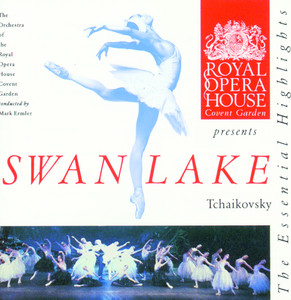 | Swan Lake, Op. 20: Op. 20: Act IV No. 29, Scène Finale | Pyotr Ilyich Tchaikovsky, Orchestra of the Royal Opera House, Covent Garden, Mark Ermler | B Major | 4 | 1B | 113 BPM | |
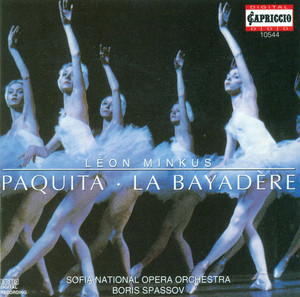 | Paquita: Variation 5: Allegro non troppo (by Cherepnin) | Ludwig Minkus, Anna Takova-Baynova, Valentina Raicheva, Sofia National Opera Orchestra, Boris Spassov | A Major | 2 | 11B | 140 BPM | |
 | Pavane, Op. 50 | Gabriel Fauré, Sinfonieorchester Basel, Ivor Bolton | F♯ Minor | 0 | 11A | 66 BPM | |
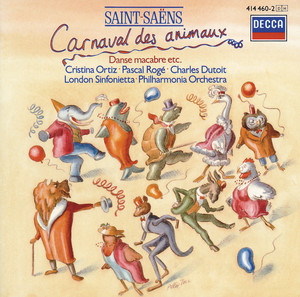 | Le carnaval des animaux, R. 125: VII. Aquarium | Camille Saint-Saëns, Pascal Rogé, Cristina Ortiz, London Sinfonietta, Charles Dutoit | A Minor | 0 | 8A | 136 BPM | |
 | Giselle, Act I: Variation de Giselle | Adolphe Adam, Academy of St. Martin in the Fields, Sir Neville Marriner | E Major | 0 | 12B | 78 BPM | |
 | Waltz Suite, Op. 110: VI. Happiness (From Cinderella, Op. 87) | Sergei Prokofiev, Orquestra Sinfônica do Estado de São Paulo, Marin Alsop | D Major | 1 | 10B | 141 BPM | |
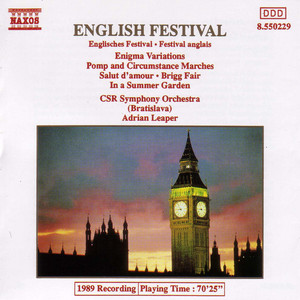 | Salut d'amour, Op. 12 (version for orchestra) | Edward Elgar, Slovak Radio Symphony Orchestra, Adrian Leaper | B♭ Major | 1 | 6B | 82 BPM | |
 | Eugene Onegin - Waltz | Symphony Orchestra of the Russian State TV & Radio Centre | A♭ Major | 1 | 4B | 118 BPM | |
 | Hungarian Rhapsody No. 2 in C sharp minor, S.244 | Franz Liszt, Michele Campanella | D♭ Major | 1 | 3B | 101 BPM | |
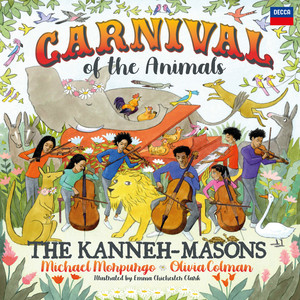 | Carnival of the Animals: The Swan | Camille Saint-Saëns, Isata Kanneh-Mason, Jeneba Kanneh-Mason, Sheku Kanneh-Mason | G Major | 1 | 9B | 65 BPM | |
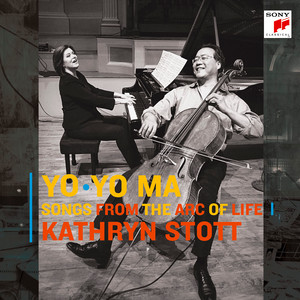 | Salut d'Amour, Op. 12 | Edward Elgar, Yo-Yo Ma, Kathryn Stott | D Major | 0 | 10B | 73 BPM | |
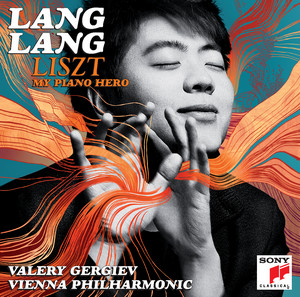 | La campanella in G-Sharp Minor (From "Grandes études de Paganini", S. 141/3) | Franz Liszt, Lang Lang | A♭ Minor | 3 | 1A | 88 BPM | |
 | Hungarian Dances, WoO 1: No. 1 in G Minor | Johannes Brahms, Cristian Mandeal, George Enescu Philharmonic Orchestra, Bucharest | G Minor | 2 | 6A | 73 BPM | |
 | Sorochintsi Fair, Act I: Gopak (Hopak) | Modest Mussorgsky, Slovak Philharmonic, Kenneth Jean | G Major | 2 | 9B | 127 BPM | |
 | La Bella Durmiente Adagio | Orquestra Sinfonica De Radio Praga | E♭ Major | 1 | 5B | 60 BPM | |
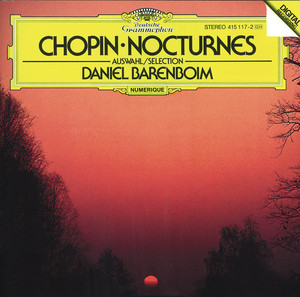 | Nocturne No. 2 in E-Flat Major, Op. 9 No. 2 | Frédéric Chopin, Daniel Barenboim | E♭ Major | 0 | 5B | 79 BPM | |
 | La Bayadere, Act III: 39. "Entrance of the Shades" | Evergreen Symphony Orchestra, Kevin Galiè | D Major | 0 | 10B | 76 BPM | |
 | Stolze & Tchaikovsky: Onegin: Lensky's Variation - Pas de deux. Lensky and Olga (After Eugen Onegin, Op. 24) | Kurt-Heinz Stolze, Pyotr Ilyich Tchaikovsky, John Lanchbery, Sydney Symphony Orchestra | A♭ Major | 9 | 4B | 125 BPM |
- ISRC
- USA2P1618632
- Label
- L-M Records/RCA Records