- BPM
- 109
- Key
- D Major
- Camelot
- 10B
À Paganini. Andante by Alfred Schnittke, Ning Feng Song Details
"À Paganini. Andante" by Alfred Schnittke, Ning Feng had its release date on January 1, 2010. This song appears to be safe for all ages as it is not explicit. There are a total of 8 in the song's album "Solo". In this album, this song's track order is #5. Furthermore, we believe that the track originated from Netherlands. In terms of popularity, À Paganini. Andante is currently unknown. In our opinion, the overall tone is not very danceable and projects negative sounds, such as being sad, depressed, or angry.
BPM and Tempo
With À Paganini. Andante by Alfred Schnittke, Ning Feng having a BPM of 109 with a half-time of 54 BPM and a double-time of 218 BPM, we would consider this track to have a Moderato (at a moderate speed) tempo marking. Because of this, we believe that the song has an overall moderate tempo. The time signature for this track is 5/4.
Music Key
D Major is the music key of this track. Or for those who are familiar with the camelot wheel, this song has a camelot key of 10B. So, the perfect camelot match for 10B would be either 10B or 11A. While, 11B can give you a low energy boost. For moderate energy boost, you would use 7B and a high energy boost can either be 12B or 5B. Though, if you want a low energy drop, you should looking for songs with either a camelot key of 10A or 9B will give you a low energy drop, 1B would be a moderate one, and 8B or 3B would be a high energy drop. Lastly, 7A allows you to change the mood.
Want to find the BPM and music key for other songs? Check out our BPM and Key Finder page!
- Popularity
- 0%
- Loudness
- -19.787 dB
- Acousticness
- 98%
- Danceability
- 35%
- Energy
- 6%
- Instrumentalness
- 54%
- Liveness
- 11%
- Loudness
- 67%
- Speechiness
- 5%
- Valence
- 4%
Recommendations
| Track | Artist | Key | Energy | Camelot | BPM | ||
|---|---|---|---|---|---|---|---|
 | Concert Suite: IV. When I Am Laid In Earth, "Dido's Lament" from Dido and Aeneas (Arr. Leopold Stokowski) | Henry Purcell, Matthias Bamert, BBC Philharmonic | G Minor | 0 | 6A | 82 BPM | |
 | Moments of Poetry and Music: No. 2, Melody, Post scriptum | Valentin Silvestrov, Inna Galatenko, Oleg Bezborodko, Lithuanian National Symphony Orchestra, Christopher Lyndon-Gee | A Minor | 0 | 8A | 65 BPM | |
 | Clowns und Kinder Suite (Arr. for Violin & Piano by Frank Strobel & Takénori Némoto): II. Intermezzo | Alfred Schnittke, Chiharu Taki, Yoshito Numasawa | C Minor | 2 | 5A | 96 BPM | |
 | Schoenberg - 4 Pieces from 6 Kleine Klavierstucke, Op. 19: No. 6. Sehr langsam | Hans Abrahamsen, Arnold Schoenberg, BIT20 Ensemble, Ilan Volkov | G Major | 0 | 9B | 0 BPM | |
 | Story of an Unknown Actor, Op. 125: I. Those Free Butterflies | Alfred Schnittke, Metamorphose String Orchestra, Pavel Lyubomudrov | G Minor | 4 | 6A | 125 BPM | |
![Gammal fabodpsalm fran Dalarna: No. 1 in A Major (arr. J. Johansson for orchestra) [Old Pastoral Hymn from Dalecarlia] by Wilhelm Stenhammar, Henning Kraggerud, Dalasinfoniettan, Bjarte Engeset](https://i.scdn.co/image/ab67616d00001e02a95e6620e53fc12c4d70391b) | Gammal fabodpsalm fran Dalarna: No. 1 in A Major (arr. J. Johansson for orchestra) [Old Pastoral Hymn from Dalecarlia] | Wilhelm Stenhammar, Henning Kraggerud, Dalasinfoniettan, Bjarte Engeset | A Major | 2 | 11B | 85 BPM | |
 | Elegia | Edith Sohlström, SRK Musiikki | D Major | 1 | 10B | 177 BPM | |
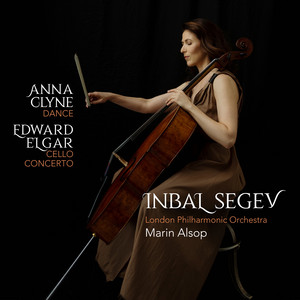 | DANCE: III. in the middle of the fighting | Anna Clyne, Inbal Segev, London Philharmonic Orchestra, Marin Alsop | A Minor | 1 | 8A | 82 BPM | |
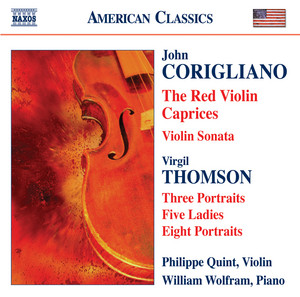 | The Red Violin Caprices: Theme | John Corigliano, Philippe Quint | A Minor | 0 | 8A | 0 BPM | |
| Violin Sonata No. 1: IV. Allegretto scherzando | Alfred Schnittke, Chiharu Taki, Yoshito Numasawa | C Major | 3 | 8B | 117 BPM | |
| Suite No. 3, Op. 19 No. 1: II. Pantomim: Moderato | Kurt Atterberg, Henning Kraggerud, Dalasinfoniettan, Bjarte Engeset | E Minor | 1 | 9A | 76 BPM | |
 | The Tempest Suite No. 1, Op. 109, No. 2: I. The Oak Tree | Jean Sibelius, Lahti Symphony Orchestra, Okko Kamu | B♭ Major | 0 | 6B | 86 BPM | |
 | String Quartet No. 12 in F major, Op. 96 - "American" B.179: 2. Lento | Antonín Dvořák, Hagen Quartett | D Minor | 1 | 7A | 88 BPM | |
 | Stockhausen: Tierkreis, for Trumpet und Organ: IX. Waage - Libra (23.09-22.10) - Venus (=71) | Karlheinz Stockhausen, Markus Stockhausen | D Major | 0 | 10B | 70 BPM | |
 | Messa da Requiem: Requiem aeternam | Giuseppe Verdi, Elena Filipova, Gloria Scalchi, Cesar Hernandez, Carlo Colombara, Hungarian State Opera Chorus, Hungarian State Opera Orchestra, Pier Giorgio Morandi | E♭ Minor | 0 | 2A | 130 BPM | |
 | Les Boréades, RCT 31, Acte IV, Scène IV: Entrée pour les Muses, les Zéphyres, les Saisons, les Heures et les Arts | Jean-Philippe Rameau, Teodor Currentzis | D♭ Major | 1 | 3B | 130 BPM | |
 | Simple Symphony, Op. 4: III. Sentimental Sarabande | Benjamin Britten, Camerata Nordica, Terje Tonnesen | G Minor | 0 | 6A | 85 BPM | |
 | 4 Lieder, Op. 27: 4. Morgen! | Richard Strauss, Jessye Norman, Gewandhausorchester Leipzig, Kurt Masur | G Major | 0 | 9B | 81 BPM | |
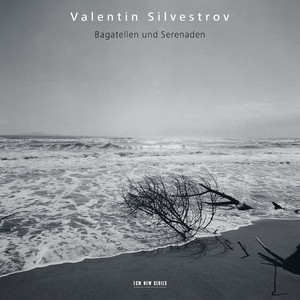 | Stille Musik: I. Walzer des Augenblicks | Valentin Silvestrov, Munich Chamber Orchestra | A Minor | 0 | 8A | 60 BPM | |
 | Symphony No. 5, Op. 107, "Reformation": III. Andante | Felix Mendelssohn, Tonhalle-Orchester Zürich, Paavo Järvi | G Minor | 0 | 6A | 72 BPM | |
 | String Octet in C Major, Op. 7 (Version for String Orchestra): I. Très modéré | George Enescu, Tabea Zimmermann, Ensemble Resonanz | E♭ Major | 0 | 5B | 78 BPM | |
 | Walton: Henry V: Passacaglia "The Death of Falstaff" | William Walton, Douglas Boyd, Chamber Orchestra of Europe | E Minor | 0 | 9A | 86 BPM | |
 | Cello Concerto in C Minor, Op. 43: I. Adagio | Mieczysław Weinberg, Marina Tarasova, Musica Viva Chamber Orchestra, Alexander Rudin | C Major | 4 | 8B | 107 BPM | |
 | Salomea | Jasmin Reuter, World Chamber Orchestra | A♭ Major | 2 | 4B | 122 BPM | |
 | Organ Concerto in G Minor, FP 93: III. Andante moderato | Francis Poulenc, Philippe Lefebvre, Orchestre National de Lille, Jean-Claude Casadesus | D♭ Major | 0 | 3B | 79 BPM |
- ISRC
- NLA460911387
- Label
- L-M Records/RCA Records